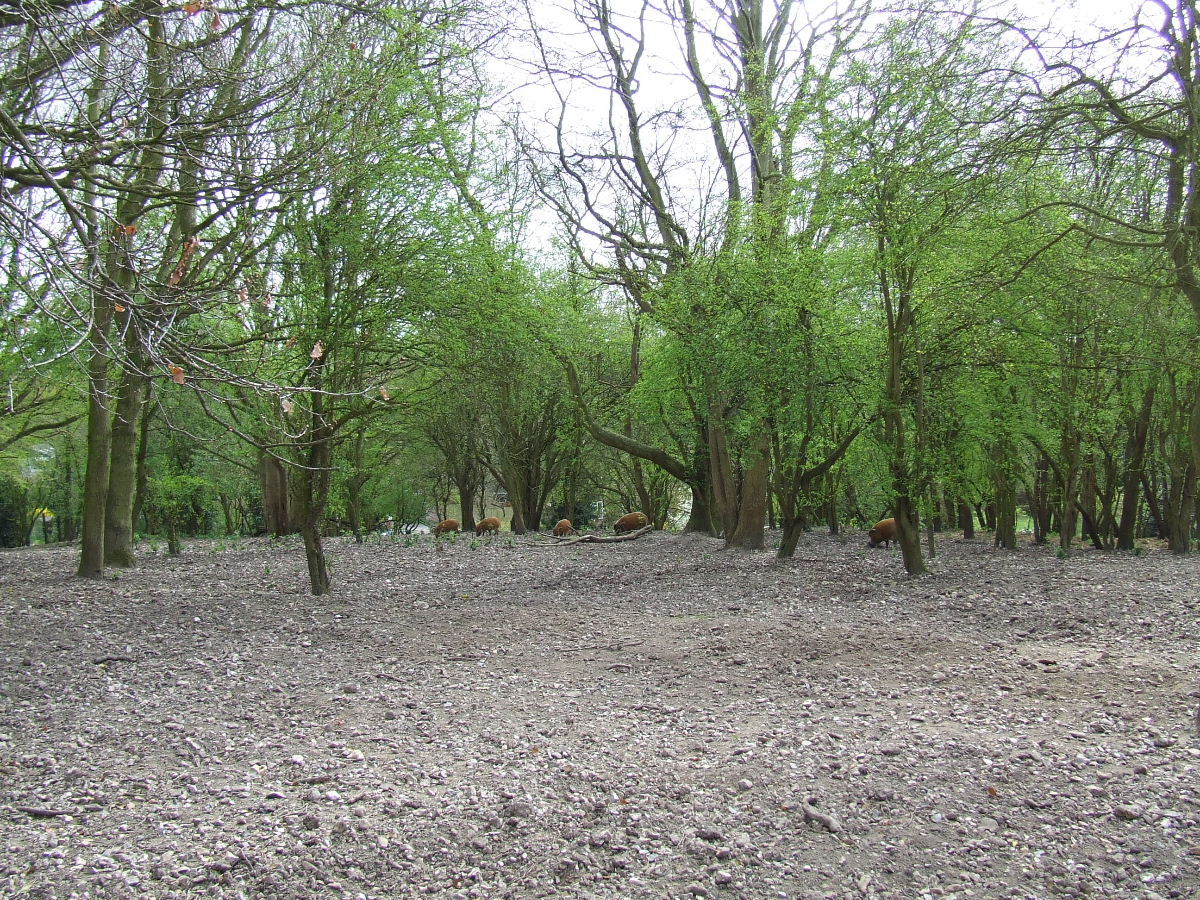
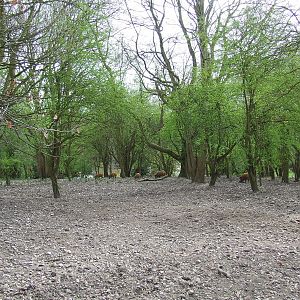
I'd have to concur with the other comments and agree that the red river hogs must have the largest exhibit I've ever seen for this particular species. It will probably allow Howletts to keep a fairly impressive number of the pigs.
It is large but the photo makes it look far bigger than it really is by enlarging the foreground massively. It is a chunk of old paddock with mostly scrubby crab apple and hawthorn trees and a small yard and indoor house to one side.
This pair has bred more than once now. Three piglets are the litter shown in this photo. But at Port Lympne they had a non-breeding pair for many years(one of earliest pairs imported to the UK) originally kept in a large wooded area then moved to a smaller open area near the Elephants. The old male died and a new one(from a previous litter at Howletts?) has replaced it.
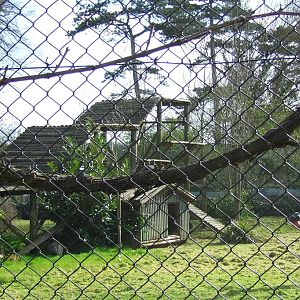
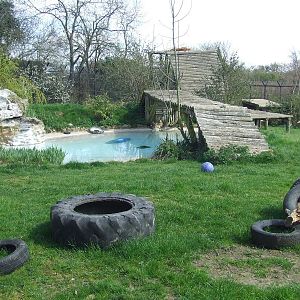
The Port Lympne pair were the first to be imported into the UK for many years. They were originally held in their current location when they first arrived, for several years, following the death/departure of the last lowland tapir. They then moved for a time to an enclosure built onto the side of the babirusa house (nearest to the bachelor gorilla house) before moving back up to their original (and current) location once the babirusa left. For some reason if my memory serves me correctly, one or both of the 2 male babirusa bred at PL were held in this location when the River hogs were moved to the wooded enclosure. One or both PL-born babirusa were then moved to where the current Red River Hogs at Howletts are housed.
I much prefer this Howletts enclosure to where they are at Port Lympne now(the open place near the Elephants). First time I saw them at PL they were in the wooded area near Gorillas.
I think Belfast imported a pair at the same time as Port Lympne? Both pairs coming from Duisburg Zoo. Belfast's didn't breed either until they replaced one of them with a new partner. I was surprised Port Lypmne never tried repartnering theirs when they didn't breed, only many years later when one died. They seemed content just to leave them as non-breeders.
The only Red River Hogs I'd seen prior to these was a male at Dudley(1960's) and a female at Paignton (same era). Nobody ever thought to pair them up of course.
It was a strange thing that, for a good few years, the first collections to start exhibiting this species again, around 5 or 6 collections, seemed to have their River hogs growing up together from young animals as if siblings and nobody was breeding them, until Woburn, who kept them in possibly the least naturalistic enclosure in the childrens farm area, began having success. Even then it was Woburn and one or two other zoos having success with this species for a few further years. I found it strange but it seems that collections in the UK have now become adept at breeding Red River Hogs, although not Port Lympne. I would be surprised if they brought in an unrelated animal to breed at PL, I think they will just use the enclosure for surplus animals bred at Howletts.
collections in the UK have now become adept at breeding Red River Hogs, although not Port Lympne. I would be surprised if they brought in an unrelated animal to breed at PL, I think they will just use the enclosure for surplus animals bred at Howletts.
I think the UK River hogs have suffered from the 'related pair' syndrome
resulting in a lack of breeding in some situations like Port Lympne. What surprised me was they went to all the trouble of importing that first pair but never tried to later exchange one in order to get them breeding. Not important enough to bother with?
The old female at Port Lympne has a new 'mate' now only because the old male died and they simply replaced him with one born at Howletts. The Howletts pair are far more recent aquisitions but they don't seem to have had the same problem of non-breeding there.
Other groups in the UK nowadays benefit from the exchanges and forming up of new pairs originating from different zoos, so they are less likely to have the same problem.