I think in Europe this species just isn't so well known as e.g. Koalas, so few people are familiar with them. If they were exhibited in more Zoos or appeared in some other form. e.g. as a T.V. advertisement humanising them like Meerkats, it could suddenly radically change public perception though.
If Japan and the USA want to keep them to themselves to maximise tourism, of course, no amount of advertisment will help Europe get more and of course, the public won't be exposed to a species that cannot be seen!
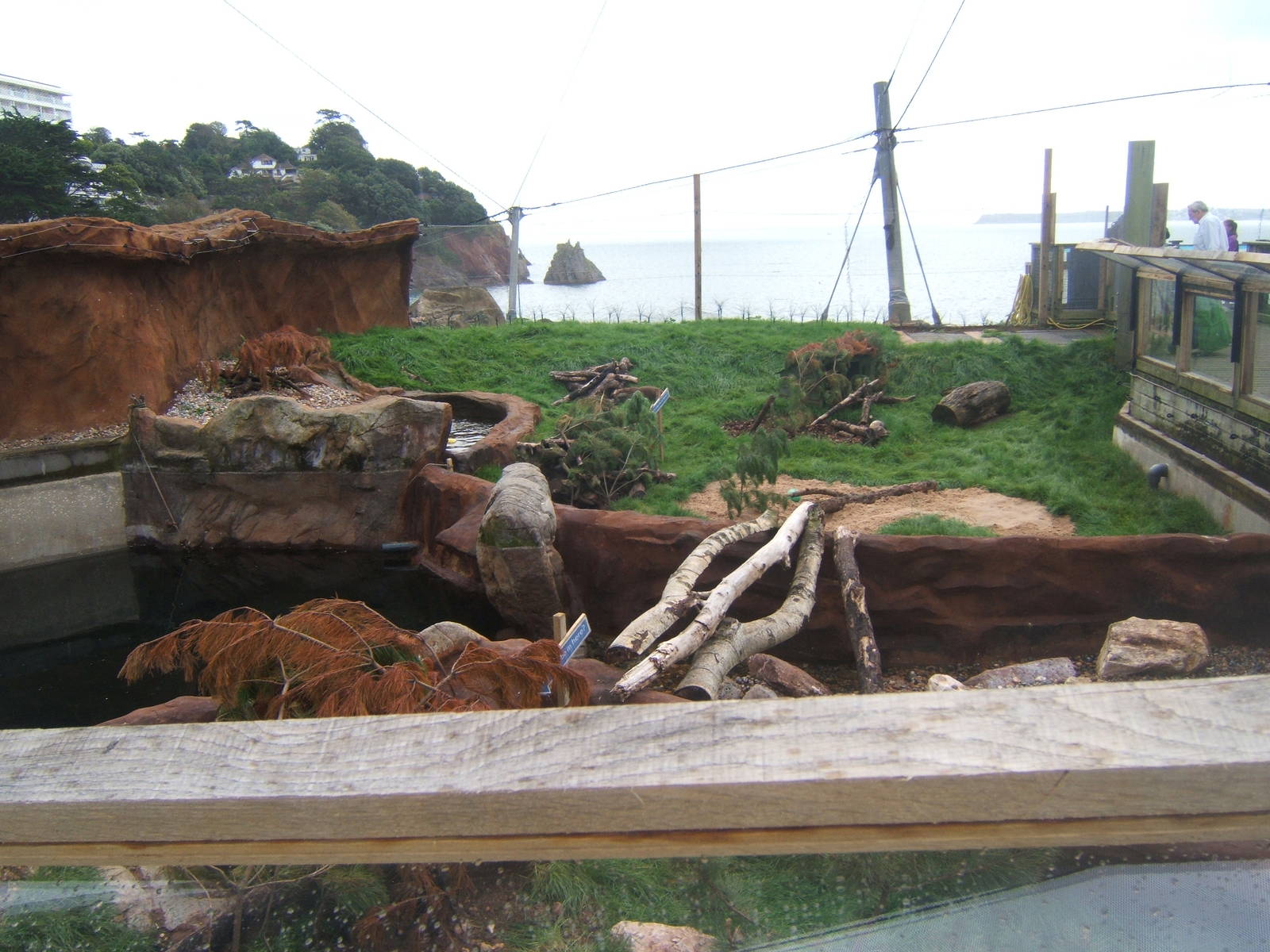
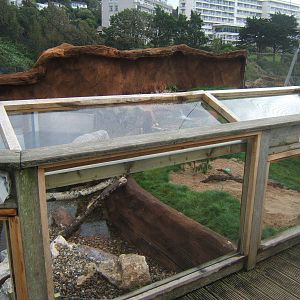
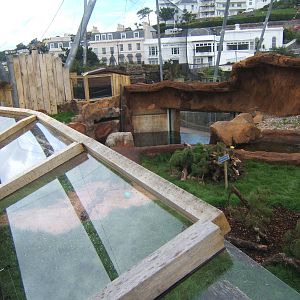
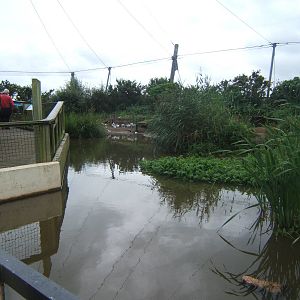
Looking at this open-looking enclosure, I would almost like to guarantee these Otters will hardly ever be seen by visitors in the daytime, unless they are handraised. They are notoriously poor 'showers' in zoos, the best exception I know is the New Forest Wildlife Park which keep a number(they raise cubs orphaned in the wild and then release them, others are breeding adults) Its the only place I've ever seen them in captivity out and about, active and confident.
I must have the weirdest good luck with European Otters - I saw them easily at Chestnut Centre and Edinburgh Zoo, both collections which many people have said are impossible to spot the species at. Of course, now the Edinburgh individuals have moved to Highland Wildlife Park, so now those people would be right
Looking at this open-looking enclosure, I would almost like to guarantee these Otters will hardly ever be seen by visitors in the daytime, unless they are handraised. They are notoriously poor 'showers' in zoos, the best exception I know is the New Forest Wildlife Park which keep a number(they raise cubs orphaned in the wild and then release them, others are breeding adults) Its the only place I've ever seen them in captivity out and about, active and confident.
These Otters were visible and very much active when we visited,in fact when this picture was taken they would have been hiding under the bits of conifer at the back right of the enclosure.
These Otters were visible and very much active when we visited,in fact when this picture was taken they would have been hiding under the bits of conifer at the back right of the enclosure.
Proves I'm talking rubbish then. Maybe they are handraised ones, which does seem to make quite a difference. But I think the NFWP is still the only place I have seen them except maybe at the Norfolk Wildlife Park years ago. In fact I am pretty sure I have seen European Otters in the wild on more occassions(about eight times) than I have in captivity!
It makes me unbelievably happy to be around for the extraordinary reversal in fortunes which the Eurasian Otter has undergone in my lifetime - now they can be seen in the town centre of Darlington!
Best place to see them, in my opinion, would be either north Tynedale or the coastline of Skye - the otters in these places are remarkably confident in coming out into the open.
Best place to see them, in my opinion, would be either north Tynedale or the coastline of Skye - the otters in these places are remarkably confident in coming out into the open.
1980's. Slapton Ley, Devon. on five occassions out of about ten evening watches, including the very first one. All at dusk or after dark.
Seil Island, Inner Hebrides. Daytime adult sleeping on rock then later fishing!
2000's Loch Insh. Speyside. fishing. Evening.
Appledore, Western Coast. Went out casually one evening to look for Otters and within minutes saw one emerge from a bankside boulder, run down the beach and then swimming.
Scottish Coast is still more reliable than elsewhere I think, but as you said, they are being seen all over the place nowadays. On rivers and the coast here in the South they are increasingly seen in daylight hours too. It wouldn't surprise me to hear that wild Otters visit the vicinity of Living Coasts as in the photo either.
Until the Panama Canal was opened (in 1914) getting animals from the Pacific coast of North America meant either a long, slow rail journey over to the Atlantic coast, or a ship journey around Cape Horn. Two World Wars and the Sea Otter's rarity would have put paid to any animals coming out until the 1970s, I reckon.
The otter species that I'd like to see acclimatised in European aquaria would be Marine, an animal that is in real trouble in the wild. But I don't see it happening, somehow.