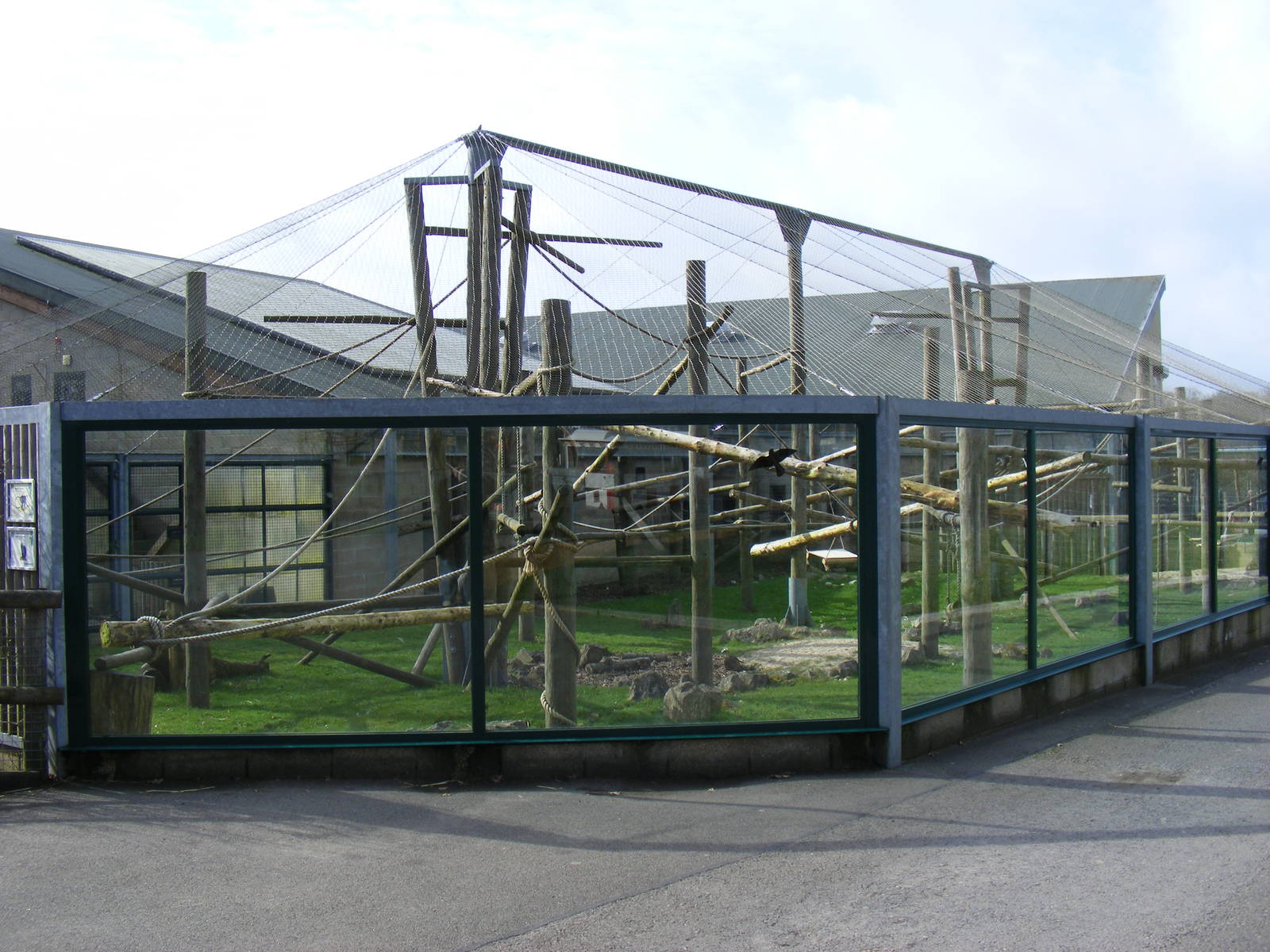
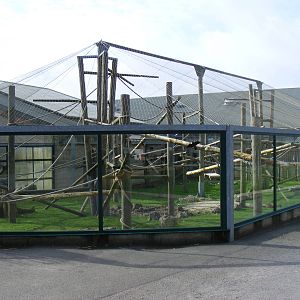
The enclosure appears to be quite large in the photo, and is it divided into two separate exhibits? I love the extensive use of climbing beams for the primates!
Was the original intention to try and mix the two species together? As they don't/can't(?), I'd prefer to see the enclosure divided so both species can have access outside all the time.
The Colobus group have bred well, but the Diana pair have not bred at all AFAIK. Anyone know why not?
Yes, the intention was to mix the two species, and this was carried out successfully for quite a long time. Unfourtunately something seemed to have gone awry, and the two species now rotate through the day which enclosure they stay.
As far as Diana breeding is concerned, I don't actually know. The likelihood is that any were infertile, or the male had the snip.
There aren't many zoos in the Uk with Dianas (or other Guenons) breeding regularly so I doubt it is the latter. Perhaps they should try swapping one partner for a new one if there isn't a definite reason.
Diana monkeys, and many other guenons for that matter, are notoriously hard to breed. I think many collections holding single pairs would do well to exchange them as they do not appear to mate regularly. However, it may be that this is genetically the most suitable pairing and the studbook holder may not be willing to give up on them yet.
I find it interesting that zoos with large groups of guenons appear to be more successful, I wonder if the 1.1 pairing maybe often won't stimulate any kind of social organising resulting in truly dominant animals.
Diana monkeys, and many other guenons for that matter, are notoriously hard to breed. I think many collections holding single pairs would do well to exchange them as they do not appear to mate regularly. However, it may be that this is genetically the most suitable pairing and the studbook holder may not be willing to give up on them yet.
I find it interesting that zoos with large groups of guenons appear to be more successful, I wonder if the 1.1 pairing maybe often won't stimulate any kind of social organising resulting in truly dominant animals.
Paington's single pair of Diana's now have three offspring. Port Lympne breed from single pairs too. I agree there is often a better chance with a larger group though.
I think Marwell should either ask to exchange one of this pair or add another animal or pair perhaps. They evidently will not breed as they are.