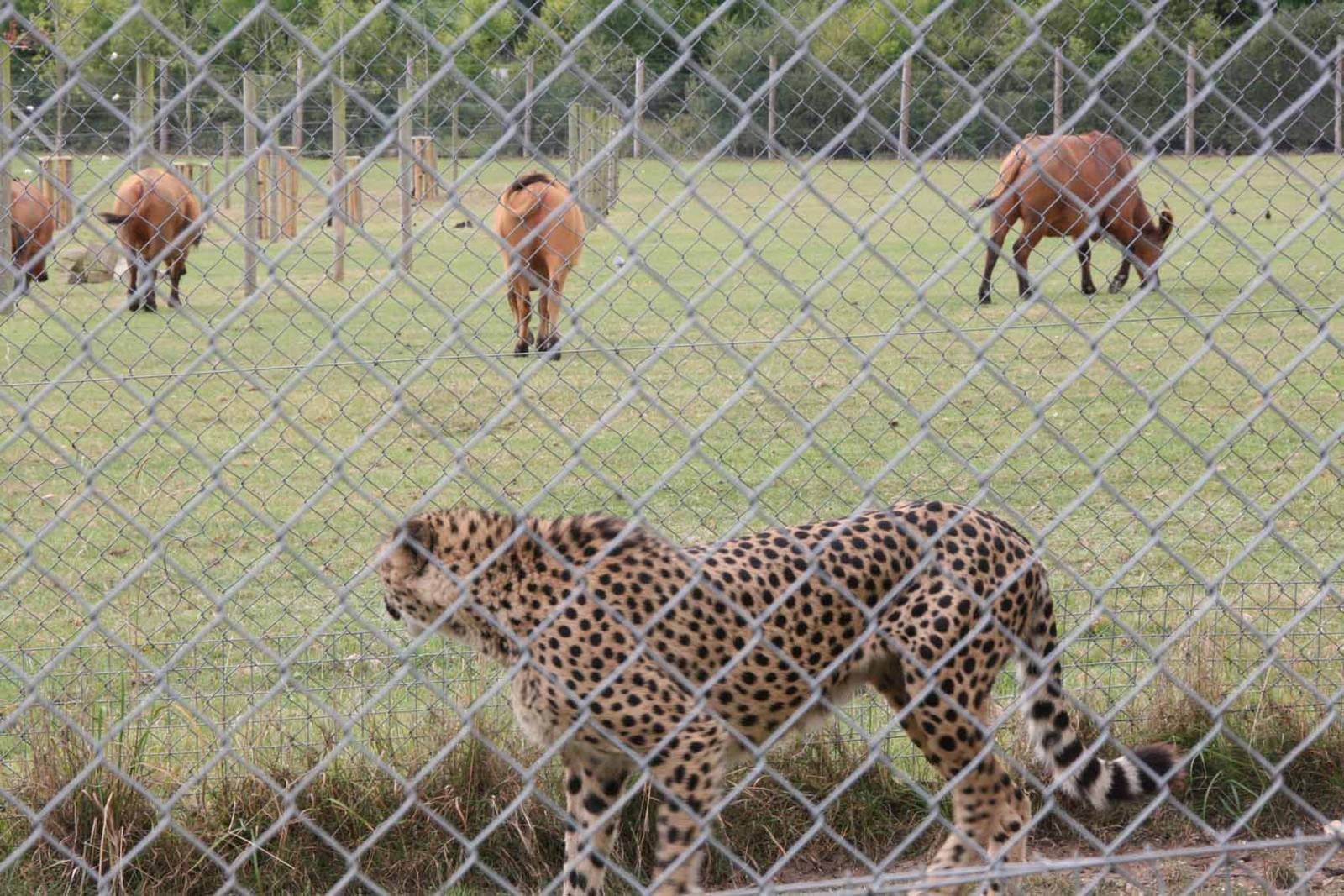
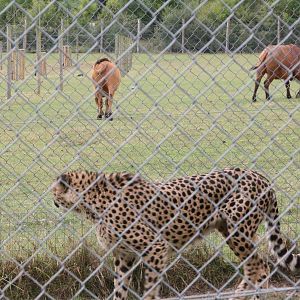
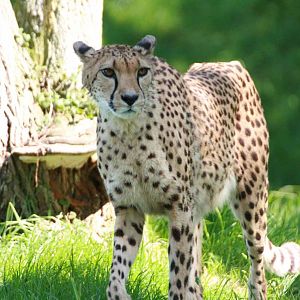
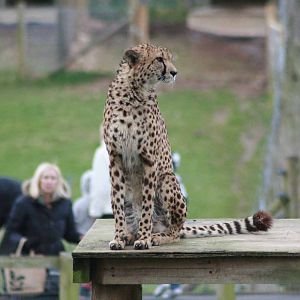
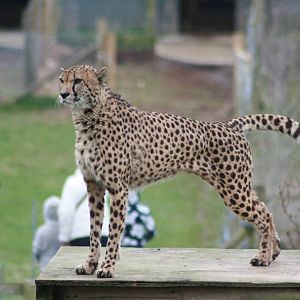
Hi, I find it so unusual that the collection have allowed this as for some prey species, the presence of a carnivore can be quite stressful. There are benefits such as the animals being able to closely see each other and encourage a lot more innate behaviours but surely it could cause more harm than good?
Hi, I find it so unusual that the collection have allowed this as for some prey species, the presence of a carnivore can be quite stressful. There are benefits such as the animals being able to closely see each other and encourage a lot more innate behaviours but surely it could cause more harm than good?
Whenever I've seen this kind of set up, the prey seem to realise very quickly that there is a fence between them and that they are safe. The predators seem to take a bit longer to realise this fact and keep on trying to get to them. I don't think the prey are adversely affected.
Hi, I find it so unusual that the collection have allowed this as for some prey species, the presence of a carnivore can be quite stressful. There are benefits such as the animals being able to closely see each other and encourage a lot more innate behaviours but surely it could cause more harm than good?
I was talking to a keeper at a zoo (I think Whipsnade) who said that one reason that predators and prey are often located next to each other is because many prey species are designed to be scared. Or rather their hearts are built to take the stress of that moment of fright and flight. However in a zoo environment many were living such docile lives that they were getting heart problems due to the fact that their hearts were never get that sudden burst of activity.
It's a sound argument save what's been said, that most animals get used to a situation and will grow accustomed to a situation that proves no threat to them over time. Thus one has to question if it has any benefit at all to herds use to seeing the predator every day.
One wonders if the predator is left more stressed by it than the prey (an almost ironic turn of events).
I don't know much more than that and I'm sure there must be more studies on the subject in general; it might also be that its been totally theoretically reversed but that most zoos are established and have fixed pen locations and thus are somewhat restricted in how they can move species about.
I was talking to a keeper at a zoo (I think Whipsnade) who said that one reason that predators and prey are often located next to each other is because many prey species are designed to be scared. Or rather their hearts are built to take the stress of that moment of fright and flight. However in a zoo environment many were living such docile lives that they were getting heart problems due to the fact that their hearts were never get that sudden burst of activity.
It's a sound argument save what's been said, that most animals get used to a situation and will grow accustomed to a situation that proves no threat to them over time. Thus one has to question if it has any benefit at all to herds use to seeing the predator every day.
I'd be interested to hear if any studies have investigated the impact of these predator-prey exhibits. Certainly, some predators can be negatively affected by proximity to other predators, and a few ungulates appear to be influenced by the presence/density of visitors (sometimes in fairly subtle ways), who are also around most of the time. So, whilst any predator-prey effect would probably be taxon-specific, I wouldn't assume habituation too readily.