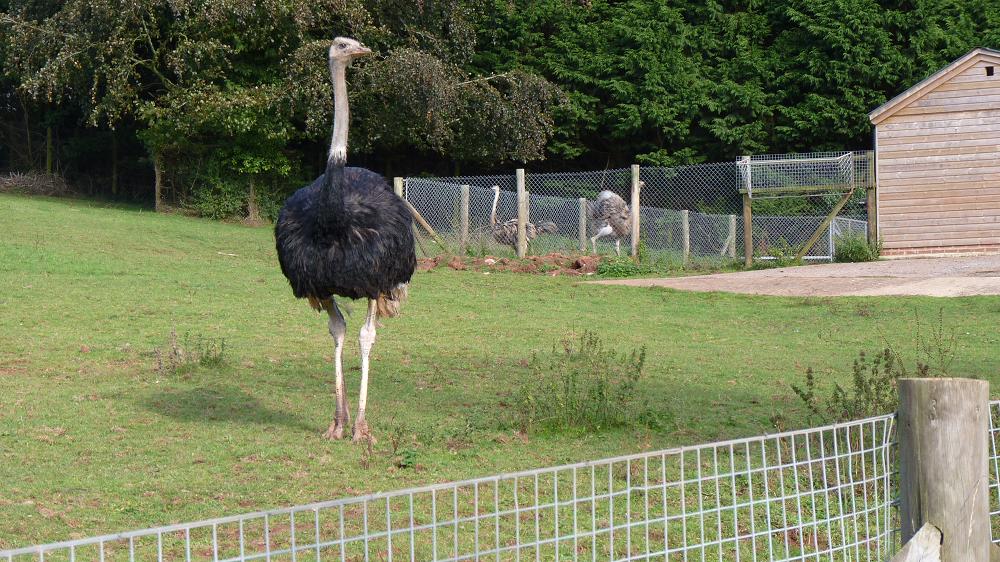
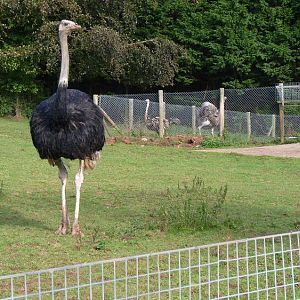
The survivor (apparently female) of Paignton's old pair of Ostriches with the two newly arrived males in the background. All, according to the signs and website, Struthio Camelus - Red- Necked.
The survivor (apparently female) of Paignton's old pair of Ostriches with the two newly arrived males in the background. All, according to the signs and website, Struthio Camelus - Red- Necked. September 2011
Appearances can sometimes be deceptive and in this case I think the 'black' one probably is a 'trans-featherite', possibly an old bird that's changed colour? I don't think they would say its female if they didn't know so. The neck and legs are pretty colourless for a male too. The two young ones are probably in immature plumage, so it seems like an unusual reversed situation where the 'black' one is female not male, and the grey ones male, not female!
That said, I can't see how they can be part of a breeding programme with immature males and (what is probably) an elderly female- though of course their records would show how old the female really is(or at least how long at the zoo)
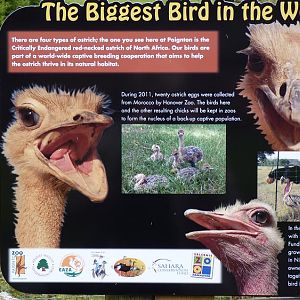
Yes, it's all a bit confusing. According to the new sign, the two in the background hatched this year. The other half of the original duo looked like this one.
Its a bit odd I agree- I would automatically assume that Black Ostrich is a male- without any background knowledge about it. One of the ones in the background appears to be displaying- usually a male preserve.
I'd be surprised if she laid any more eggs now- after adopting 'male' plumage, as this is normally a sign of old age in the species where it happens (mostly some Gallinaceous birds and Waterfowl).
According to a BBC Devon news bulletin, the zoo says young females will join the two young males.
The current female , in the photo, is described as 'elderly'- but it doesn't mention she's become a 'heshe' now.