if the paddock hasnt been moved and my memory is correct the water buffalo are near to the lions and hyenas ? these animals always appear so gentle whenenver i see them i always remember that chinese mystics often rode them instead of horses because the buffalo was a more humble and wordly beast of burden
They are down to maybe 5 animals now, with perhaps a lone bull on the African Safari experience. Howletts stopped keeping them several years ago. I think the likelihood of these animals being augmented by fresh genes is extremely remote.
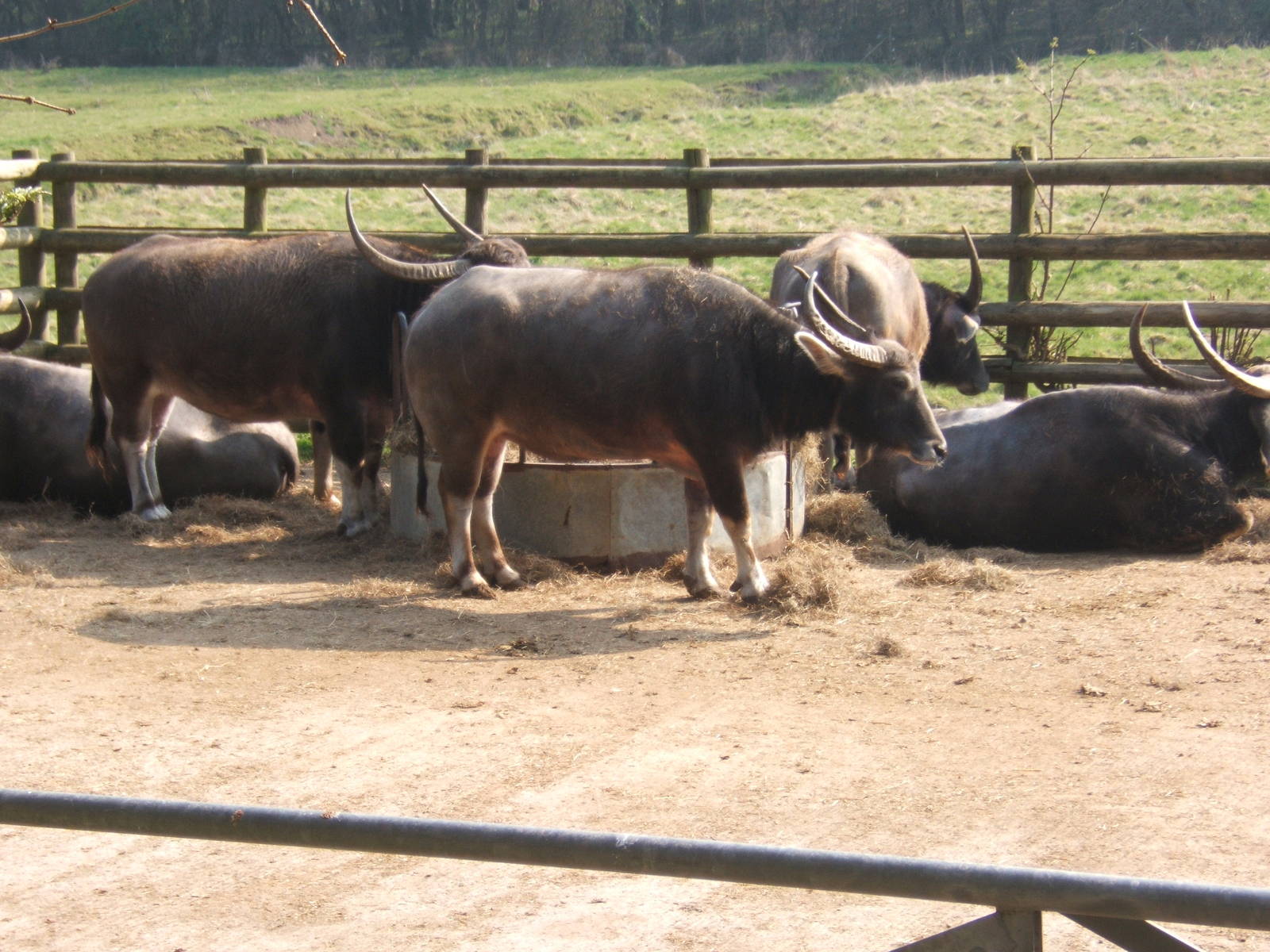
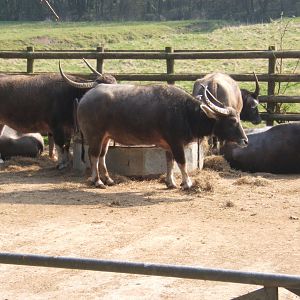
I can't work out if they are actually 'wild-type' assamese buffalo or whether this was just the story told by the zoo (see 'Barbary' lions). The Port Lympne animals do resemble buffalo found in some Indian national parks, but these could be feral domesticated animals... http://www.indiabirds.com/images/gallery_birds/Wild-Buffalo-young0509.jpg
Certainly there are herds of domesticated 'water buffalo' in the UK used commercially that resemble almost African Cape Buffalo (much like the feral water buffalo in Brazil - they are almost jet black with very think, narrow, horns:
The slightly larger herd of Asian Water Buffalo at West Mids are from the same stock (came from PL along with the Barasingha and Sambar when the Asian Reserve was set up). As 'wild' Water Buffalo they look pretty good - grey with white markings rather than black all over and with long sweeping horns so much more outwardly wild-type than domestic to my eyes. Of course, the Lympne Barbary Lions all had manes extending along the belly - you can't always judge a book by its cover.
. As 'wild' Water Buffalo they look pretty good - grey with white markings rather than black all over and with long sweeping horns so much more outwardly wild-type than domestic to my eyes. Of course, the Lympne Barbary Lions all had manes extending along the belly - you can't always judge a book by its cover.
They do look very much like Wild water buffalo- the horns are of the uniform 'lyre shape' associated with the wild type- there is no variety of horn curvature as in the domestic types, which are also all-black in colour, as you said.
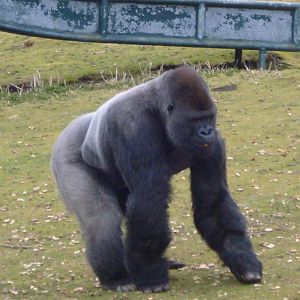
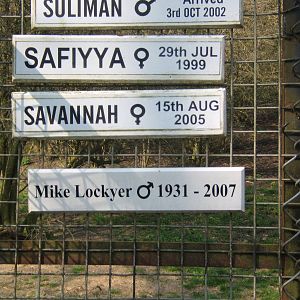
Incidentally, Port Lympne lions(the males) don't all have complete belly manes- even their (ex?) breeding male Suliman direct from Rabat Zoo had a noticeable gap- more like a 'grade 2' lion in the old ranking system!
No idea for most of them - many of those species have been there a while. The Bantengs they have I think may have been another PL job; and I've a feeling that Chester's Pere David's Deer came here (though West Mids already had the species). I think some of the Philippine Spotted Deer are Chester animals too.
So how many Water buffalo approximately do West Midlands have, and when did they arrive? Did they definitely come from Port Lympne? I wouldn't be surprised if they arrived when Damien Aspinall took over, many of the large herds and multiple groups of species decreased in size I guess when the park had to become financially viable. Looking back, the number of tigers John Aspinall used to hold at any time was ridiculous, with hoofstock though it never seemed overcrowded....
the Longleat and Africa Alive water buffalo definitely don't look like the Port Lympne animals.
West Mids certainly have at least 6, looking at my photos from the weekend.
They were definitely from Port Lympne and I believe came for just the reason you suggest - it was when Damien Aspinall was having to save/make money fast after taking over.