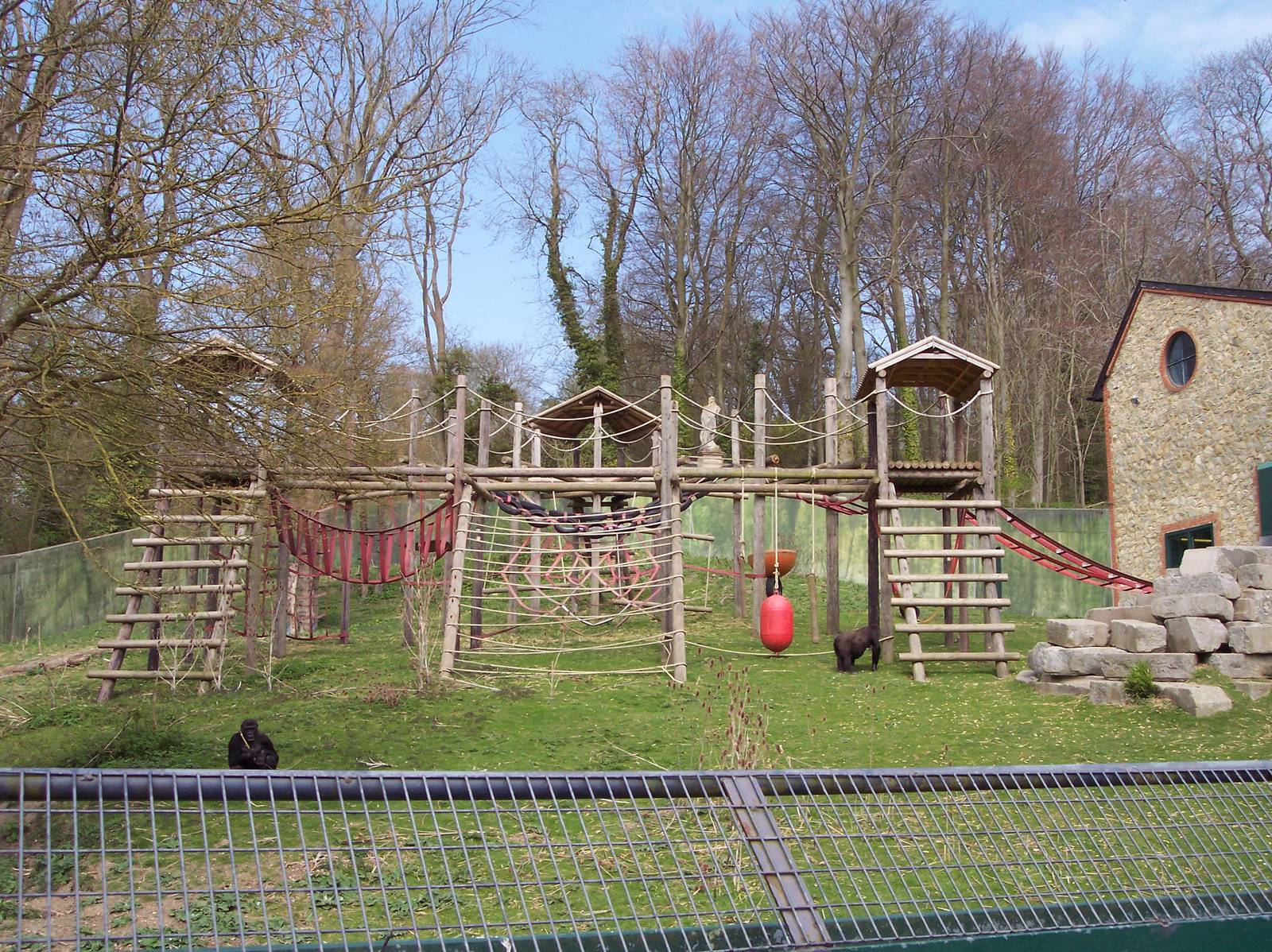
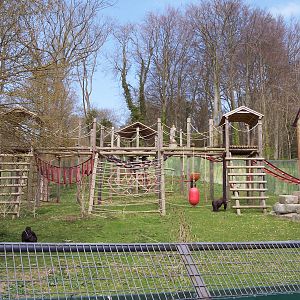
About half of the one acre Garden of the Apes, adjacent to Palace of the Apes. This shows the large climbing frame that they have to play on. April, 2009
About half of the one acre Garden of the Apes, adjacent to Palace of the Apes. This shows the large climbing frame that they have to play on. April, 2009
You would probably use it more than the Port Lympne gorillas do. They all have masses of fancy climbing and play equipment in the outside areas but I rarely, if ever see them using it. It seems a waste of money.
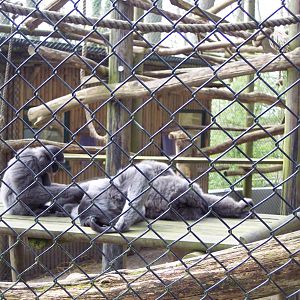
I think this seals the argument that they prefer the cages. This open area even has a decent tree canopy covering most of it yet (from what I've heard and seen on my visit), they scarcely use it.
It doesn't have many trees, just one or two in the actual enclosure itself(the others are outside the wall)
There are young Gorillas in the group. While the babies tend to stay with their mothers, its the juveniles would be most likely to use the equipment. I'm sure they do occassionally.
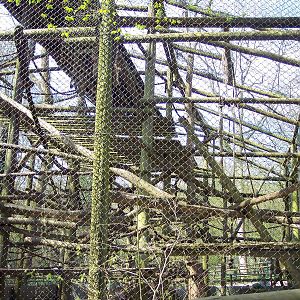
As many of you know by now, the Aspinall Parks work by function rather than immersion, creating enclosures more suited to the animals than the visitor. OK, so this outdoor enclosure, an acre or two in size is no CGF, but these climbing frames provide a stablising enrichment for the apes, the huge lawns allow them to pick and eat to their hearts content, and the ironic thing is they only really use this at feeding time: They soon go back into their covered enclosure, which shows just what they prefer. Not every enclosure has to be a recreated rainforest of hotwire and fake rock, and I infact put Howletts and Port Lympne above other zoos I've visited like Chester and London who set to make their exhibits naturalistic.
These parks still very much feel like a private collection and some of it needs updating urgently, having said that the Gorilla set up is impressive and am grateful to be able to have seen this.