That's a dangerous assumption. You don't know that it came from a rescue centre. The RSCC publicised the fact it's Sun bears were rescued, and they contibuted to in situ conservation. It's not enough to then give them the benefit of the doubt every time they import something.
And zoos did have to start somewhere. As did many institutions. But, for example, if a court in South London brought back hangings, I wouldn't be too pleased if people started defending it by saying 'well, the judicial system had to start somewhere'.....we have left the era of importing something just to add it to your collection, or at least I thought....
It is a valid point that fish, reptiles, amphibians and invertebrates are all still imported as wild-caught stock. I personally have more of a problem with behaviourally complex organisms such as carnivores or primates being wild caught in this day and age as opposed to one of the above classes.
It's hardly dangerous, that's where all their other wild caught animals came from so I just put two and two together. I don't think they'd really be able to import just for the sake of it. And why are so many up in arms about this? We hear "wild caught" and "came from Africa" when we're talking about chimps and gorillas all the time, is it just because someone wasn't ashamed to say they have an animal from the wild?
Really great animal. And I have nothing against the fact it is wild caught. I dont exactly know how many individual are kept in zoos around the world but I thing not too much and they are descendants from few individuals. To bring new individuals from wildlife is the best way how to make a long time succesful population in captivity. If anybody can pay money and can shoot antilope, buffalo or almost anything else in many places in Africa why not to pay money and bring it to UK?
For starters, chimpanzee and gorilla individuals who were wild caught are almost entirely animals that have lived for decades, who were captured during a different era in captive animal management. I don't think it is valid to compare wild-caught animals from the 1960s with an animal caught in 2009.
The howletts gorillas that originated from central west Africa in the 1980s were orphaned, and linked in with funding for in situ conservation.
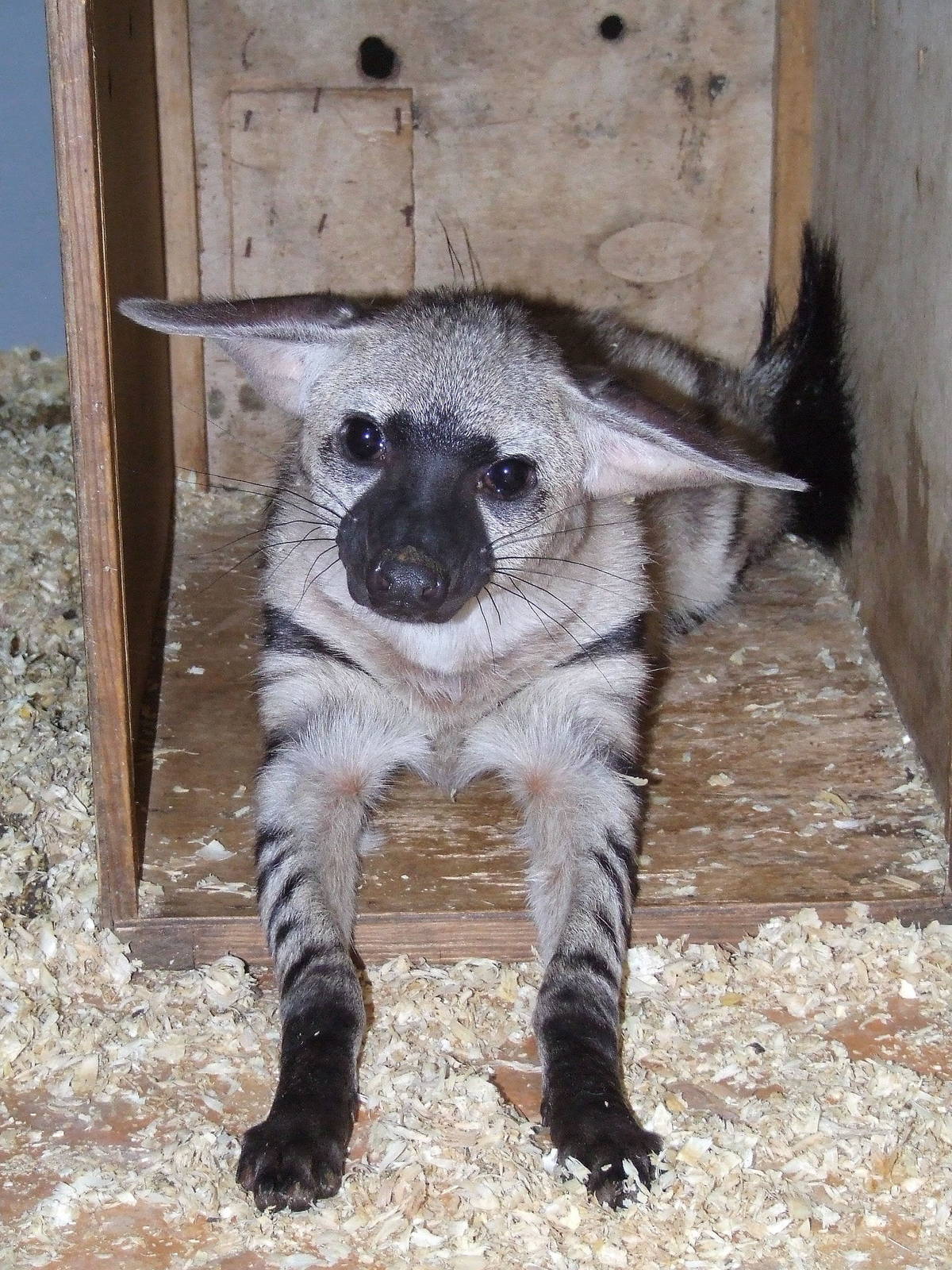
I would say that nowadays, wild-caught mammal acquisitions are only acceptable as part of coordinated conservation inititatives where there is an overwhelming benefit to in situ conservation from starting an ambassador ex situ programme in accredited zoos. For example Durrells Madagascar expedition, the Owston's palm civets and other cambodian/vietnamese rescue centre stock etc. This is different. Unless RSCC/EAZA are about to announce that the Aardwolf is in need of such a programme. But nobody is arguing that point here as no such announcement has been made. I don't think it being a 'fine looking animal' really justifies capture from the wild. If, indeed, it has been wild caught.
As for the argument about shooting parties in Africa, the same argument was put to the Australian government about its culling of pest parrot species that were of value to the european pet trade. Two wrongs don't make a right. However disgusting I find breeding for hunting in some African countries (and US states), with the colonial land ownership system still largely in place across sub-saharan Africa, it has been one of the unlikely saviours for a number of endangered antelope species. That does not mean that we should start importing wild-caught mammals again unilaterally whenever a collection decides to. That, to me, IS a dangerous step back to being completely unjustifiable to the anti-zoo lobby. Owston's palm civets/ sun bears are an example of good practice in bringing wild-born stock to european collections, this however is not.
I'm not exactly a fan of wild caught animals myself, but assuming it hasn't come from a rescue centre is just as damaging as assuming it has! Truth is you don't know, so in my eyes it's very wrong to assume the worst! Same goes for the Sun Bears!
Also there is the consideration of the numbers in other zoos around the world, how many are there? From what I've read on this thread not many, so how inbred are the captive animals? Surely, if they do want to increase the numbers in captivity the odd WC animal is beneficial to the gene pool?
Well you could use that argument for many species. Lets get some Ukari monkeys, Marbled cats or Proboscis monkeys from the wild then!
What is the point if they are least concern? Will 4 animals be enough or will we need to keep taking more? And at what point will they generate funds for conserving this relatively common species in the wild? And what is the point of generating such funds when there are conservation needs much greater for a number of wild dog species?
Well you could use that argument for many species. Lets get some Ukari monkeys, Marbled cats or Proboscis monkeys from the wild then!
What is the point if they are least concern? Will 4 animals be enough or will we need to keep taking more? And at what point will they generate funds for conserving this relatively common species in the wild? And what is the point of generating such funds when there are conservation needs much greater for a number of wild dog species?
As I said, I don't know if he's raising money for them - he does for the Sun Bears so I got caught in your trap and ASSUMED he would be (forgetting for a moment they are listed as least concern)!
What is the point? Well the fact that they were WC was met with some disdain on here, and of course the ASSUMPTION they were trapped specifically for the RSCC was also met with some disdain (even though that was ONLY speculation) - so now you're telling me you see no point in a captive breeding program and they might as well be taken from the wild for zoo exhibits? Personally, for me, I'd rather animals be CB than WC, but in order to do that a small number need to come from the wild (whether trapped or rescued for whatever reason). Unfortunately that is a sad fact whether it's for the zoo system or for the pet trade!! (which these animals are NOT destined for before anyone begins to speculate!)
They are after all stunning looking animals, and it would be great to see more of these animals in zoos. But preferably CB animals .
No, of course I don't think they should be taken from the wild. It's not an either/or situation, between captive breeding and taking from the wild. We don't have a right to exhibit whatever species we want in captivity. If they die out in captivity, but with no pressing conservation need in the wild, I don't believe a population needs to be maintained in captivity.
Thing is johnstoni - it's not up to YOU what zoos keep is it? Whether you believe it's necessary or not the REALITY is zoos are going to keep them if they want, they're stunning and unusual. Just like in the pet trade, whether you think it's ethical or not, people are going to keep primates, nothing you can do about it, that doesn't mean they're bad and it doesn't give you the right to to slate them on a public forum! I've seen legal action threatened on forums for lesser things than have been said about the RSCC on here!
Criticism - fine, but what I've seen on this forum is just speculative bi**hing.
Of course it's not up to me, but this is a forum for discussion about zoological collections. Unfortunately, you won't always hear what you want about a collection you like, but I'm afraid you have to respect other people's opinions when entering into debate with them.
I understand that you like this collection, but suggesting that critics have not had the privilege of seeing the collection, or speaking to those who run it or work there, serves to undermine the debate. You present no more facts than anyone else, however the root of these debates stems from the experience people have had from seeing the collections, and the analysis for others of photographs from those visits.
Well-run forums such as this one are ultimately responsible for the content found within them. If there was an issue of libel or slander then moderators may (and probably will, now you've rather cleverly threatened legal action on the RSCCs behalf) choose to step in. That's their role. Forum posters have a responsibility to make sure it is clear they are expressing personal opinion. Speculating is not libellous unless people attempt to present it as fact. I think this has been a mature, serious debate about a significant nascent collection that everyone wants to do well, given the rapidity of species acquisition onto a relatively small site (1.5 acres?) before expansion commences. I think you're comments have been designed to personally undermine those criticising the RSCC, and depict your perspective as a superior or more informed one.