Many species of animals will breed in completely unnatural environments. As long as the animals basic requirements are met, they will breed in the most sterile enclosure. We all know about dogs, cats, rabbits, rats and primates in laboratories and animal houses. I breed snakes in relatively small plastic tubs, and people have bred fish in buckets. As long as their basic needs are met, it's not too hard to breed them.
If a zoo has an endangered species and they have an environment that the animals readily breed in, then the zoo would be foolish to make changes. Especially if they are involved in a re-introduction program. However, these facilities should be off-display because the enclosure carries no educational value to the general public, and because the public may upset the animals and impair breeding efforts.
The reason for having an enclosure that is as close to replicating the natural environment as possible is purely to give the public a visual impression of the animal's preferred habitat. Yes, you can put up signs and graphics and static displays, but it's well-known that a major proportion of zoo-goers don't read signs or labels. Even for those that do read the labels, if the label that says the animal lives in dense forests by a river, and the animal is in a concrete and metal cage with little vegetation and a waterbowl, when they get home and think about the animal (or look at their photos) what will they remember? What was written on the label or what they actually saw? For example, the malayan tapir exhibit at RSCC - it doesn't matter what the label says, people will go home believing tapirs live on mudflats, or spend their days wallowing in mud like pigs and hippos.
One of the greatest threats (if not the greatest threat) to wildlife is the loss of their habitat in the wild. How will we convince people that habitats are worth saving when they see animals surviving in cages that do not actually represent the wild? The Malayan Tapir, Sun Bear and Clouded Leopard all come from dense rainforests, but the exhibits for these animals at RSCC do not portray dense rainforests, so the public might not be inclined to contribute to rainforest conservation because these animals do not look like rainforest denizens.
Many of the RSCC exhibits should be off-exhibit areas, and it seems that most people are in agreement of this. However, those that insist that this tiny little zoo is adequate are perhaps more concerned with the breeding record that can occur in "ugly cages". It is true that a zoo like Howletts has been a pioneer in the success of reproducing many endangered species, and the RSCC might also be vital to breeding rare animals in the future, but the education value is worthless when animals are kept in substandard exhibits.
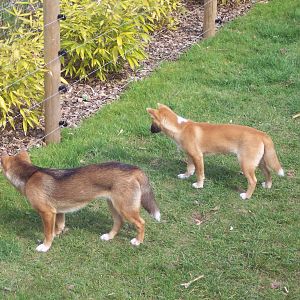
For example: a small group of coyotes are kept in a half-acre exhibit, and by creating a naturalistic environment at the Northwest Trek wildlife park the public are educated on the fact that sometimes coyotes spend time in forests rather than always on the open plains. All of the tiny signs around an enclosure mean nothing in comparison to the exhibit itself:
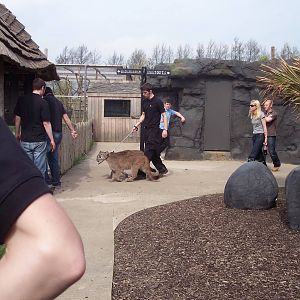
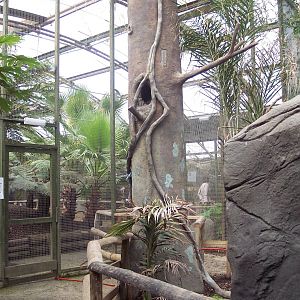
I could provide photos from excellent puma exhibits at the Arizona-Sonora Desert Museum, Oregon Zoo or Oklahoma City Zoo...but then someone will undoubtedly point out that I'm comparing the RSCC to big city zoos. Instead here are a pair of images from a conservation facility in northern Florida. Wouldn't it be great if the RSCC could come up with an enclosure that was even remotely acceptable in the 21st century zoo industry?:
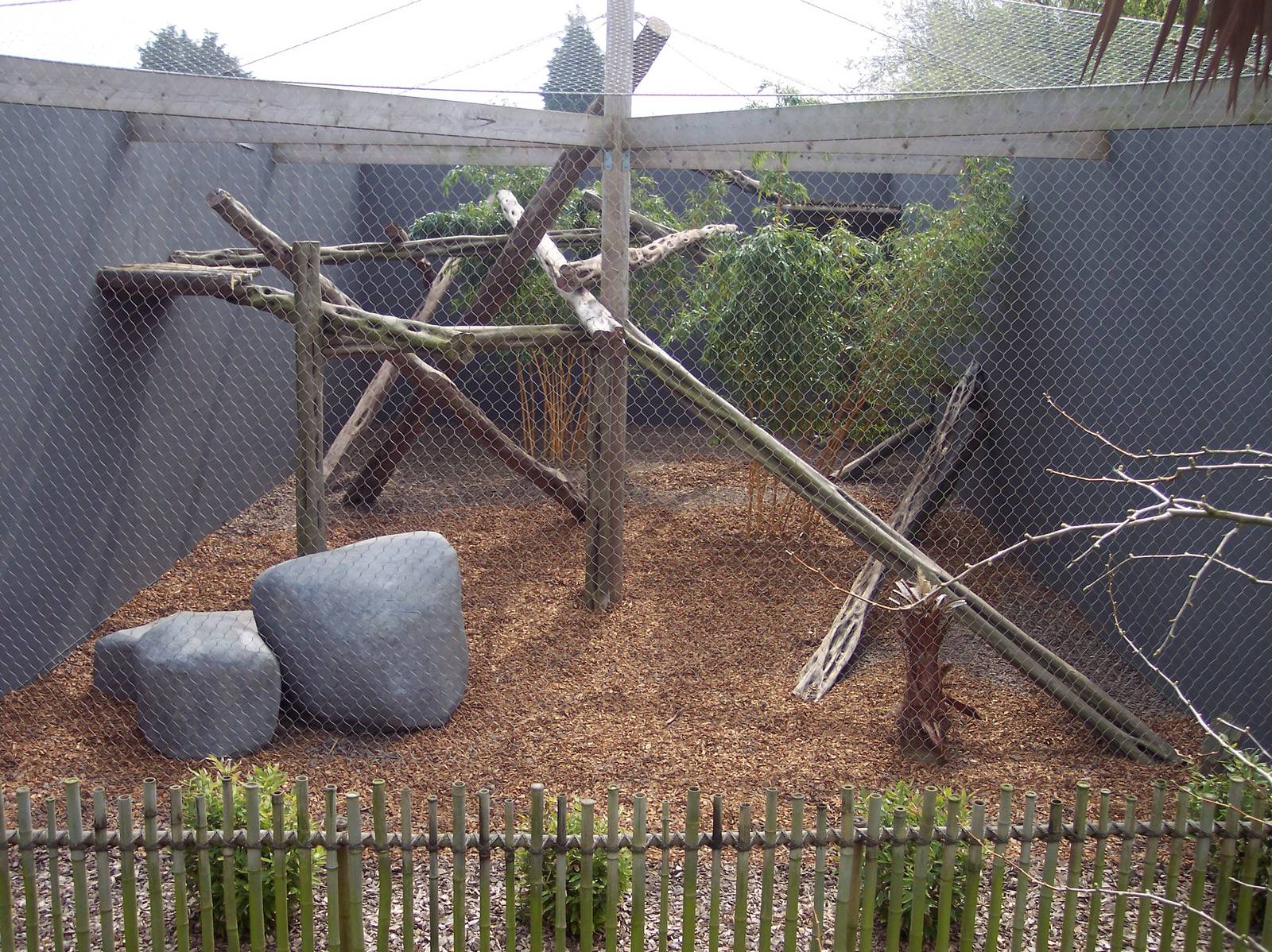
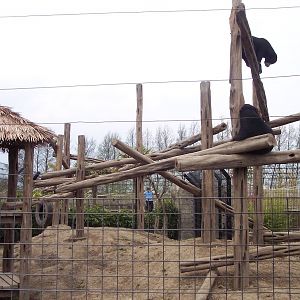
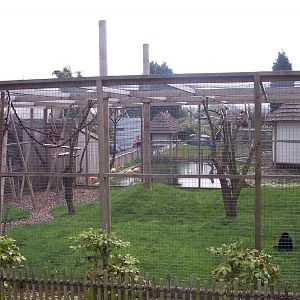
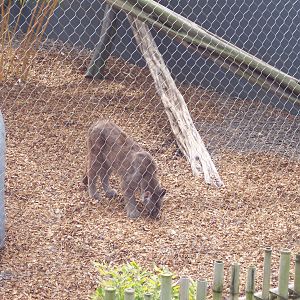
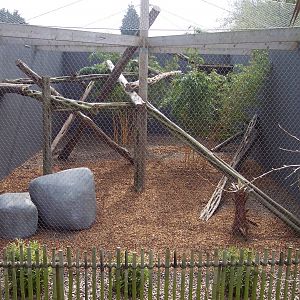
All interesting replies. I must admit that, looking at this photo, the enclosure does seem worse than when I saw it personally. I have a few more pictures to up-load at different angles which may show it in a slightly better light.
Many species of animals will breed in completely unnatural environments. As long as the animals basic requirements are met, they will breed in the most sterile enclosure. We all know about dogs, cats, rabbits, rats and primates in laboratories and animal houses. I breed snakes in relatively small plastic tubs, and people have bred fish in buckets. As long as their basic needs are met, it's not too hard to breed them.
If a zoo has an endangered species and they have an environment that the animals readily breed in, then the zoo would be foolish to make changes. Especially if they are involved in a re-introduction program. However, these facilities should be off-display because the enclosure carries no educational value to the general public, and because the public may upset the animals and impair breeding efforts.
The reason for having an enclosure that is as close to replicating the natural environment as possible is purely to give the public a visual impression of the animal's preferred habitat. Yes, you can put up signs and graphics and static displays, but it's well-known that a major proportion of zoo-goers don't read signs or labels. Even for those that do read the labels, if the label that says the animal lives in dense forests by a river, and the animal is in a concrete and metal cage with little vegetation and a waterbowl, when they get home and think about the animal (or look at their photos) what will they remember? What was written on the label or what they actually saw? For example, the malayan tapir exhibit at RSCC - it doesn't matter what the label says, people will go home believing tapirs live on mudflats, or spend their days wallowing in mud like pigs and hippos.
One of the greatest threats (if not the greatest threat) to wildlife is the loss of their habitat in the wild. How will we convince people that habitats are worth saving when they see animals surviving in cages that do not actually represent the wild? The Malayan Tapir, Sun Bear and Clouded Leopard all come from dense rainforests, but the exhibits for these animals at RSCC do not portray dense rainforests, so the public might not be inclined to contribute to rainforest conservation because these animals do not look like rainforest denizens.
Thank you for eloquently stating an argument I have been attempting to make for weeks on this site, only to be bashed by others as a "rude American, "annoying" etc. This is not an America vs UK argument. I would suggest the defenders of these spartan exhibits travel to a neutral country--the Netherlands--to see a place where the value of exhibiting animals in naturalistic environments has widely taken hold. And even in the Dutch zoos that use a more "utilitarian" style of exhibition (like Apenheul), the exhibits and layout are clearly created with DESIGN INTENT. There is thought and good taste put into creating the environments housing the animals and the way the public is treated. This is in contrast to the random assemblage of cheap architecture and illogical groupings of animals that characterize a number of the UK facilities so strongly championed here (RSCC, Howletts etc). These facilities are clearly the conceit of private collectors and lack even the vaguest understanding of what good educational exhibition is about.
Thank you for eloquently stating an argument I have been attempting to make for weeks on this site, only to be bashed by others as a "rude American, "annoying" etc. This is not an America vs UK argument. I would suggest the defenders of these spartan exhibits travel to a neutral country--the Netherlands--to see a place where the value of exhibiting animals in naturalistic environments has widely taken hold. And even in the Dutch zoos that use a more "utilitarian" style of exhibition (like Apenheul), the exhibits and layout are clearly created with DESIGN INTENT. There is thought and good taste put into creating the environments housing the animals and the way the public is treated. This is in contrast to the random assemblage of cheap architecture and illogical groupings of animals that characterize a number of the UK facilities so strongly championed here (RSCC, Howletts etc). These facilities are clearly the conceit of private collectors and lack even the vaguest understanding of what good educational exhibition is about.
Reduakari, I think only one or two people are championing this exhibit (I think it's poor by the way). The main gripe i have with this debate is that exhibits from obviously superior zoos are used in comparison with a frankly poor zoo (RSCC) or a zoo which for years has strived to have a different ethos to the rest (Aspinall). But ive posted those thoughts in another thread.
The Aspinall parks are stuck in a place between a visitor-friendly and private collection. Most of the newer developments are what you could say "modern-zoo" (African Safari trucks etc) so I think they themselves see they need to be more visitor friendly.
My philosophy on zoos (for lack of a better word) is that animal care is the priority, followed very closely followed by education. This is why I can see the plus side of the Aspinall enclosures, however I much prefer enclosures which allow animals to perform their natural behaviour in a somewhat natural setting (a fence in the background won't bother me etc) and is good for visitors (which is why Chester's Realm of the Red Ape is the best exhibit i've seen in person).
p.s. I'm not one of the ones who believe you're a "rude american". I really value your opinion and you seem to be one of the most intelligent posters on this forum.
I would suggest the defenders of these spartan exhibits travel to a neutral country--the Netherlands--to see a place where the value of exhibiting animals in naturalistic environments has widely taken hold.
And I would suggest that you travel to see this exhibit before judging it. I held the same opinions as you of this place before seeing it however I was really rather impressed overall. I'm not saying this exhibit is amazing, far from it but it certainly is not as bad as some on this site are saying.
My problem at this web site is that I am not fluent in English and cannot express myself as detailed as I would want to. I will never be able to intellectually participate the way you "natives" do. Nevertheless, I will throw in some more thoughts of mine in this thread:
I notice that some of you would accept a cage like this if it was off-exhibit - because the animals breed in it. I totally disagree. As many of you mention, animals will often breed under whatever conditions. (Actually - so will humans. People bred in Auschwitz and in Stalin´s Gulag...). In other words: breeding is not an automatic sign of well-being.
Now, I am not a zoologist and I have no degree in ethology, but I am absolutely sure that no big cat can live a happy life in small cage like this - and this is the only relevant argument for me. The argument that an endangered species would breed in this awful cage holds no value to me. Some of the endangered cats (and many other species) now exist in such small numbers in the wild that they no longer have any importance for evolution. Saving a species only for the reason that some people will find pleasure in being able to watch the animals in question in zoos, is not good enough for me. I want more than that. If many of the big cats will soon go extinct in the wild, I want the big cats kept in captivity to live good lives. This they cannot do in small cages like this one.
Dan, I don't think they're even classified as big cats. They're not much, if at all, bigger than Ocelots. Yes, this cage needs more enrichment and climbing stuff, but (personally) I think it's an ok size. Do you dislike it because of it's size?
Hi ashely-h!
Ah... "big cats", "small cats" - again, I am not fluent in English and I know that this is a problem when I debate here at ZooChat...
But still: Yes, size (and height) is my biggest complaint about this enclosure. I would not think that an ocelot would live a good life in it, either. And of course, stubborn as I am, I always take the opportunity to refer to this thread of mine: