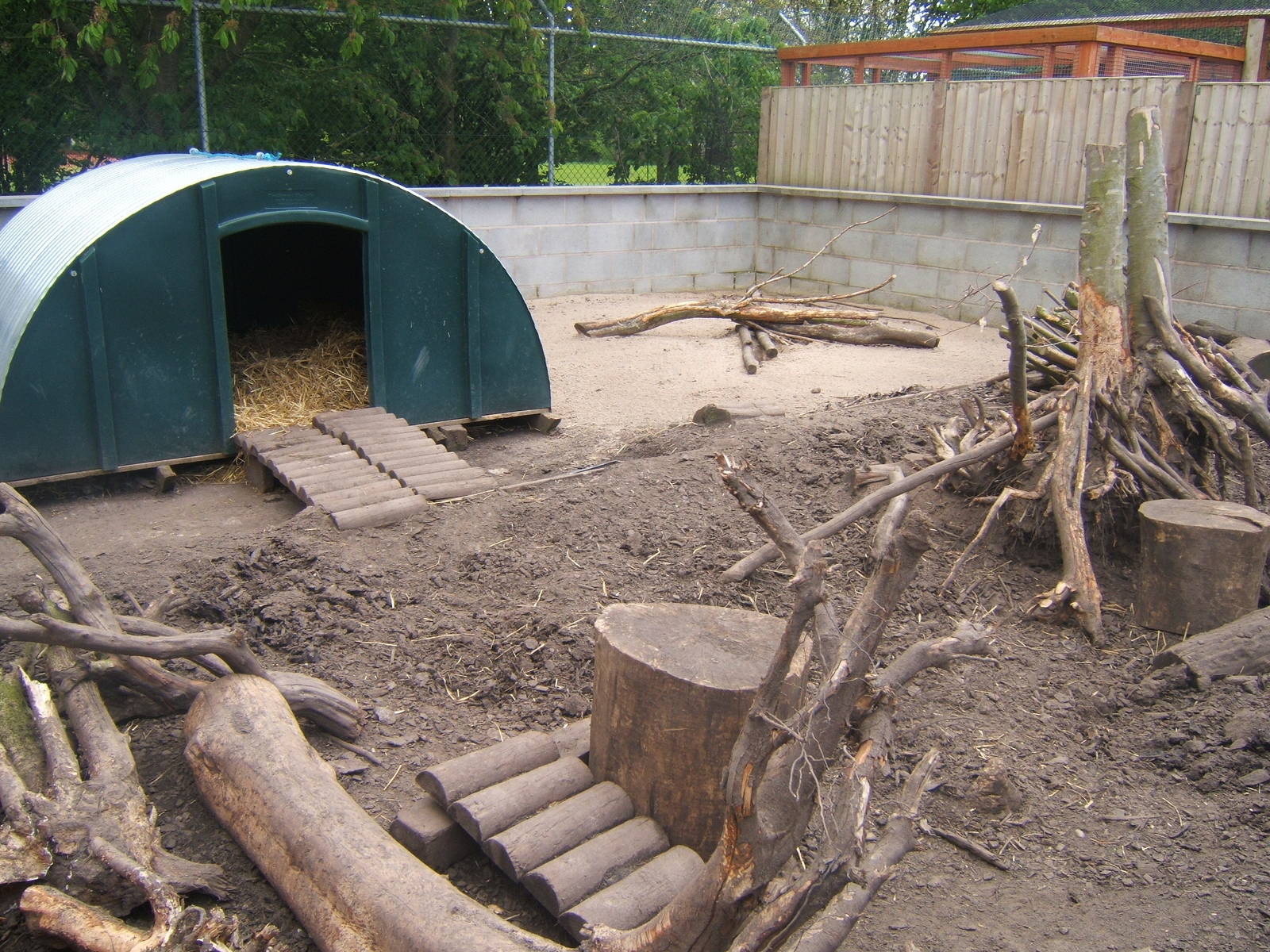
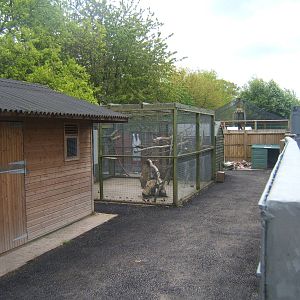
What this picture shows remains deeply unattractive.
I agree that students need to learn the simple things keepers can do to make an enclosure into an attractive exhibit.
Perhaps this exhibit will be improved by the students as part of their curriculum as time goes on. We can only hope so.
I guess I wonder when Taun writes ... for what purpose?
What I mean is that this picture clearly shows that the animal is catered for in terms of suitable substrate and enrichment with out the frills that are purely created in my mind to justify the existence of zoos in some people minds.
Yes there could be a fancy barrier so that no one sees it or some bushes to give the enclosure some green but it’s not needed to make this exhibit better for the occupants.
If folks wish to be satisfied with basic, rudimentary enclosures that meet the needs of the animals and offer up little of anything else then that is their choice. Let's put all manner of exotic animals in primitive bunkers! To quote David Hancocks, who famously labelled British zoo fans as "apologists" (sorry Maguari, as I know that you do not like that phrasing): "The validity of the zoo experience hinges on the functional AND visual integrity of the zoo exhibits". We could go on all day here, but the fact remains that some people think that this porcupine enclosure is perfectly fine while just as many others think that it is an embarrassment.
"The validity of the zoo experience hinges on the functional AND visual integrity of the zoo exhibits". We could go on all day here, but the fact remains that some people think that this porcupine enclosure is perfectly fine while just as many others think that it is an embarrassment.
As an enclosure it is absolutely fine. As an exhibit it could be better. But for most of the year, this isn't an exhibit, as there is no public access.
Actually my main gripe as an exhibit would be that there's no viewing into the den - this is where most Hystrix spend most of their time!
I said the enclosure was half-decent, not world-class or world-beating. I still stand by that statement, as Maguari said, "as an enclosure it's fine, as an exhibit there's room for improvment".
Seriously, I've seen far worse in the UK and it's nice to see a non-ABC animal get some thought put into its needs when an enclosures constructed.
Finally, out of interest, does anyone have examples of other decent/better Crested Porcupine enclosures. This is not throwing down a gauntlet, I'm just curious to see what's been done for the species elsewhere (as you gather, they sometimes get a bum deal in the UK).
Sometimes I wish folks would do a little research about a location before jumping to all manner of conclusions.
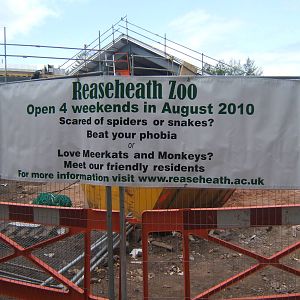
Reaseheath is primarily a horticultural college, the zoo is a fairly recent addition and its aim is to teach students about animal husbandry. Similarly they have kept battery hens and breeding sows, the purpose being to educate how best to care for animals in a real-world, agricultural environment, even if it isn't everyone's ideal. Opening to the public for a limited number of days is an afterthought, and as Maguari says, this it isn't an exhibit, it's more an example of how many porcupines are kept.
Whether Reaseheath should be setting an example with aesthetically attractive enclosures is a different debate.
The horticulture at Reaseheath is primarily function-based, and by that I mean forestry, food crops (the agricultural facet), countryside and utility management. They're not really specialised in the types of planting we'd expect to see in "naturalised" exhibits or in the use of exotic species. Students wishing to specialise in those areas would be located elsewhere.
That's not to say that they won't encompass those subjects in relation to animal husbandry, or perhaps run a joint course with another university. It certainly wouldn't be a bad thing.