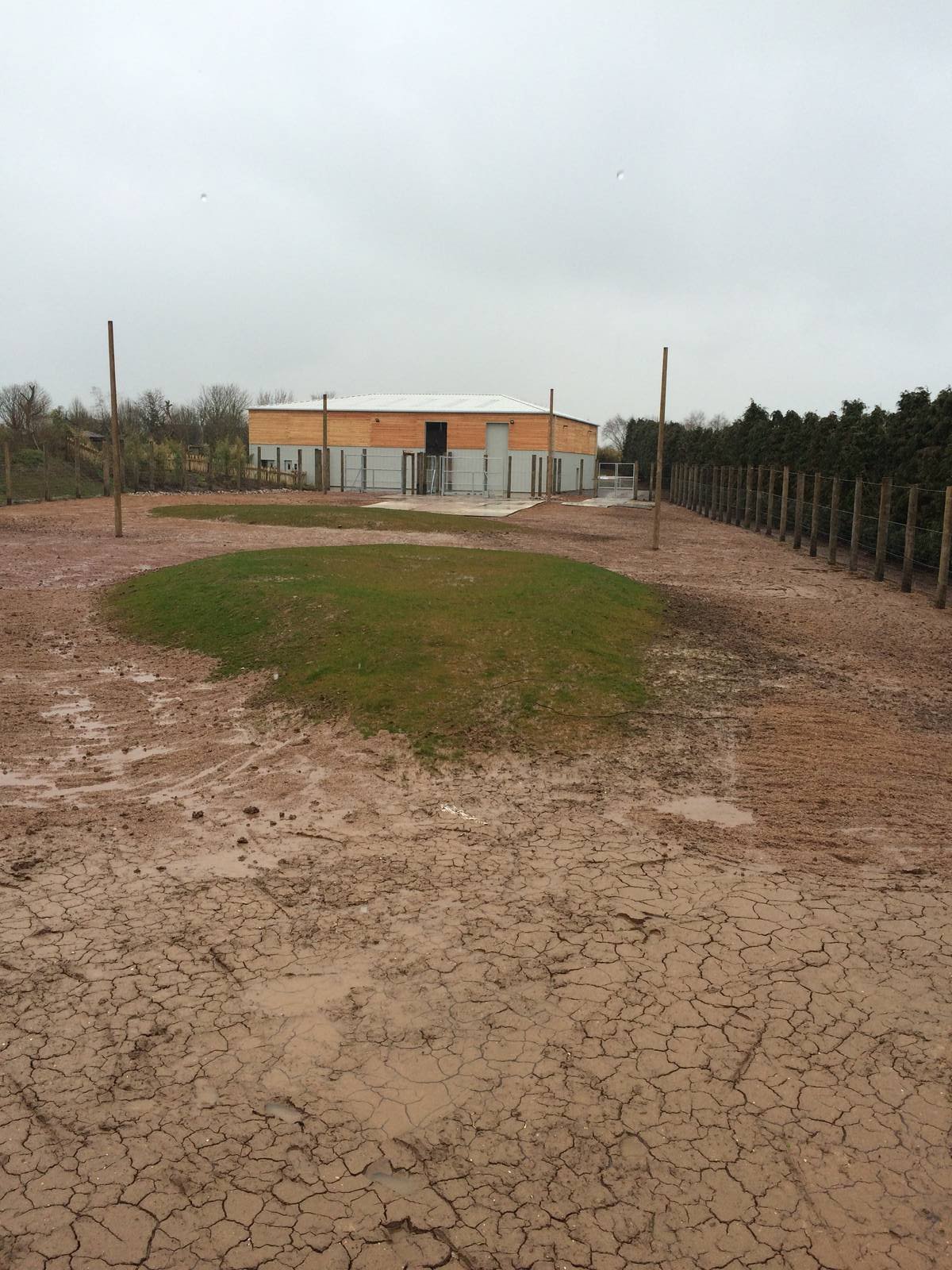
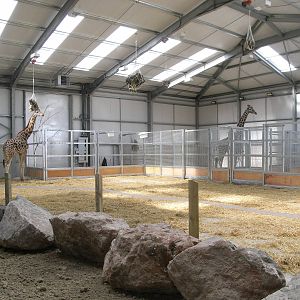
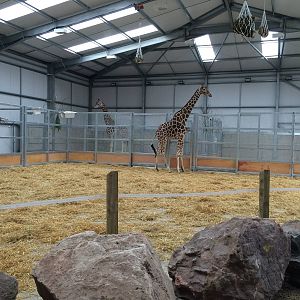
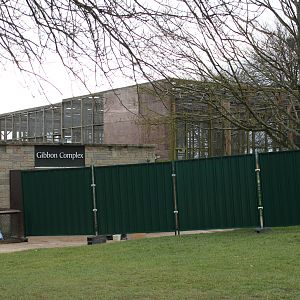
It was taken during development. It shows the house is considerably larger than the old one, 3 or 4 times the size in fact but the enclosure is only 30-40% bigger. A significant improvement on what was there before, none the less.
Interesting photo- not just the Giraffe area but the whole Zoo. It does give a proper comparison between the old and new Giraffe areas. You can see the piece of unused ground at the end of the new paddock too- I couldn't quite understand why the enclosure ends in a point where it does, rather than extending into that bit too. Maybe its been earmarked for something else.
The planned new Ape enclosures( if they get built )will eventually encompass all the section of the Zoo in the lower left quarter and the two current Chimp houses + the Bonobo and the Gorilla Houses would all (finally) disappear.
I just clicked on this link and it showed up. Chlidonias, here's your chance to see the layout of Twycross Zoo. The several semi-circular enclosures are mainly the Ape house buildings, some of them being thirty or more years old now and much in need of the redevelopment that was recently announced.
yes, my first thought on seeing the photo was that from above the zoo has a very "orderly" sort of look; "functional" might be another way of expressing it. The numerous paddocks and other enclosures which seem largely bare of anything but grass and maybe a couple of trees really emphasise this. (Of course some of them might just be lawns?).
You'll find the open grassy spaces are nearly all lawns, not paddocks. The Zoo site was originally open fields with little mature tree cover except around the House and Driveway and near the main A444 road boundary. It grew up piecemeal from its early development of mainly wooden-framed monkey enclosures, brick and concrete Ape enclosures (with grass outside areas) plus rather basic enclosures for e.g. Zebra, a baby Elephant, Giraffes etc. On the plus side they were one of the first places to keep Apes and Monkeys on grass.
Most of the enclosures were(and still are) on quite a small scale and dotted rather haphazardly about the large open lawns. The Ape enclosures are all rather unsightly brick buildings and because the flat site has never really been landscaped properly and there has been no significant tree planting, it is still pretty much as open as it was when it started.
The £55 million development plans could( or will?)finally see major developmental changes here though.
All of the exhibits the zoo are adding, and have added over the last couple of years have had considerably better landscaping so hopefully the red brick and box cages days are numbered!
My only concern with the future direction is the sheer scale of some of the new exhibits. Whilst great for the animals of course, things like Chimpanzee Eden and the Gibbon Complex are taking up huge amounts of space (4, 5, 6 x the space the existing enclosures for these animals take up), if this trend continues as they look to replace other enclosures after Kingdom of the Apes in fully complete the zoo will run out of space within the existing boundary ridiculously fast.
My only concern with the future direction is the sheer scale of some of the new exhibits. Whilst great for the animals of course, things like Chimpanzee Eden and the Gibbon Complex are taking up huge amounts of space (4, 5, 6 x the space the existing enclosures for these animals take up), if this trend continues as they look to replace other enclosures after Kingdom of the Apes in fully complete the zoo will run out of space within the existing boundary ridiculously fast.
The planned Ape developments will/would certainly use up that lower quarter of the Zoo completely.Its another reason I don't like watermoats, they use up a lot of space( though I would prefer the area they use given over to the animals' areas, rather than actual smaller exhibits). You are correct that other developments on a similar scale would soon use up a lot of the existing site very quickly, though there are the big open lawns which could be put to better use perhaps.