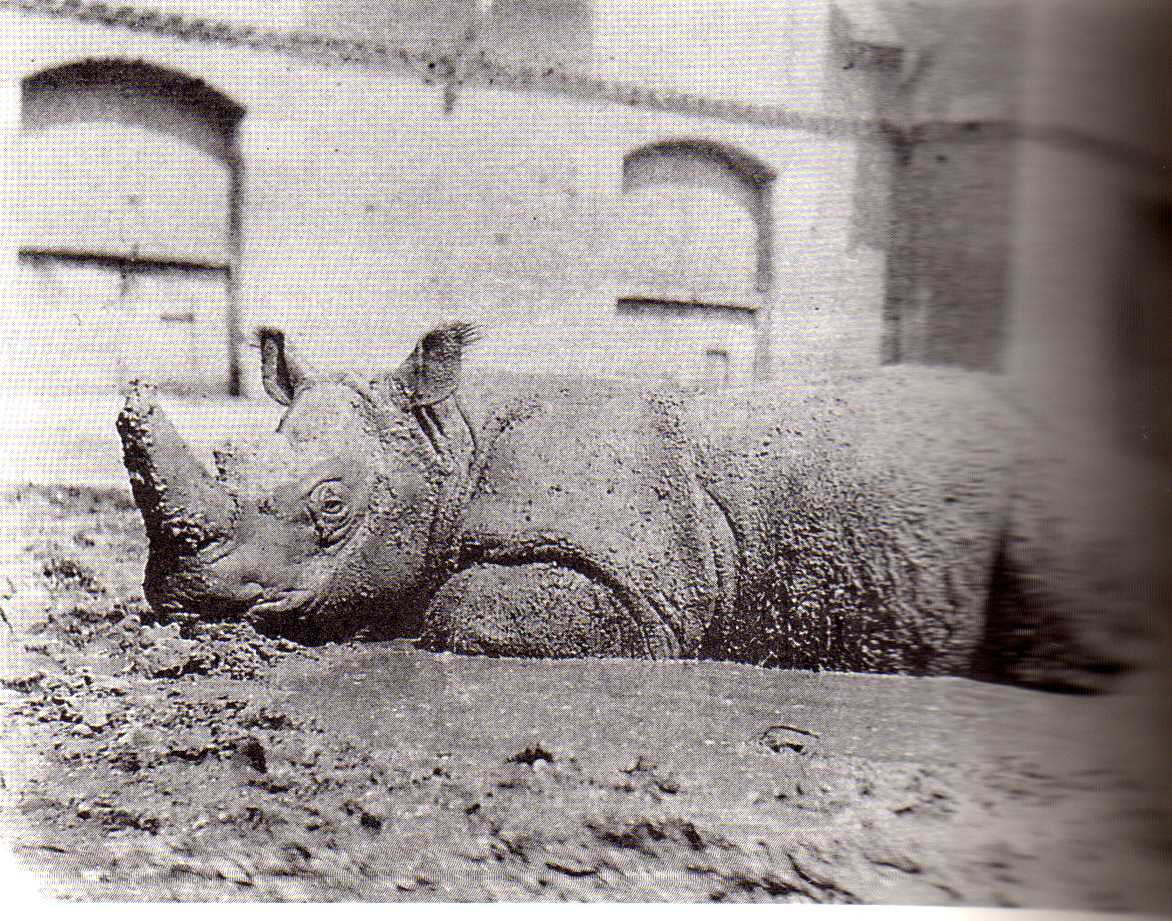
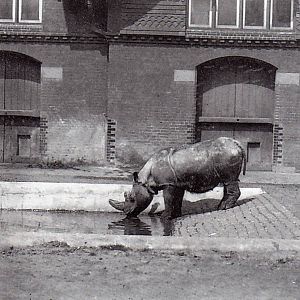
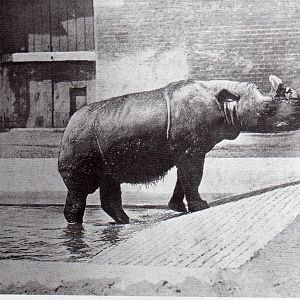
Jackson enjoys his mud bath. It was very unuassly for a zoo in the times, to offer rhinos a water pool or a mudhole, but this is very important for them.Maybe its one resaon, Jackson and Begum lived that long at the zoo.
Jackson enjoys his mud bath. It was very unuassly for a zoo in the times, to offer rhinos a water pool or a mudhole, but this is very important for them.Maybe its one resaon, Jackson and Begum lived that long at the zoo.
Jackson enjoys his mud bath. It was very unuassly for a zoo in the times, to offer rhinos a water pool or a mudhole, but this is very important for them.Maybe its one resaon, Jackson and Begum lived that long at the zoo.
possibly the sumatran rhinos tried to create one themselves after rain, so the staff realised this was an essential part of their behaviour and helped by giving them a permanent muddy area.
I always find it fascinating how sumatran rhinos in modern facilities have died after a couple of years yet these went on for two or three decades. Perhaps zoos should revert to 19th century husbandry when keeping these animals.
its possible some of the more recent Sumtrans rhinos in captivity have been very old animals, hence their short life in zoos. The female 'Subur' at Copenhagen in the 1960/70's era lived a good long time but the one at Basel (Betina) imported at the same time lived only a couple of years.
it is interesting that somehow London Zoo also got the knack of maintaining them successfully all that time ago though, especially as most of those imported into the USA about a hundred years later were far less successful.
Different era different style of management of the species,when London kept them it was more about the keepers knowing the animals rather than how many qualifications the keeper has!!!
Different era different style of management of the species,when London kept them it was more about the keepers knowing the animals rather than how many qualifications the keeper has!!!
Possibly both of them were quite young animals when they were first imported?
It appears Port Lympne had rather bad luck in obtaining successive females which were both old individuals and subsequently died- they seemed to have no problem maintaining the (younger) male 'Torgamba' in good health until he was eventually repatriated.
I don’t know how old these animals were when they arrived at the zoo, but it seems likely that they were fairly young animals.
Digressing somewhat, a Sumatran rhinoceros was born onboard a ship in the Victoria Docks, London, on 7th December 1872. (Its mother was on route for America.) This calf did not live for long; it would be interesting to know what happened to it. Perhaps it is in a museum somewhere?