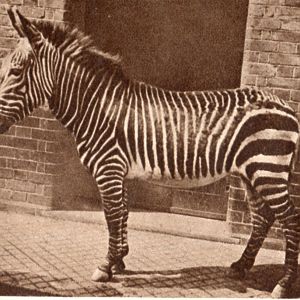
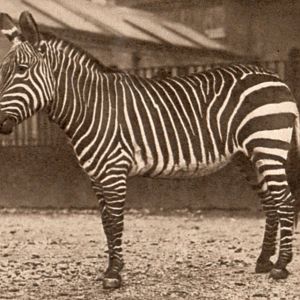
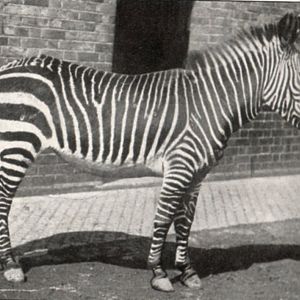
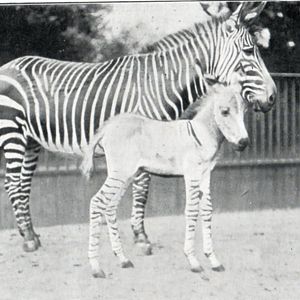
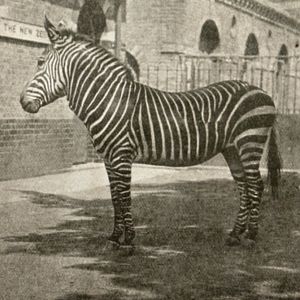
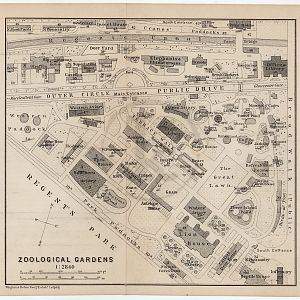
London Zoo has kept a male at the same time with two females, with the first mare for four years until she died in 1903, and with the second, from 1907 until 1909, he died in that year. The female was killed by order in 1930.
Don't ask me, why they never bred, maybe the stallion was not interested in both females.Equid stallions do not accept every mare. Another possibillty, the Zoo has not kept them together...
Amsterdam zoo has bred several times Cape Mountain zebras, the first London female was born there.
Don't ask me, why they never bred, maybe the stallion was not interested in both females.Equid stallions do not accept every mare. Another possibillty, the Zoo has not kept them together...
Amsterdam zoo has bred several times Cape Mountain zebras, the first London female was born there.
Interesting information. Perhaps in relatively small enclosures, keeping male and female together was difficult. So resulting in a lack of breeding. Hartmann's zebras can be very 'crabby' toward each other and maybe the Cape ones at London were similar.
I have an old postcard of a cape mountain zebra at Amsterdam Zoo, the enclosure was smaller than London, but in a similar stile.
I think, Hartmann Mountain zebras are not more crabby to other group members than the other zebra species. But some stallions can be very brutal to the mares, nevertheless how large the exibit is, so the Mountain zebra stallion at Wroclaw Zoo is a good example for that, they let them to the mare only for a short time to breed. In some cases, stallons have killed males. But not only zebras, other equids have done it also.
Interesting information. Perhaps in relatively small enclosures, keeping male and female together was difficult. So resulting in a lack of breeding. Hartmann's zebras can be very 'crabby' toward each other and maybe the Cape ones at London were similar.
I have seen at the Toronto zoo the male Grevy's zebra kepted apart from the mares and I am sure he is only put with them at breeding times.
There is a photo of him in the gallery alone in his own yard, the exhibit for them is quite large
Most Zoos I know keep the Grevy's stallions seperated from the mares and let them together only for breeding. This is the most common breeding behaviour of that species in nature, most Grevy stallions do live by themselfs in their own territory.
The stallions of mountain and common zebras live all the time together with some mares and their foals.
Most Zoos I know keep the Grevy's stallions seperated from the mares and let them together only for breeding. This is the most common breeding behaviour of that species in nature, most Grevy stallions do live by themselfs in their own territory.
The stallions of mountain and common zebras live all the time together with some mares and their foals.
Grevy stallions can be very rough with mares, particularly in confined spaces. As you said, in the wild the dominant ones each have a territory that the mares enter, get mated and leave again- so keeping them apart in captivity where there's only limited room is often necessary because of the excitable, violent chasing display of the male- though I think in big paddocks they can be okay together for longer periods..
Hartmann's are group animals but I have often observed aggressive biting and kicking between individuals of this species as if to create space between them- which is why I used the term 'crabby'.