Emus are absent from some of the bigger UK zoos (Chester, Colchester, Edinburgh) but with over 300 European zoos (including over 40 UK collections) keeping the species I wouldn't exactly call them a rarity!
Why do zoos insist on putting rednecks on sand - they are a forest species, not a desert species. Red Kangaroos would be better suited to this environment (and even then only with the addition of grasses and/or spinifex).
Why do zoos insist on putting rednecks on sand - they are a forest species, not a desert species. Red Kangaroos would be better suited to this environment (and even then only with the addition of grasses and/or spinifex).
While it's true that some places in Europe claim the subspecies rufogriseus and some fruticus, I'm not at all sure they're managed separately, and would be surprised if they were pure (Zootierliste treats them as a single population).
However you are correct that ZSL list theirs as M. r. rufogriseus - Bennett's Wallaby.
(they're still Red-necks though - because an M. r. rufogriseus is still an M. rufogriseus )
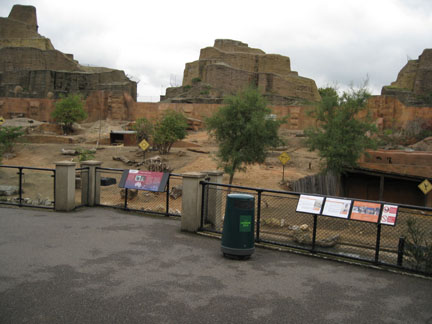
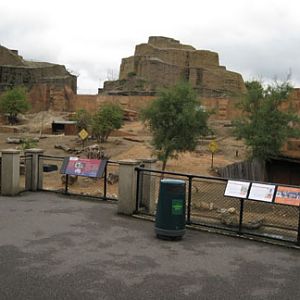
As I remember, it looked pretty good with the original setup; goats & sheep on the 'mountains' at the back, bears in front of them, pigs in front at ground level, with birds on the long pool at the front. Enclosures were small by today's standards, but could possibly have dividing walls knocked down to create fewer, larger units. Concrete bases could be covered with softer substrates, as has been done to create the Outback. I have a vague recollection that the mountain area is no longer structurally sound, and that's the real reason it's no longer in use. Barbary Sheep on the skyline are one of many things missing from today's London Zoo, along with the cry of the Fish Eagle & the barking of Sealions.
In the UK, besides Red-necked/Bennett's and Parmas you can see Agile Wallabies (Blackpool (and South Lakes?) ) and Swamp Wallabies (Edinburgh and South Lakes).
According to Zootierliste, South Lakes also have Tammar Wallabies - I've not been for a while so can't confirm this. There are also Yellow-footed Rock Wallabies on the continent, and some of these may turn up in the future.