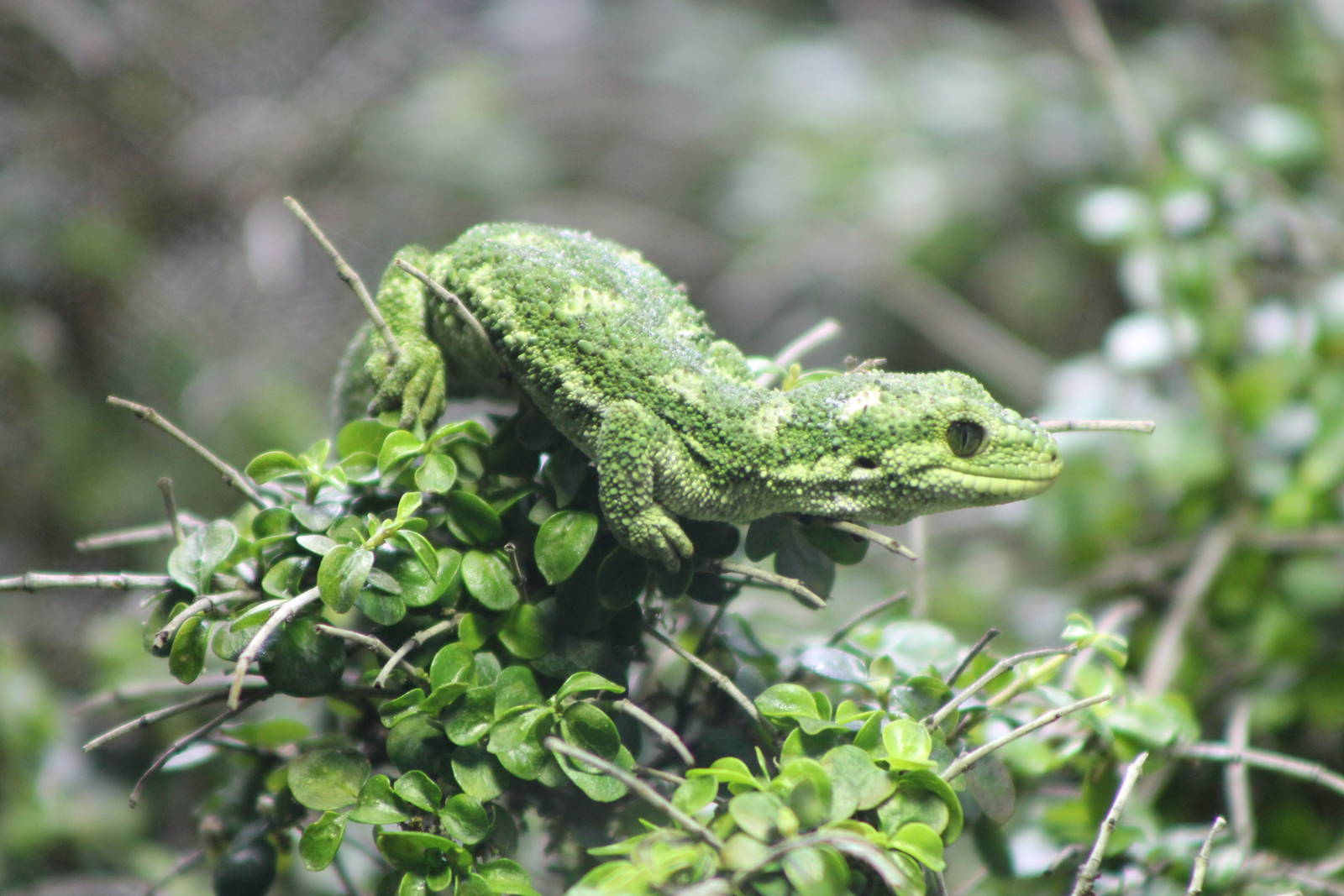
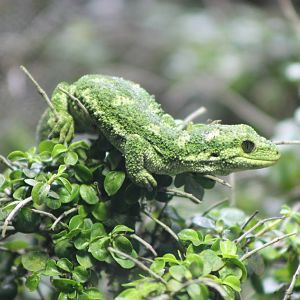
The photo's not the best, but the rough gecko is a fabulous species. There are two gecko genera in New Zealand: Hoplodactylus are nocturnal and act like "typical" geckoes, but the Naultinus are all diurnal, green, with prehensile tails, and creep around branches like chameleons. All the New Zealand geckoes are live-bearers.
This species is actually really rough-skinned (I'm not sure how well it comes across in the photo) and just looks bizarre if you're more used to the soft velvety skin of most geckoes.
The photo's not the best, but the rough gecko is a fabulous species. There are two gecko genera in New Zealand: Hoplodactylus are nocturnal and act like "typical" geckoes, but the Naultinus are all diurnal, green, with prehensile tails, and creep around branches like chameleons. All the New Zealand geckoes are live-bearers.
This species is actually really rough-skinned (I'm not sure how well it comes across in the photo) and just looks bizarre if you're more used to the soft velvety skin of most geckoes.
Not to be too particular, but the 2011 major revisions of NZ gecko systematics suggest that Naultinus is nestled within Hoplodactylus, and to rectify this, several clades have been elevated to genus-level. There are now seven gecko genera (36 species) in NZ, which form one monophyletic clade, believed to have split from Australian relatves 40mya. As far as I know, no NZ zoos have updated their signage to reflect this although there is no change for the Rough Gecko, which remains (as do all original members) in the Naultinus genus.
Not to be too particular, but the 2011 major revisions of NZ gecko systematics suggest that Naultinus is nestled within Hoplodactylus, and to rectify this, several clades have been elevated to genus-level. There are now seven gecko genera (36 species) in NZ, which form one monophyletic clade, believed to have split from Australian relatves 40mya. As far as I know, no NZ zoos have updated their signage to reflect this although there is no change for the Rough Gecko, which remains (as do all original members) in the Naultinus genus.
(And if I may be pedantic also, Naultinus, rather bizarrely, used to be split into Naultinus for the North Island species and Heteropholis for the South Island species, and so up until the 1980s and later (depending on how up-to-date references were) there were three NZ genera, including Hoplodactylus. Skinks have gone in the other direction to geckoes: now all NZ species are contained within one genus, Oligosoma, and Cyclodina has been dropped (as has the even earlier overly-lumped genus Leiolopisma). I always liked Cyclodina too!)
(And if I may be pedantic also, Naultinus, rather bizarrely, used to be split into Naultinus for the North Island species and Heteropholis for the South Island species, and so up until the 1980s and later (depending on how up-to-date references were) there were three NZ genera, including Hoplodactylus. Skinks have gone in the other direction to geckoes: now all NZ species are contained within one genus, Oligosoma, and Cyclodina has been dropped (as has the even earlier overly-lumped genus Leiolopisma). I always liked Cyclodina too!)
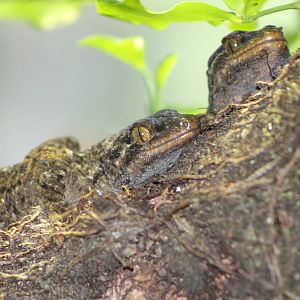
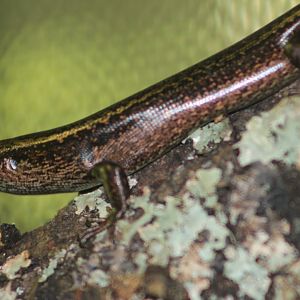
Was the gold-stripe gecko correctly named in the signage?
The only real reason I know this is I studied common geckoes for my honours, and had to go through it and replace all the Hoplodactylus with Woodworthia when I found out about the changes. However, I didn't realise the change in the species name, from maculatus to maculata (although neither did the revision paper!), so I still managed to mislabel my study species!
replace all the Hoplodactylus with Woodworthia when I found out about the changes. However, I didn't realise the change in the species name, from maculatus to maculata
it was labelled as Hoplodactylus chrysosireticus. Its worth noting that most zoos/staff don't really keep up with taxonomic changes, and they're not going to go changing established signage for a simple generic shift anyway. It is a pity that new signage doesn't reflect the current taxonomy though. (Although that's not really an issue at Auckland as they don't give scientific names on their native reptiles!)
Hix is correct as always. Hoplodactylus is masculine and Woodworthia feminine, so the specific name of both maculatus and chrysosireticus (both masculine) also change gender to maculata and chrysosiretica respectively (you may notice I had neglected to do this with the title of the gold-stripe gecko, which I will remedy, and this is because all the NZ reptile references I've seen have left the specific name masculine).