Orycteropus

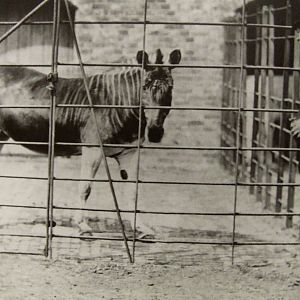
The last Quagga in London Zoo, 1864

Short Quagga history at London Zoo: the Zoo purchased its first specimen in 1831, and after that, in a following decades exhibited three of them. The species became extinct in the wild while the third of these animals was still in the Zoo. This last one died in 1872.

In this picture You can see this last one of three to be seen in the Regent’s Park, photographed in 1864.

The last specimen of the species in the world died in Amsterdam Zoo on 12 August 1883.

Source( photo and partly description): Barrington-Johnson, J. 2005. The ZOO, The story of London Zoo
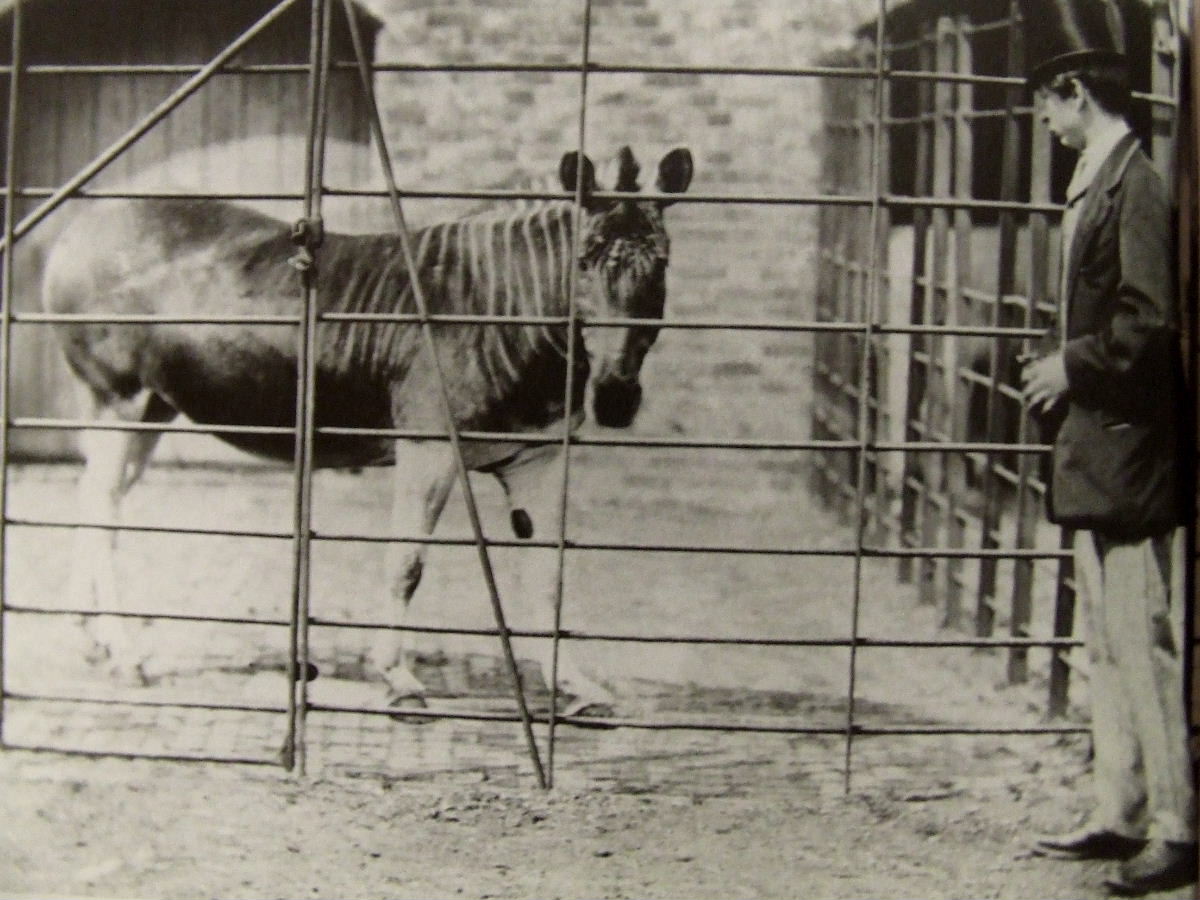
Short Quagga history at London Zoo: the Zoo purchased its first specimen in 1831, and after that, in a following decades exhibited three of them. The species became extinct in the wild while the third of these animals was still in the Zoo. This last one died in 1872.

In this picture You can see this last one of three to be seen in the Regent’s Park, photographed in 1864.

The last specimen of the species in the world died in Amsterdam Zoo on 12 August 1883.

Source( photo and partly description): Barrington-Johnson, J. 2005. The ZOO, The story of London Zoo
 
Interesting had not heard of this at all.

This site
http://www.quaggaproject.org/

Reading this site makes for a very interesting take on the Quagga.

My first reaction was that this was a hoax. Now after reading the article. At what point do we say this is a quagga! Returned from extintion!!
 
Regarding the quagga in the photograph:-

This female quagga was purchased from the famous animal dealer Jamrach.

This animal lived at London Zoo for more than twenty-one years from 15th March 1851 until her death on 7th July 1872; this is the longevity record for a zoo quagga.

The mounted skin of this specimen is at Royal Scottish Museum, Edinburgh and its skeleton is in the Peabody Natural History Museum at Yale University, U.S.A.

Tim
 
Did they never try to breed them, or did they only have all females?

London Zoo had three quaggas in all, as follows:-

(i) Purchased purchased from a Mr.Thomson, lived in Regent's Park for less than three years from 25th November 1831 to 18th July 1834. The mounted skin of this animal is at the Natural History Museum, South Kensington. (The whereabouts of its skeleton is unknown; there is a quagga skeleton at South Kensington, but it is from a different ZSL quagga to the mounted skin.)

(ii) Female, purchased from the famous animal dealer Jamrach. This animal, which holds the longevity record for a zoo quagga, lived at London Zoo for more than twenty-one years from 15th March 1851 until her death on 7th July 1872. Incidentally, this was the only quagga known to have been photographed in life. The mounted skin of this specimen is exhibited at Royal Scottish Museum, Edinburgh. The skeleton of this animal is in the Peabody Natural History Museum at Yale University, U.S.A.

(iii) Male presented by Sir George Grey, who was subsequently awarded the Zoological Society's Silver Medal for his "numerous donations of South African animals". This animal lived at the zoo from 4th September 1858 until 10th June 1864 when, sadly, it had to be destroyed after sustaining a serious injury. The mounted skin of this animal is in the zoology museum at Weisbaden in Germany and its skeleton is in the Natural History Museum at South Kensington.

Obviously any chance of breeding quaggas at London Zoo ceased after the male was destroyed.
 
Obviously any chance of breeding quaggas at London Zoo ceased after the male was destroyed.

Rats :( Would have been nice if they had suceeded at least once, though I doubt quaggas would have been a very viable species by then. Still, fascinating information! Thanks :)
 
my first reaction was that this was a hoax. Now after reading the article. At what point do we say this is a quagga! Returned from extintion!!

No, its a serious experiment and very interesting too.

However compare the striping patterns and markings of the 'recreated' Quaggas in the Project with those of the original in the photos, and you will see how, so far at least, they are heading in a rather different direction.

The project is producing increasingly stripeless white zebras, that is all. They haven't so far been able to recreate the dark brown body colour, and the black and white banding on the forequarters and the neck is still the traditional zebra pattern, not the Quagga's.

These zebras more closely resemble the (also) extinct Burchell's zebra though.
 
London Zoo had three quaggas in all
Obviously any chance of breeding quaggas at London Zoo ceased after the male was destroyed.

Didn't they breed at lord Derby's collection at Knowsley?

Do you know where the 'Tring' Quagga came from?
 
Didn't they breed at lord Derby's collection at Knowsley?

Do you know where the 'Tring' Quagga came from?

After Lord Stanely, Earl of Derby, died in 1851 some of the animals in the Knowsley Menagerie were sold at auction; a quagga was purchased by Artis (Amsterdam) Zoo. When this quagga eventually died in Amsterdam, its skin was mounted for the Amsterdam Zoology Museum.

The last quagga ever died at Amsterdam Zoo on 12th August 1883; it too was stuffed for the Amsterdam Zoology Museum. It was decided that the museum did not need two stuffed quaggas, so the earlier specimen (i.e. the ex-Knowsley animal) was sold to an Amsterdam taxidermist named Frank and the museum retained the specimen that died in 1883.

Walter Rothshild the purchased the Tring Museum quagga from Frank, the Amsterdam taxidermist.

It seems probable, therefore, that Tring quagga is one of the Knowsley quaggas; it would be remarkable if Frank had two different specimens of the extinct quagga for sale.
 

Media information

Category
ZSL London Zoo
Added by
Orycteropus
Date added
View count
17,073
Comment count
32
Rating
5.00 star(s) 1 ratings

Share this media

Back
Top