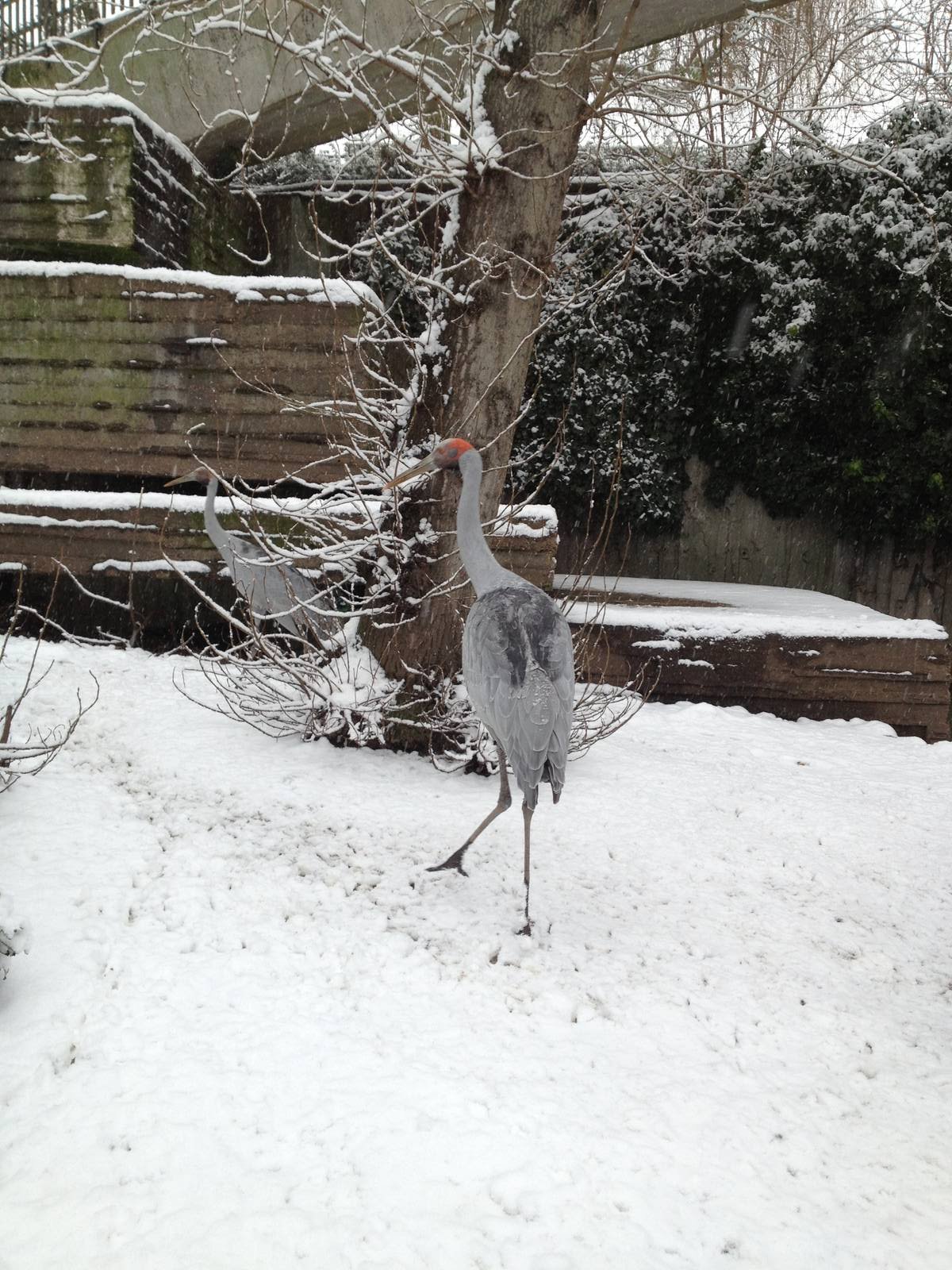
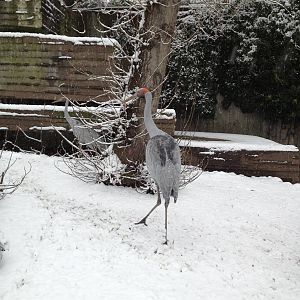
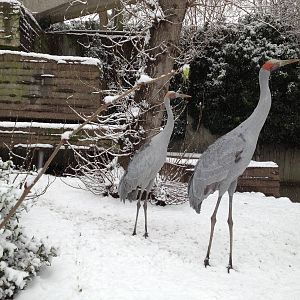
I know many cranes are fine with snow and cold weather, but Brolgas would never encounter such low temperatures in the wild. Do they cope well with this sort of weather in Europe? I thought they would have been kept inside.
How odd. On my ipad it is right, on my desktop it's sideways...
Anyway, I guess like many animals and birds, what they would experience in the wild and what they can deal with are two different things. I don't know where this pair actually came from though.
There is a shed in the aviary with straw and I saw a few areas where straw had been scattered on the ground and under trees.
But then we'll lose the discussion. People might just have to tilt their heads on this one
Brolgas do live in Victoria so must be able to cope with quite chilly conditions (probably not this extreme) and as Shirokuma says, if they have access to warm areas but just choose not to use them then they must be fine. Does anyone know why they were moved from the Australian exhibit? Could better protection from the elements in this aviary be part of it?
But then we'll lose the discussion. People might just have to tilt their heads on this one
Brolgas do live in Victoria so must be able to cope with quite chilly conditions (probably not this extreme) and as Shirokuma says, if they have access to warm areas but just choose not to use them then they must be fine. Does anyone know why they were moved from the Australian exhibit? Could better protection from the elements in this aviary be part of it?
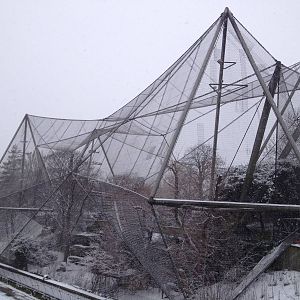
I'd totally missed the fact that they weren't on the Mappin Terraces in this photo! Maybe this is where they are kept in winter? Where specifically is this aviary in the zoo?
I'd totally missed the fact that they weren't on the Mappin Terraces in this photo! Maybe this is where they are kept in winter? Where specifically is this aviary in the zoo?
I seem to remember reading that they're in the Snowdon Aviary for now. Did you go to London Zoo while you were in Europe? If not, it's on the edge of the canal opposite the African wild dogs and warthogs.