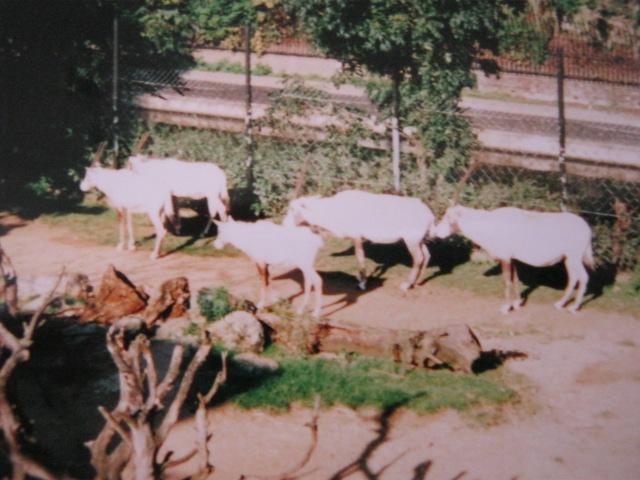
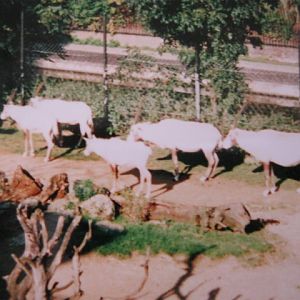
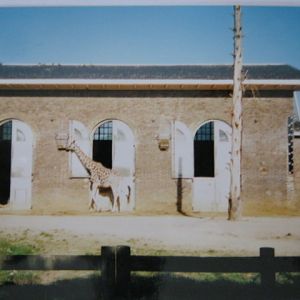
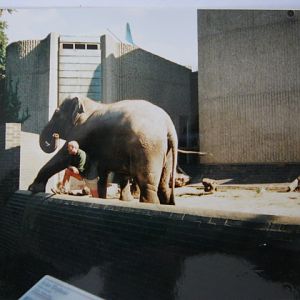
At a time when the ZSL still regarded the species as a "top priority species". (Not the case these days for some reason I don`t really understand.)
At a time when the ZSL still regarded the species as a "top priority species". (Not the case these days for some reason I don`t really understand.)
Such a shame they are no longer held on either site. Despite their conservation importance I guess they didn't have the exhibit value for the public to warrant 'prime space' at London which has now gone to the Hunting Dogs. But strange that Whipsnade eventually abandoned them too.
Such a shame they are no longer held on either site. Despite their conservation importance I guess they didn't have the exhibit value for the public to warrant 'prime space' at London which has now gone to the Hunting Dogs. But strange that Whipsnade eventually abandoned them too.
Very true. Perhaps this is the case for other UK collections too, there is still a general reluctance to afford the species cage-space. The last ones from London Zoo were put out as surplus a few years ago and there were hardly any takers, Marwell took them on almost "as a favour" at the time, then they were kept off-show for sometime, but re-listed as surplus by Marwell, again no takers, some died and the last ones remained until the latest return to a degree of interest as a "studbook species" at Marwell. So they have almost gone full-circle, though still other zoos in the UK are not interested.
At a time when the ZSL still regarded the species as a "top priority species". (Not the case these days for some reason I don`t really understand.)
Much as I miss seeing Arabian Oryx regularly in zoos as they become increasingly hard to find, from a conservation point of view, they are indeed no longer a top priority species. Since 2011 they have been rated as 'only' Vulnerable by IUCN (they were the first taxon previously listed as Extinct in the Wild to make it back to that category - a major success story) and with a stable or slowly increasing population. Obviously it needs continued attention in situ, but from a zoo breeding point of view there are much more threatened ungulates to work with (like Eastern Bongo, which is Critically Endangered).
That said, the above also makes them an excellent tool to educate visitors about the positive results possible from captive breeding.
I agree with all your comments especially the last point, quoted above, regarding the educational value of showing Arabian oryx.
That’s why I think the species should be exhibited in London Zoo. The ZSL donated the female ‘Caroline’ as one of the founder members of the world herd, so it would be an excellent illustration of the contributions London Zoo has made to conservation by captive breeding.
from a conservation point of view, they are indeed no longer a top priority species....... That said, the above also makes them an excellent tool to educate visitors about the positive results possible from captive breeding.
Yes, I think that played a role too in their disappearance- at least from London, though Whipsnade had plenty of room to continue with them.
Like American Bison before them, and as Tim May says, they represent a Zoo conservation success story and given their own role in it, its a pity London don't still keep them to illustrate it. It would be a significant enough reason IMO.
I also wonder how long they will stay at Marwell - despite a recent fresh import and the obvious current intention to keep them- who knows how long that will last or whether they will still be there in five or ten years?
Much as I miss seeing Arabian Oryx regularly in zoos as they become increasingly hard to find, from a conservation point of view, they are indeed no longer a top priority species. Since 2011 they have been rated as 'only' Vulnerable by IUCN (they were the first taxon previously listed as Extinct in the Wild to make it back to that category - a major success story) and with a stable or slowly increasing population. Obviously it needs continued attention in situ, but from a zoo breeding point of view there are much more threatened ungulates to work with (like Eastern Bongo, which is Critically Endangered). .
H'mm. The present state of the Middle East makes me wary of concluding that any mammal as big and conspicuous as Arabian Oryx is truly safe. Effective long-term conservation relies on political stability.
London Zoo, with large Jewish and Arab communities nearby, could have a uniquely enlightening Middle Eastern themed exhibit. Arabian Oryx would be an obvious flagship species, but the likes of Arabian Camel (rarer in UK collections than Indian Rhino now!), Sand Cat, Fennec Fox, Northern Bald Ibis and Kleinmann's Tortoise also are worthy of consideration. Heck, bring back Barbary Sheep for old times' sake!
I don't think this trend is limited to the UK - I swore two or three of my local zoos had them ten years ago and they seem to be completely gone. A shame, as I grew to like them more just as they were removed