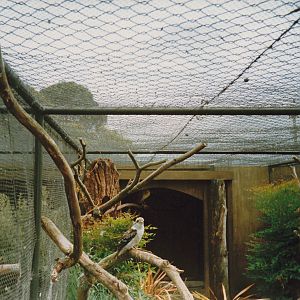
Yes, I see that that is not present, but there could have been changes in the intervening 15 or so years between the late 1970s and 1992 (not clutching at straws here). I still think the kookaburra aviary was in the same block.
Further down the path, there is only the aviary with the taller central cage I posted a photo of before on the left, followed by the Japanese Garden (again, I don't know what this replaced, but it still predates the photos we are discussing). On the opposite side is a weird exhibit surrounded by low rock walls and some wide mesh fences, which I believe may have been built for ratites, and more recently held mara, and now parma wallabies, with a small exhibit with a pond at the end which held Carolina wood ducks until recently and is now empty. Beyond this is the black cockatoo aviary, followed by a distinctive long aviary with a rounded roof and end, which holds lovebirds. The stream then runs through this part of the zoo, with a small bridge that takes you past a small exhibit for a sulphur-crested cockatoo (not an aviary) to the original freeflight aviary (1922) which now holds blue & yellow macaws and sun conures. The peafowl exhibit has been renovated extensively, and has held Galapagos tortoises for a number of years now.
So there is no room in that area at all for the kookaburra aviary, especially given the presence of aviaries either side of it, except for the block at the top. I also can't think of any other places in the zoo where such a block could have been, I would have thought that a block of aviaries would have appeared on a map, although could believe that an individual aviary might have been omitted.
hmm, so it seems likely that it must have been in the same block as the curassow aviary then. I will bow to your deductive reasoning.
zooboy28 said:
Yes it does seem odd, and quite frustrating too, as I very much doubt that visitor viewing from the rear would not have been possible, although may have been possible through the side, if the shubbery was not too thick. There seems to be a picnic table near this back aviary visible in the aerial photo, although that had likely gone by 1992.
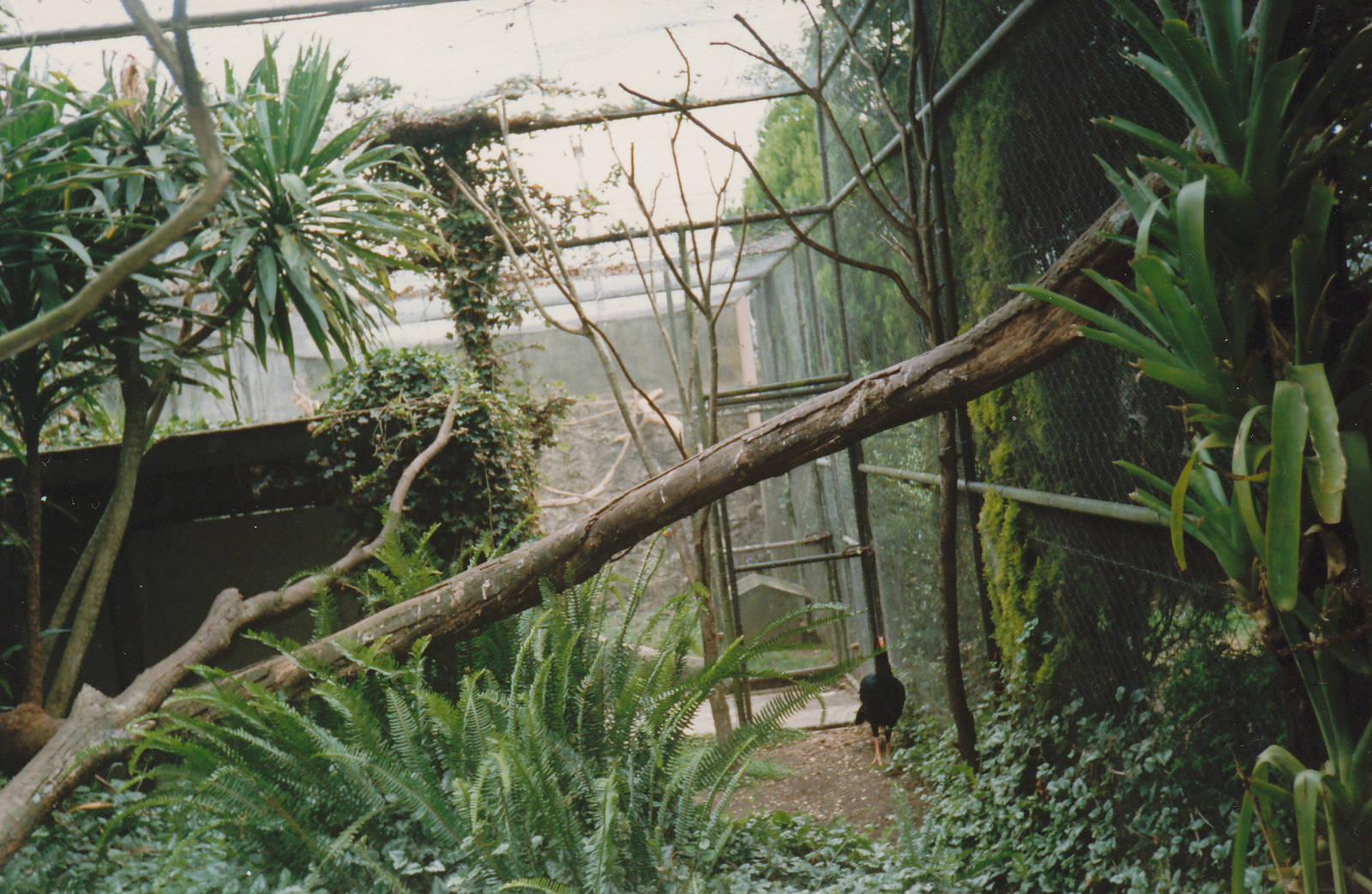
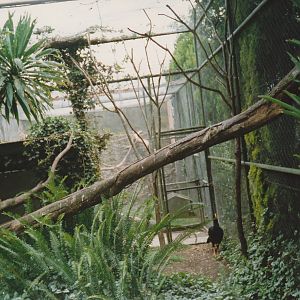
Looking at the aerial photo again it seems almost impossible that there was viewing of the block from the rear (it appears to back up completely against the boundary), but I think you can see the keeper passage running through the middle (entered from the curassow end, as seen by the safety porch in the curassow photo). It looks like there's about three or four aviaries in the back part. It's hard to make out, but there may also be aviaries down the side as well (at the opposite end from the curassow) - is/was there a section of path there for visitors?
Looking at the curassow photo you can see rear viewing would have been impossible in 1992 at any rate, because the back wall appears to be a fake-rock one, and the shrubbery at the side looks far too dense to admit any viewing at all.
hmm, so it seems likely that it must have been in the same block as the curassow aviary then. I will bow to your deductive reasoning.
Looking at the aerial photo again it seems almost impossible that there was viewing of the block from the rear (it appears to back up completely against the boundary), but I think you can see the keeper passage running through the middle (entered from the curassow end, as seen by the safety porch in the curassow photo). It looks like there's about three or four aviaries in the back part. It's hard to make out, but there may also be aviaries down the side as well (at the opposite end from the curassow) - is/was there a section of path there for visitors?
Looking at the curassow photo you can see rear viewing would have been impossible in 1992 at any rate, because the back wall appears to be a fake-rock one, and the shrubbery at the side looks far too dense to admit any viewing at all.
I wouldn't have though there was such a path for visitors, as it is not indicated on any maps, and just seems unlikely to me. There is no such path there now. I agree that viewing from the rear would be impossible, although I would say that the back of the aviary is meshed, as the rocks at the back are part of the boundary wall, which runs along two of the sides of the zoo and certainly pre-dates the aviary.
I have a sense of disappointment now, as it seems this discussion has been largely concluded. Does your sister have any more photos of Auckland Zoo?
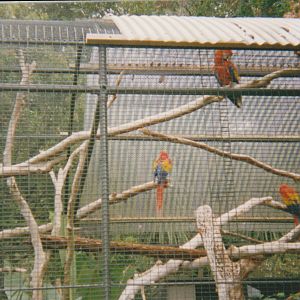
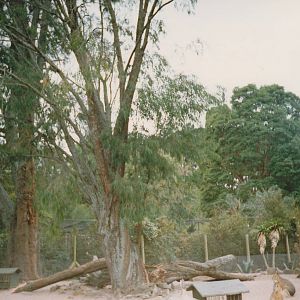
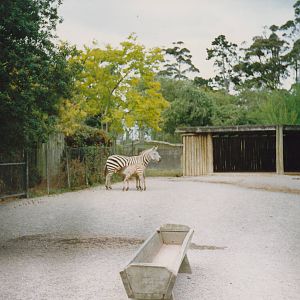
I think I added all the photos my sister had to the gallery. There weren't many: curassow, kookaburra, elephant, polar bears, sealions, hippos, zebra, gemsbok, blackbuck, orangutans and mara. And then there were a few crappy ones of my own from 1995 including the macaws. I'll have a look to see if I do have any other older photos that either weren't uploaded or were victims of The Great Purge that I can re-upload.
I think I added all the photos my sister had to the gallery. There weren't many: curassow, kookaburra, elephant, polar bears, sealions, hippos, zebra, gemsbok, blackbuck, orangutans and mara. And then there were a few crappy ones of my own from 1995 including the macaws. I'll have a look to see if I do have any other older photos that either weren't uploaded or were victims of The Great Purge that I can re-upload.
Further down the path, there is only the aviary with the taller central cage I posted a photo of before on the left, followed by the Japanese Garden (again, I don't know what this replaced, but it still predates the photos we are discussing). On the opposite side is a weird exhibit surrounded by low rock walls and some wide mesh fences, which I believe may have been built for ratites, and more recently held mara, and now parma wallabies, with a small exhibit with a pond at the end which held Carolina wood ducks until recently and is now empty. Beyond this is the black cockatoo aviary, followed by a distinctive long aviary with a rounded roof and end, which holds lovebirds. The stream then runs through this part of the zoo, with a small bridge that takes you past a small exhibit for a sulphur-crested cockatoo (not an aviary) to the original freeflight aviary (1922) which now holds blue & yellow macaws and sun conures. The peafowl exhibit has been renovated extensively, and has held Galapagos tortoises for a number of years now.
I'm just trying to place this aviary from the photo you posted because I apparently didn't see it from your vantage point. Is it the tri-vided one with the doves and parrot finches in it?
I'm just trying to place this aviary from the photo you posted because I apparently didn't see it from your vantage point. Is it the tri-vided one with the doves and parrot finches in it?
funny I never even noticed the dome. I must have been looking too hard at the birds (and trying to stay ahead of the school group tailing us!). The bleeding-heart pigeons are always gorgeous.
just for interest's sake, Auckland Zoo had two razor-billed curassows, both imported from Adelaide Zoo. One was held from 1983 to 1998, and the other from 1988 to 1991.