Incidentally, the "Centenary History of the Zoological Society of London" (Chalmers Mitchell; 1929) includes a map of Whipsnade that features Bison Hill. However, this is the proposed plan for Whipsnade, it does not necessarily mean that bison were in residence on Bison Hill in 1929.
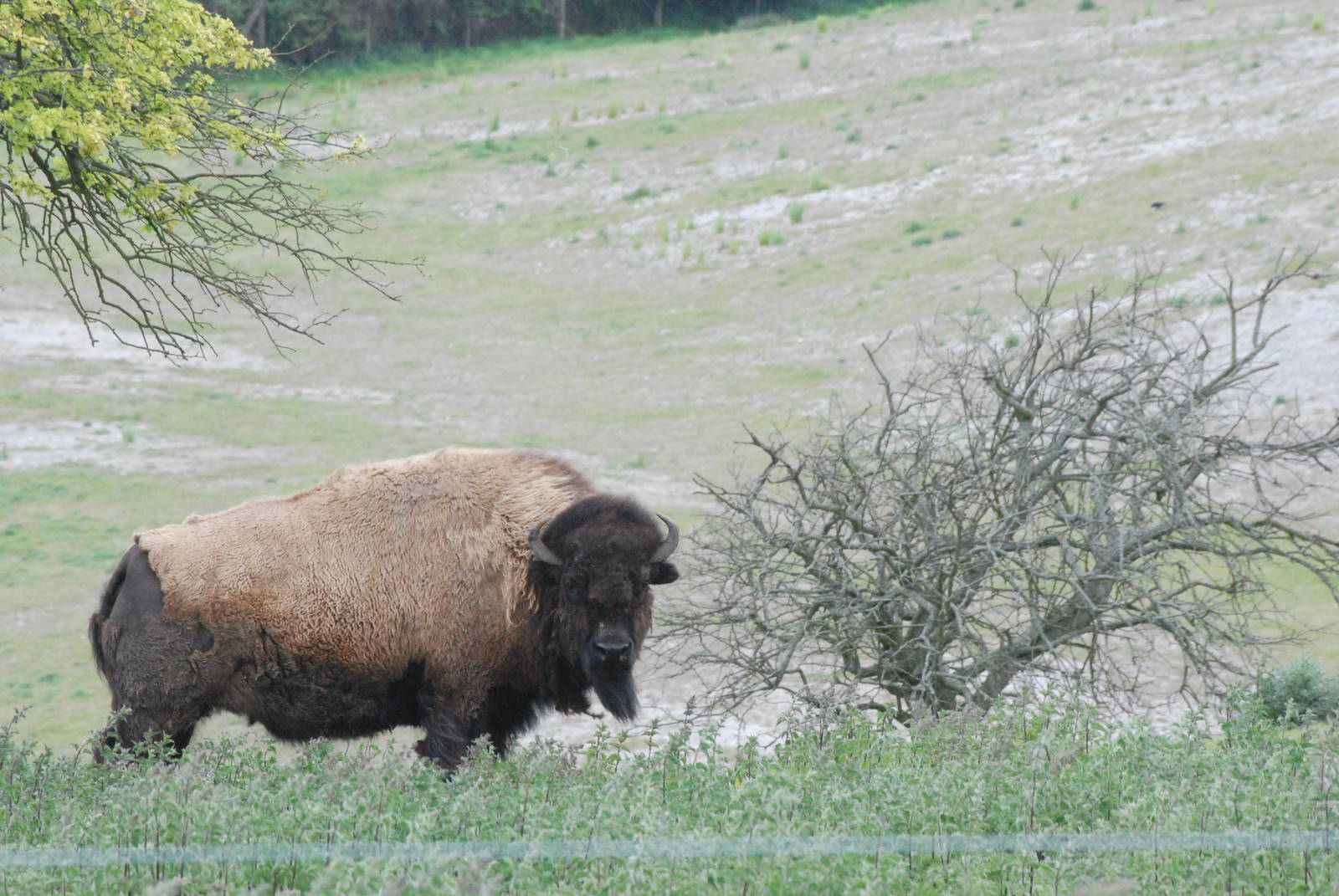
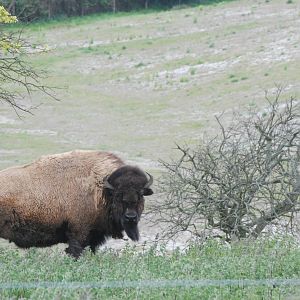
The paddock is clearly visible from local roads and when they took the bison out at one point (late 90s?) they had so many local complaints about 'Where have the bison gone?' they had to put them back. The road (and a local tourist car park) outside the zoo are also called 'Bison Hill' after this paddock.
Yes, its interesting the complaints came from local residents, who valued them as a landmark in the area, rather than Zoo visitors!
I believe they were absent for about six years. I suspect the original stock were rehomed (or culled) and may well have descended unbroken from the original stock. The replacements came from Christopher Marler's collection.
I've just looked at this thread, with its lovely, iconic photo (in a previous era it would have been thought good enough to grace the cover of Whipsnade's guidebook).
Recently, I was moved to comment that "I appreciate that ZSL doesn't have endless mountains of cash; my criticism is that they seem sadly short of imagination." The inability to realise just how little it would cost, and how much it would gain, for this paddock, complete with its original 1930s iron railings, to be restocked with a species that nobody will quibble about not being able to cope with Whipsnade's winters, really saddens me.
Bison Hill is the name given to it by the local authority, for heavens' sake. The sort of thinking that puts dogmatic adherence to EAZA dictates over putting part of a great zoo's history back to its appropriate use is, frankly, mediocre.
David, I know they are still there: a castrated bull, and a couple of cows (or is it just one?). Historically, there was a herd a good dozen strong, and it's hard to see that there would be much extra cost in expanding the number.
It would indeed be damn nice to see sizable numbers there; and I believe the species is not exactly in short supply through private breeders and "domestic" bison.
Its as if they can't really be bothered with them, they only came back because local residents asked for this 'landmark' to the area to be returned(you can't have a Bison Hill without Bison...) but the Zoo only really paid lip service to the request.
One would assume also that a decent group of American Bison would help maintain the chalk grassland. Bennett's Wallabies, so much smaller and with soft macropod feet rather than hooves, can't possibly have the same impact.
It would indeed be damn nice to see sizable numbers there; and I believe the species is not exactly in short supply through private breeders and "domestic" bison.