Arizona Docent

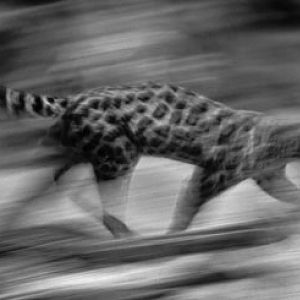
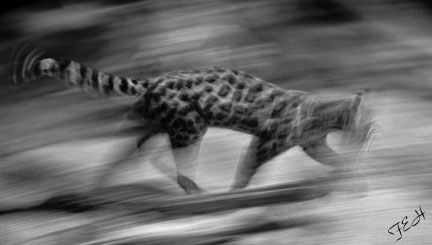
margay on the move

Summer Saturday Nights, 2007, when they still had a margay in Small Cat Canyon. Sadly, these cats have been phased out in the AZA and in fact are about to disappear from America altogether. According to the latest issue of the Feline Conservation Federation Journal, there are likely only five margays left in the entire country.

 
Followup - I just checked ISIS and there are five adults listed, spread across five U.S. zoos (7 adults if you count the two subspecific ones listed at San Diego, which are either dead or moved off exhibit).

However, in addition to the one adult at Denver Zoo, it lists them as having four of unknown gender, which would seem to indicate cubs. (Although with cats, even small cubs you can tell the gender, unless they are nursing and unapproachable). Is this a typo, or is Denver harboring a big secret? Anyone out there in Colorado have any inside info?
 
Is it just me or is the general cat diversity in the US zoo world taking a nosedive? I'm sorry to see margays go. I remember that the Santa Ana Zoo used to have a tigrina and the Arizona-Sonora Desert had jagarundis. Why are cat species disappearing from zoos?
 
Overall diversity is diminishing. The plain and simple cause is the need to create self sustaining populations, which necessitates keeping fewer species.
 
Yes, diversity of small cats is diminishing - a source of anguish for a cat fanatic like me. Of course we have all the big cats, but only one race of leopard for all practical purposes (the amur). One facility - the Exotic Feline Breeding Compound is singlehandedly trying to keep the north china leopard going and to restart the persian leopard program (in addition to maintaining the largest breeding group of amur leopards). We have also recently had some major success with the clouded leopard program in the AZA thanks to the Thai partnership.

But small cats are diminishing for several reasons. The AZA Felid TAG has chosen 8 small cats for breeding and asked that all others die out. Of course now that jaguarundis have died out in the AZA (there are three or four outside the AZA), they have decided they want them again so instead of breeding the ones they had they are going to have to import all new ones.

The Feline Conservation Federation, a support group for wild cat breeders (both private facilities and public zoos) feels that part of the problem is the AZA does not consider available cage space in non-AZA facilities when they make their recommendations on the number of species they can maintain. Another problem is the difficulty of importing new animals with today's tight regulations. The last FCF Journal had reprinted an old letter from US Fish & Wildlife about margays, where they basically said your import request is denied but we encourage you to breed the existing population. This of course was a Catch 22 because without new imports the population could not be self-sustaining. I know one prominent cat breeder and zoo director (not AZA zoo) who thinks the Endangered Species Act does more harm than good because of the way it hamstrings imports for breeding purposes.

In more depressing small cat news, I have learned from an inside source that the proposed small cat breeding center to be run off-site by the Cincinnati Zoo has been delayed because some zoo executives diverted the $1.2 million state grant to other zoo projects, even though the grant was specifically for the small cat center.
 
Yes, diversity of small cats is diminishing - a source of anguish for a cat fanatic like me. Of course we have all the big cats, but only one race of leopard for all practical purposes (the amur). One facility - the Exotic Feline Breeding Compound is singlehandedly trying to keep the north china leopard going and to restart the persian leopard program (in addition to maintaining the largest breeding group of amur leopards). We have also recently had some major success with the clouded leopard program in the AZA thanks to the Thai partnership.

But small cats are diminishing for several reasons. The AZA Felid TAG has chosen 8 small cats for breeding and asked that all others die out. Of course now that jaguarundis have died out in the AZA (there are three or four outside the AZA), they have decided they want them again so instead of breeding the ones they had they are going to have to import all new ones.

The Feline Conservation Federation, a support group for wild cat breeders (both private facilities and public zoos) feels that part of the problem is the AZA does not consider available cage space in non-AZA facilities when they make their recommendations on the number of species they can maintain. Another problem is the difficulty of importing new animals with today's tight regulations. The last FCF Journal had reprinted an old letter from US Fish & Wildlife about margays, where they basically said your import request is denied but we encourage you to breed the existing population. This of course was a Catch 22 because without new imports the population could not be self-sustaining. I know one prominent cat breeder and zoo director (not AZA zoo) who thinks the Endangered Species Act does more harm than good because of the way it hamstrings imports for breeding purposes.

In more depressing small cat news, I have learned from an inside source that the proposed small cat breeding center to be run off-site by the Cincinnati Zoo has been delayed because some zoo executives diverted the $1.2 million state grant to other zoo projects, even though the grant was specifically for the small cat center.

As a cat fanatic I share your depression. It seems especially sad to me that AZA don't seem to see the need to liaise with non-AZA facilities. I suspect that private breeders are better equipped in many ways to deal with secretive animals such as small felids.
 
But small cats are diminishing for several reasons. The AZA Felid TAG has chosen 8 small cats for breeding and asked that all others die out. Of course now that jaguarundis have died out in the AZA (there are three or four outside the AZA), they have decided they want them again so instead of breeding the ones they had they are going to have to import all new ones.

What are the 8 species of small cats that the AZA wants to focus on?
 
Thanks for the info and the link KC.

It is a shame that small cats diversity is going away more or less. Zoos seem like the only place that they get any real exposure to the public in terms of conservation and general natural history awareness. When I was growing up there were many small cat species at my local zoo in Sacramento (pallas cats, jungle cats, caracals, serval, fishing cats, margays, Geoffery's cats, black-footed cats). Now there are none left.
 
There is a good breeding program for geoffroy's cats in the private sector. Bobcats will continue to be seen at zoos, even though they are not part of the Felid TAG recommendation. That is because they are part of many zoos native wildlife exhibits and there will always be a steady supply from orphaned rescues without the need to breed.
 

Media information

Category
Arizona-Sonora Desert Museum
Added by
Arizona Docent
Date added
View count
3,814
Comment count
24
Rating
0.00 star(s) 0 ratings

Share this media

Back
Top