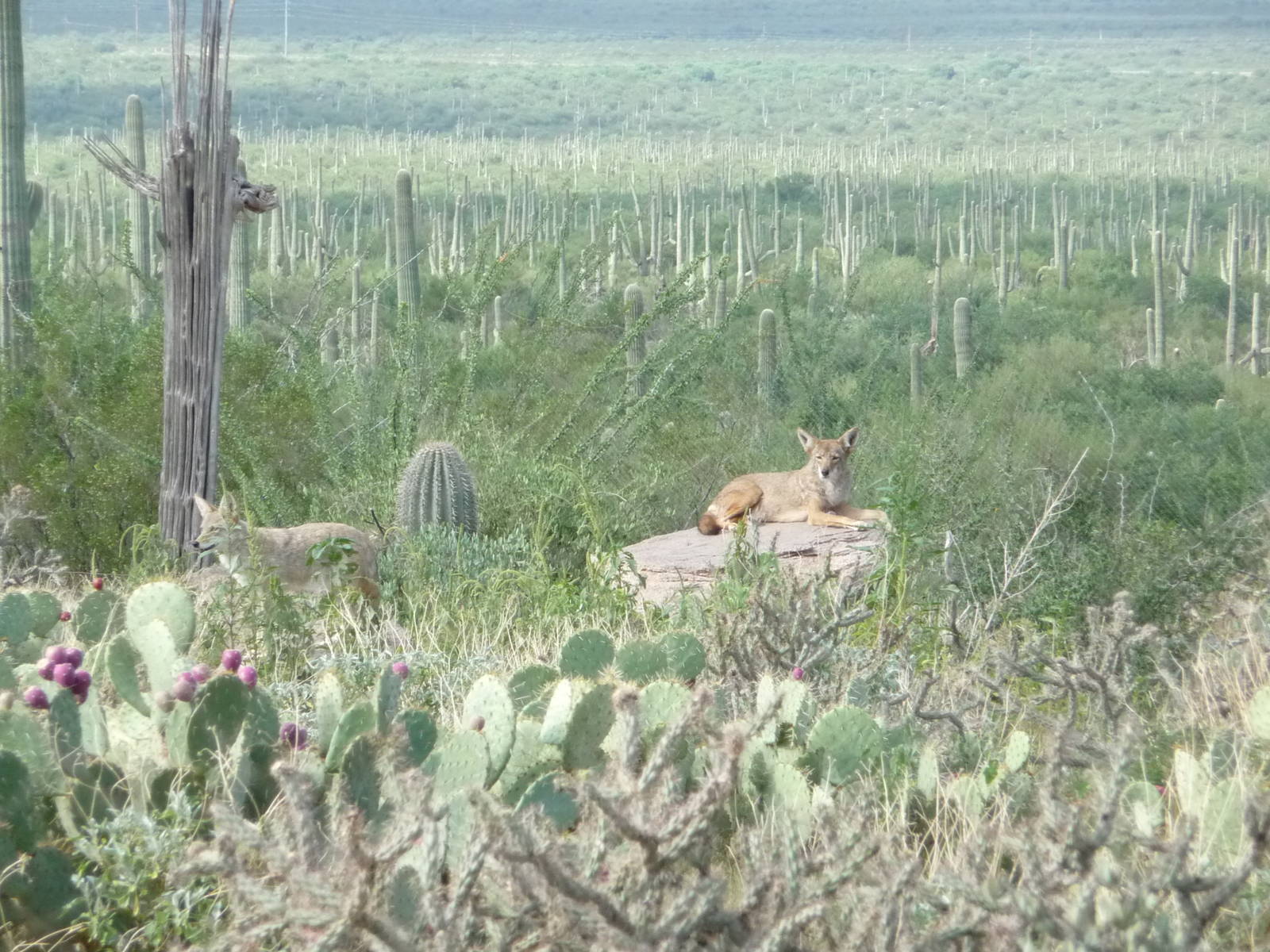
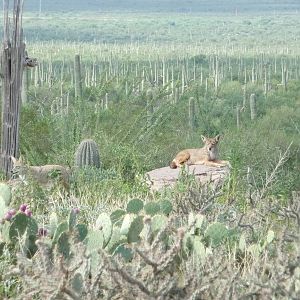
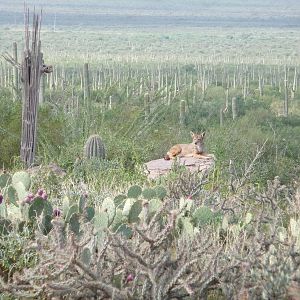
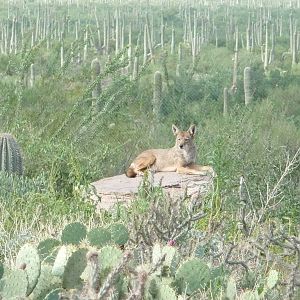
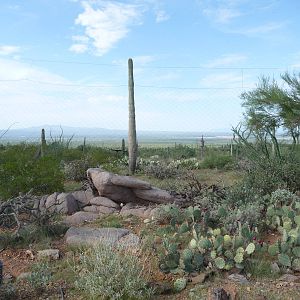
The invisinet used to contain the two coyotes in this photo is almost literally invisible, and it is eerie to find oneself strolling through the dusty pathway that curves around the enclosure because there is the sensation that the coyotes are actually roaming free. Immersion exhibitry at its finest.
I think that harp wire (piano wire) has become very popular in many zoos, but I'm not sure why the invisinet hasn't caught on at more collections. Perhaps it is not strong enough to withstand larger mammals running against it.
That's what I was thinking with larger mammals, there's a diagram on zoolex on invisinet for the javelina exhibit and it looks likes it can be pretty strong judging by the fake trees it is bolted to. Maybe it could be used to make a netting for big cat exhibits. I'm of some of those eastern Jaguar exhibits with the obvious netting and mayan ruins.
Binder Park, Bronx and Disney all use it for colobus monkey exhibits. Minnesota uses it for lemurs, coyotes and wolves. Omaha uses it in several places in Desert Dome. It really works best if there are lots of shrubs or twigs both in front of and behind the mesh (which is why it is less effective in Omaha, where it usually is just "plugging a hole" in concrete rocks).
@reduakari: is cost a factor when exhibit designers are in the process of choosing whether or not to go with viewing areas covered by glass, mesh, harp wire or invisinet? Is the amazing invisinet an expensive option? One would think that it would be ideal for all types of smaller primates, and even many mid-sized carnivores such as coyotes.
The invisinet they originally had on the nearby javelina exhibit is no longer there. It has been replaced by a thicker black netting. Not sure if it wore out or if the javelinas destroyed it somehow, but I suspect the latter because the coyote exhibit opened at the same time and it is holding up fine. Invisinet is very thin and would definitely not work for larger animals like jaguars.
Not sure of cost. I know this facility created it and when they first started manufacturing it, it was actually produced by prisoners at one of the state's prisons. I do not think that is the case any longer, but not sure.
As for whether or not it is a hazard to birds, I have honestly never thought of that and I have no idea. I have never seen any birds flying into it and have never heard of any issues.