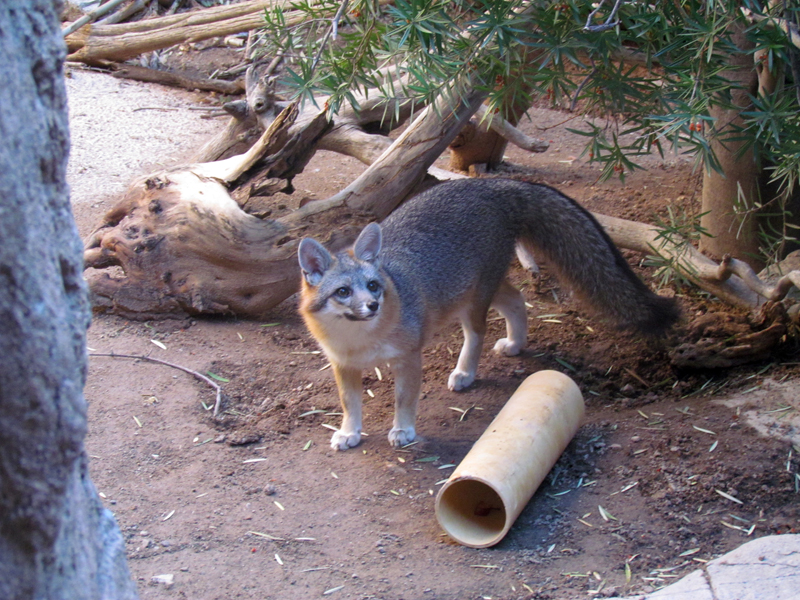
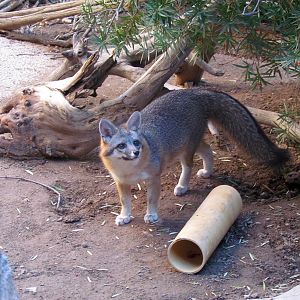
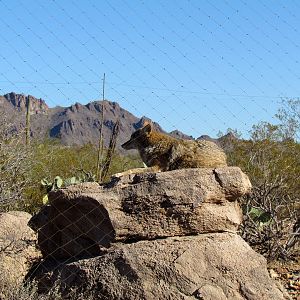
A very attractive species, and one which I would sorely like to see - though it is so common in the USA that I doubt anywhere over here would care to bring any into Europe.
Used to be quite a few in the UK . I remember them in the cages behind the old Sealion Pool at Regent's Park , where they could be seen climbing in the trees . I think it was Graham Dangerfield who first bred them in his private collection .
I believe the last in Europe were some elderly animals at Dartmoor about 10-15 years ago, which were the last survivors of the individuals held by Kilverstone.
Considering the novelty value which I am sure the public would find incredibly appealing inherent in a species of fox which climbs trees, it is a great shame there is no interest in bringing them in; the very thing which makes it unlikely anywhere will (they are so common there is no conservation need) is what would make them easy to source.
A very attractive species, and one which I would sorely like to see - though it is so common in the USA that I doubt anywhere over here would care to bring any into Europe.
They are sometimes in U.S. zoos, but mostly these are rescue animals I think. Not sure how common they are.
The Channel Island fox population in zoos is shrinking because the island conservation program has been successful and captive breeding is no longer needed. The mainland grey fox zoo population doesn't seem all that large, but I could be wrong about that.
I meant that the species itself is common in the USA, and thus not a conservation priority - this is the same reason that there are only two European collections holding coyote, and none holding American badger.
I meant that the species itself is common in the USA, and thus not a conservation priority - this is the same reason that there are only two European collections holding coyote, and none holding American badger.
Ah, got it. Similarly there are very few European mammal species in American zoos. Even wisent seem to be vanishing from our zoos. I would love to see European badgers and chamois. The San Diego Zoo did have a Eurasian river otter, but that was several years ago.
London had a pair in the dog dens behind the old sealion viewing stand, which were very obligingly visible. And, as Dave suggests, they loved climbing the tree in their enclosure.
London had a pair in the dog dens behind the old sealion viewing stand, which were very obligingly visible. And, as Dave suggests, they loved climbing the tree in their enclosure.