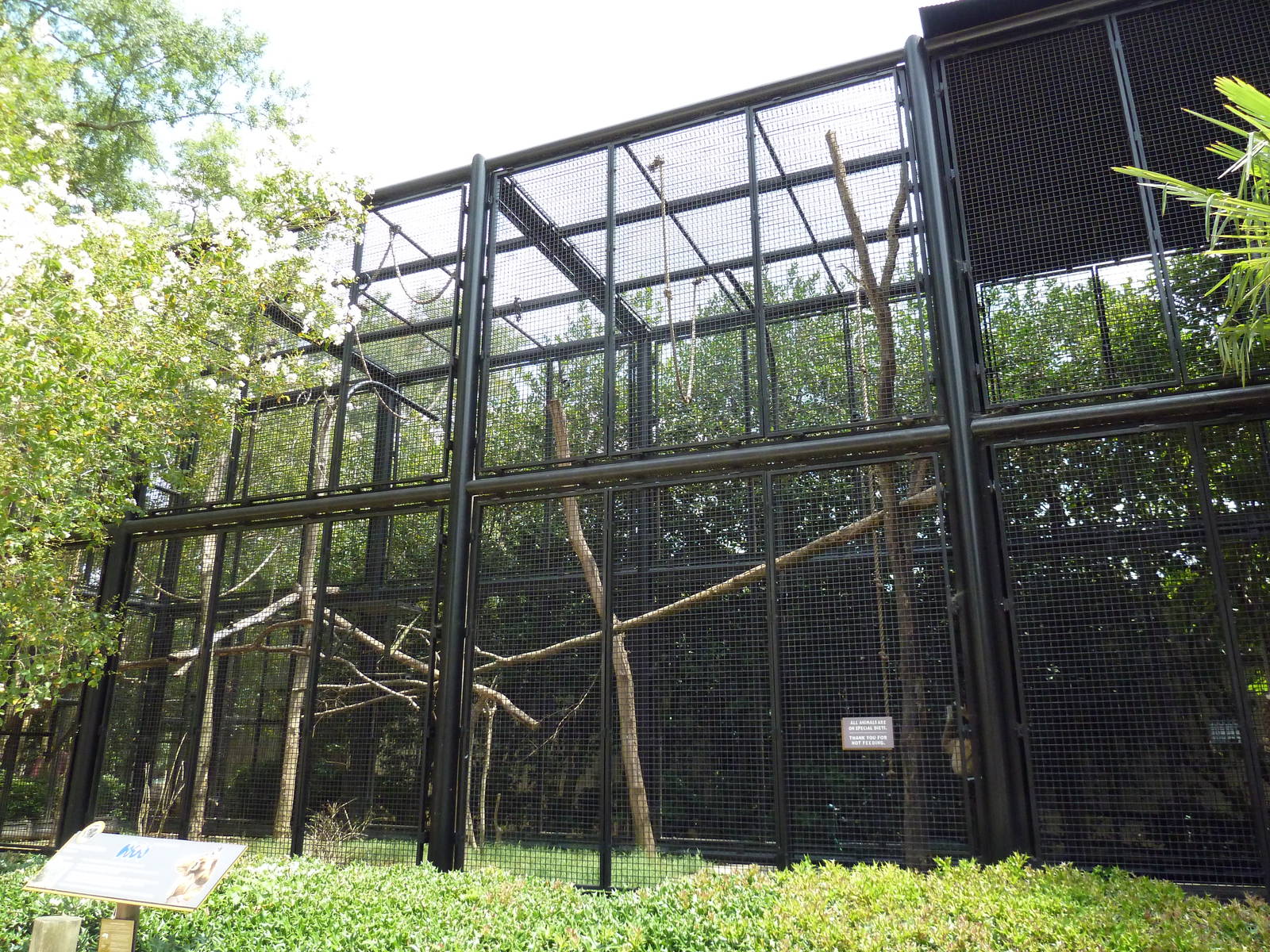
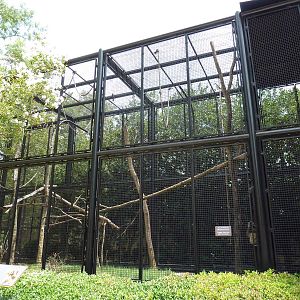
Sacramento has what is possibly a smaller cage for its gibbons, but obviously just as aesthetically awful. Many primates at Birmingham Zoo have sunlight filtered down from above but I believe that only two species have access to outdoor quarters. It is difficult to remember as I chose not to spend too much time in the drab Primates building. Apes, monkeys and lemurs are quite often the highlight of any given zoo for myself and my family, but to see them in poor enclosures is rather disappointing.
An excerpt from my 2010 review:
Primates – This aging building houses 10 species: gorilla, Sumatran orangutan, white-handed gibbon, cotton-top tamarin, spectacled langur, lion-tailed macaque, squirrel monkey, black-handed spider monkey, ring-tailed lemur and red-fronted lemur. Of those 10 species only the gorillas and white-handed gibbons have access to an outside area, meaning that the other 8 species all exist in traditional glass fish tanks. The Sumatran orangutan exhibit is the worst of the lot, as the pair of sad-sack orangs are in an incredibly dark environment that rivals Brookfield, Fort Wayne, Cleveland and Pittsburgh as all-indoor red ape hellholes. Birmingham is a strong contender for the worst of the lot, but there is curiously a stream of water cascading through the exhibit and some natural substrate in the form of wood chips. There is an indoor walk-through aviary with 10 species of African birds, thus expanding this zoo’s already comprehensive bird collection.
Well, I suppose that for example the spectacled langur, lion-tailed macaque and ring-tailed lemur exhibits could technically be called outdoor enclosures, but there is the visitor area (indoors and completely covered) and thick walls surrounding the primates. Some of the exhibits in the ghastly Primate House have wire overhangs or metal roofing and so a whiff of a breeze must strike the animals on a windy day. I feel that it would be a stretch to say that the primates have access to the great outdoors, although it might just be a slight difference of opinion on how one judges the enclosures. However, there are plenty of photos in the gallery that illustrate just how overwhelming and oppressive the walls are and although there is some natural sunlight for the most part the entire structure is indoors. One thing that I'm sure that we can all agree on is that practically all of the exhibits (including one of the all-time worst orang enclosures) are pitiful and in dire need of an upgrade. But the zoo also needs to upgrade its Predators Building, the many metal bird aviaries, etc, etc, etc...
I'd be very interested in knowing about the history of gibbon husbandry. I wonder if before people got the idea that gibbons could be kept on islands with natural vegetation if cages like this and Sacramento were state of the art? Fresno Zoo kept their siamangs in a similar cage to this until the new orang/siamang complex was built.
Are there any gibbon keepers, primate curators, or zoo designers that could speak to this?
Functionally it doesn't seem any worse than "island" exhibits in indoor rain forest exhibits like Omaha and Minnesota, but doesn't win any points for attractiveness.
By having access to outdoors, these animals are subject to the outdoor temperature, rainfall, sunlight, humidity, and various abiotic factors of the local environment. If these animals lived indoors - they would be sheltered from the elements completely. It is not a stretch to say that most of the primates of that area do have access to the outdoors. It really isn't a judgement of opinion, but a simple fact.
And yes, this building was constructed for the primary consideration of the visitors, not the animals. The open-air design of many of the enclosures marks the only improvement for the animals beyond traditional primate house design.