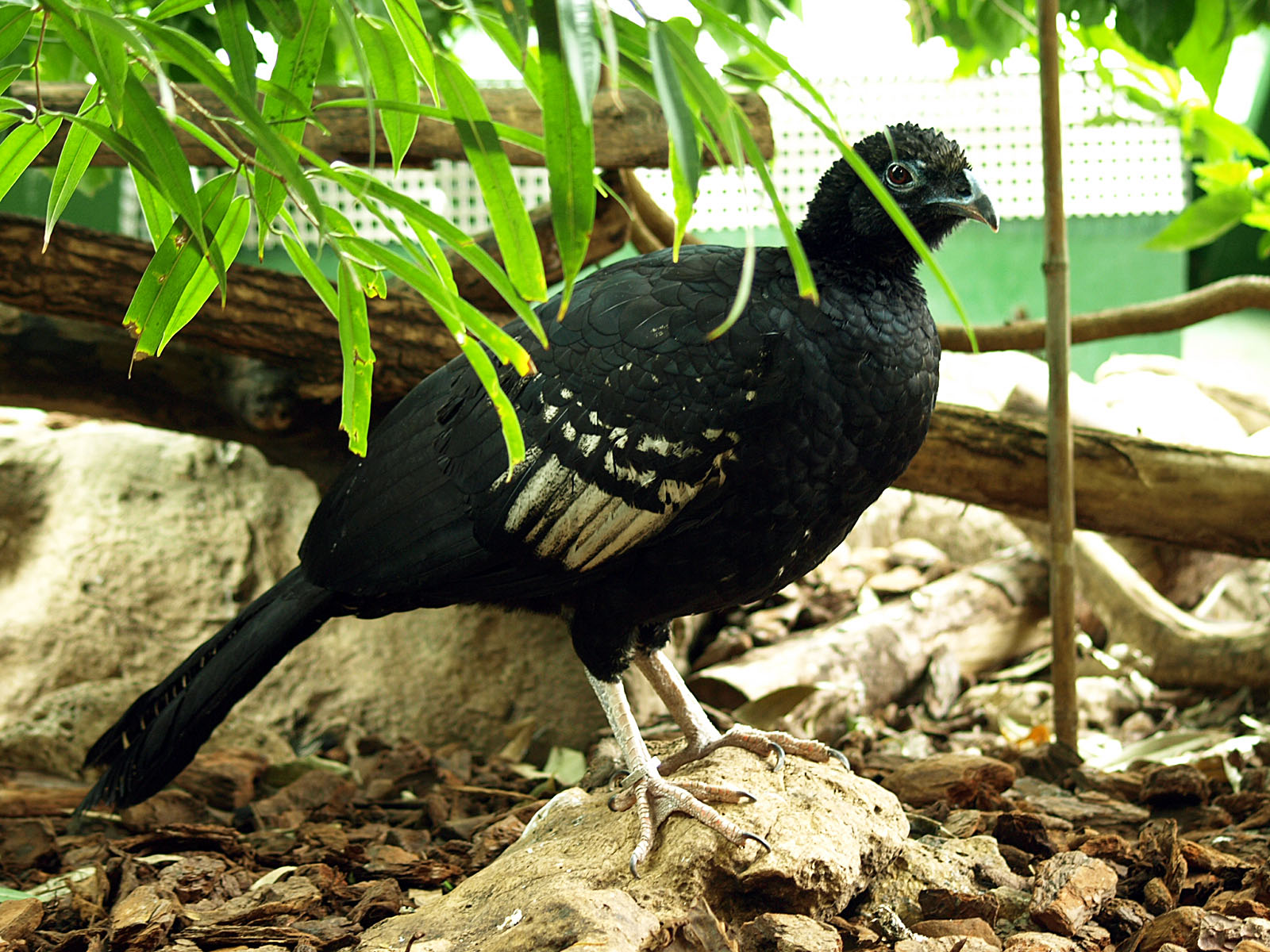
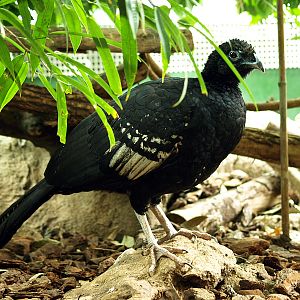
They had a pair of mature Piping Guans in the collection so this could explain it although i sent them a photo and asked for identification and they said it was an immature bird and they didn't know what species it was. I suppose they might have obtained it from a dealer.
Thanks, I did see it but didn't explain my post very well. I thought it might have been possible that they bred it (unlikely?) since they may have had the other parent species as well.
Young piping guan look like this (immature below, adult above). Bare face, relatively narrow pale beak with dark tip and pale crown; browner than adult. This is same in all piping guan species, except rare black-fronted (which from genetics actually belongs in another genus than the rest of the piping guans) where there only is a small pale eye ring instead of a pale face. In piping guans the only plumage before the adult-like plumage is the completely different downy chick. Cracidae also mature fast, getting near-adult plumage within a year. An immature in 2008 would be in full adult plumage shortly after, well before 2010, supporting my previous comment that this is an adult. Unfortunate with hybrids but it happens, and Cracidae are especially notorious for being able to hybridize easily, even between the different genera. In this they can be compared to their cousins, the pheasants.
I quite like Cracidae; I don't remember seeing this unusual specimen on my visit to Haus des Meeres in 2011, but could simply have missed it.
That's interesting - good website as well...thanks. I too like Cracids; Antwerp has about 5 species all kept in pairs but I'm not sure what their breeding success has been like. I have a copy of Delacour & Amadon's 'Curassows and Related Birds' which is a lovely book but it didn't help me with identification of this one...now i see why, although they do have a small section on hybrids and as you mentioned, this takes place quite readily even in the wild.
Toddy, your bird is a normal blue-throated piping guan. They've had a pair of those for quite some time. Notice the differences in beak, crown and face compared to the bird on Goura's photo.