Yes, this is very bad, but there is another accredited zoo in America that has a virtually identical setup - Denver Zoo. Both Denver and Cincinnati are in climates that are conducive to having snow leopards outside year round, so there is just no excuse.
OVERALL, however, I like Cincinnati, I think more than most other forum members who have been there. They are planning a new cat complex so I sincerely hope this will be addressed very soon.
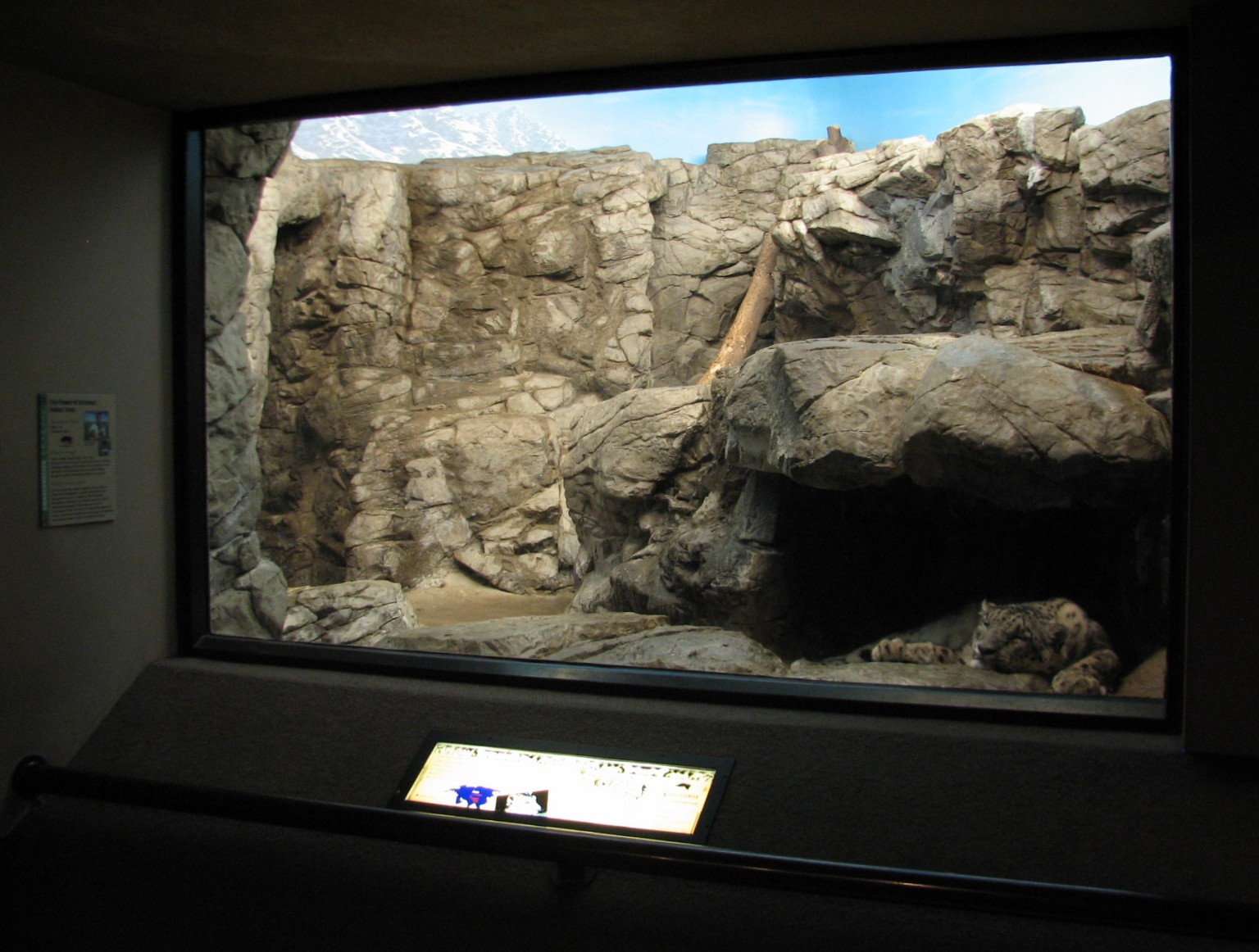
I'm wondering if we have any concrete information about the actual size and area of the exhibit seen in the photo and the new snow leopard exhibit?
Does anyone have anything new to add? Has anyone been to the zoo recently and seen the snow leopard?
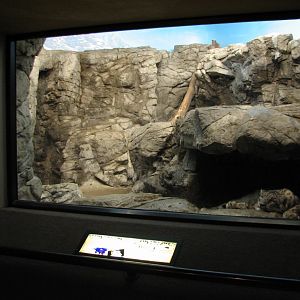
I just came across this photo and although I had a vague notion of Cincinnati having small-ish indoor exhibits for cats, I had no idea it was this bad.
So I have a question, it may be somewhat naive but I wonder, how does the zoo, as a major accredited institution justify this? I don't mean in a hypothetical 'how can they do this?' way but rather in a totally straight-forward way. How do they think this kind of husbandry is appropriate in the 21st century?
I just came across this photo and although I had a vague notion of Cincinnati having small-ish indoor exhibits for cats, I had no idea it was this bad.
So I have a question, it may be somewhat naive but I wonder, how does the zoo, as a major accredited institution justify this? I don't mean in a hypothetical 'how can they do this?' way but rather in a totally straight-forward way. How do they think this kind of husbandry is appropriate in the 21st century?
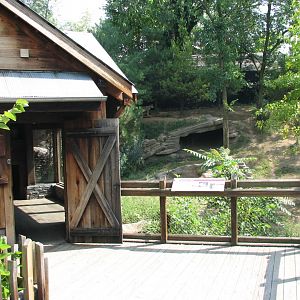
Quite frankly--while I am by no means justifying this one...the outdoor exhibit isn't as bad as the photo makes it. It's still bad but that photo makes it look worse.
Cincinnati's problem IMO is space. If you've ever been to the zoo, you know that it is literally inside of an urban city area mixed with a rough neighborhood. Literally. The zoos new parking lot from last May is surrounded by homes, there is a home just feet away from the back rhino paddocks and most ganders out of the zoo from the zoo show homes, etc. As a result...expansion isn't possible. The zoo is tightly packed enough that in order to expand any one area of the zoo is a hardship. Right now, the zoo is renovating it's Children's Zoo area and--as a result--it's a much longer walk in varying directions and steps of back-stepping to get where you want to go. If the zoo wanted to heavily renovate the cat house at this point, it would impinge on access to the majority of other major exhibits (tigers, rhinos, gorillas, etc.).
The zoo has recently gone through many rotation changes at the cat house. Meerkats were added a few months ago, they've moved the Tayra on and off exhibit a few times to accomodate the Fishing Cat cubs with more space, Eared Foxes, etc. The snow leopard has some form of sore on the tip of his tail (the zoo is very aware of) and IMO (I know others feel differently) is the only really offensive exhibit in the cat house. The other exhibits, while I wouldn't use the word 'good' for any of them, are an adequate amount of space for what are generally small cats.
So, after all this babbling (thanks for reading if you have lol), I don't think Cincinnati is 'justifying' any this exhibit or thinking it's appropriate. They have plenty of stand-out exhibits for other animals (come now, most of you will give me the Insect House and Jungle Trails as stand-out for the zoo, right?). I think zoos just do what they can. You can't renovate every exhibit when you realize it's not good enough at the drop of a hat--especially when in a few years it's likely to change again. When the zoo's gorilla exhibit opened up, it was groundbreaking and novel. Now, it's an average gorilla pit.
I'm wondering if we have any concrete information about the actual size and area of the exhibit seen in the photo and the new snow leopard exhibit?
Does anyone have anything new to add? Has anyone been to the zoo recently and seen the snow leopard?
I think zoos just do what they can. You can't renovate every exhibit when you realize it's not good enough at the drop of a hat--especially when in a few years it's likely to change again. When the zoo's gorilla exhibit opened up, it was groundbreaking and novel. Now, it's an average gorilla pit.
I accept that zoos have budgets and limitations but if you have a small space and little money then you should be pragmatic as London Zoo was in the 1990s and stop keeping certain species.
I'm a firm believer in not keeping animals if you can't keep them properly.
Good to hear that the other animals in the building are more appropriate for the spaces but I can't accept this.
I accept that zoos have budgets and limitations but if you have a small space and little money then you should be pragmatic as London Zoo was in the 1990s and stop keeping certain species.
I'm a firm believer in not keeping animals if you can't keep them properly.
Good to hear that the other animals in the building are more appropriate for the spaces but I can't accept this.
That's impossible, however, for two reasons. No species of animal in the US or worldwide has a 5-star exhibit every single place it is exhibited. But in many cases, these animals are alive in part because of the breeding efforts many zoos have worked on. If you want SSP's to be successful, you need a certain number of animals. You can't crowd those animals too much at locations with the space and money to keep great exhibits, so those animals have to go somewhere. In some cases, yes, to poor exhibits. I'd much rather that than have to explain to my children why so many animals are no longer alive.
Public opinion of what is 'good' and 'adequate' changes frequently. We've all seen photos of tigers being kept in much smaller spaces with bars in the early 1900's when that was considered a great exhibit, yes? Even weeks before Bronx went ahead with Congo, the idea of a good gorilla exhibit was vastly different, etc.
I also think there's a difference between exhibited space and total space. I entirely doubt that this snow leopard has lived every ounce of time at the Cincinnati Zoo in either the indoor or outdoor space. Off-exhibit holdings, etc. need be factored in too.