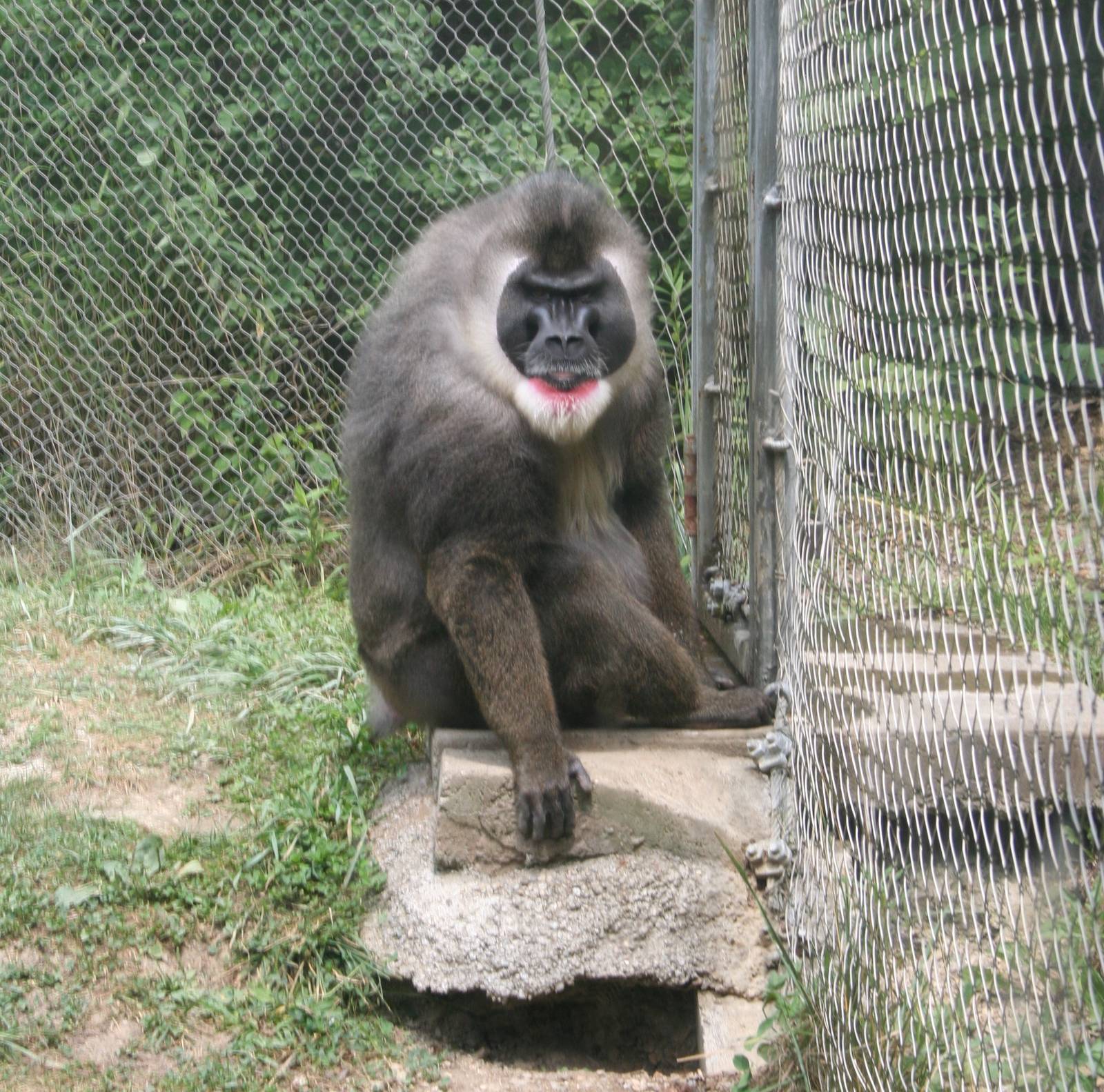
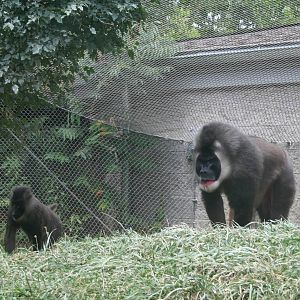
They never have been that common. They could have been if breeding occured but this has become one of the top ten hardest species to breed in captivity. Its sad such a beautiful and amazing primate couldn't prosper in the US.
I wouldn't say it's "hard" to breed them in captivity, as Hannover Zoo or the Drill Ranch | Pandrillus demonstrate.
I think there are several aspects contributing to the small number of drills in zoos. One could be inapt social groups (a 1.1 husbandry with an eager male means a lot of stress for a single female...), another the rarity of the animal and the "competition" with the similar but much more colourful and more popular Mandrill.
I wouldn't say it's "hard" to breed them in captivity, as Hannover Zoo or the Drill Ranch | Pandrillus demonstrate.
I think there are several aspects contributing to the small number of drills in zoos. One could be inapt social groups (a 1.1 husbandry with an eager male means a lot of stress for a single female...), another the rarity of the animal and the "competition" with the similar but much more colourful and more popular Mandrill.
Just because a handful of institutions have luck, doesn't mean a species isn't hard to breed. If they were 'easy' they wouldn't be endangered in the wild or in zoos, now would they .
ColumbusZoo001, what would you say in your experience/knowledge ARE the ten hardest species to breed?
@tigertiger: There are various species that breed well in captivity, but are nevertheless not common in most zoos. Take Frankfurt Zoo as an example, with their successful breeding of Sri Lankan Rusty-Spotted Cats or Australian Water Rats. Ever seen those in many zoos worldwide? The frequency of zoo husbandry of a species is also influenced by demand; if only a few zoos are interested in the presentation of the species, it won't be a common sight in zoos-even if it might breed well. In the case of the drill, reasons (mandrill competition) are mentioned above.
Since when are animals in zoos "endangered"-unless they live in a war zone or among very hungry (or stupid/evil) people?
And the drills in the wild might breed like rabbits-that wouldn't change the habitat destruction and massive poaching they face.
Last but not least: better let Lyle play the cheeky monkey.
In the US, at this very moment I would say the following. This is based on rarity and breeding rates with the current population. They are in no particular order.
- Sumatran Rhino
- Drill
- Pallas Cat (Population is crashing due to lack of breeding)
- North Island Brown Kiwi
- Southern White Rhino
- Hooded Crane
- Asiatic Black Bear (Breeding hopes have really gone out the window)
- Giant Panda
- Dhole
- Harpy Eagle
- Giant Otter ( We dont enough about them to breed - they are also a "new" species to be held in captivity
Also note that some major zoo animals are having difficulty right now (Asian Elephants, Western Lowland Gorillas, Black Rhinos).