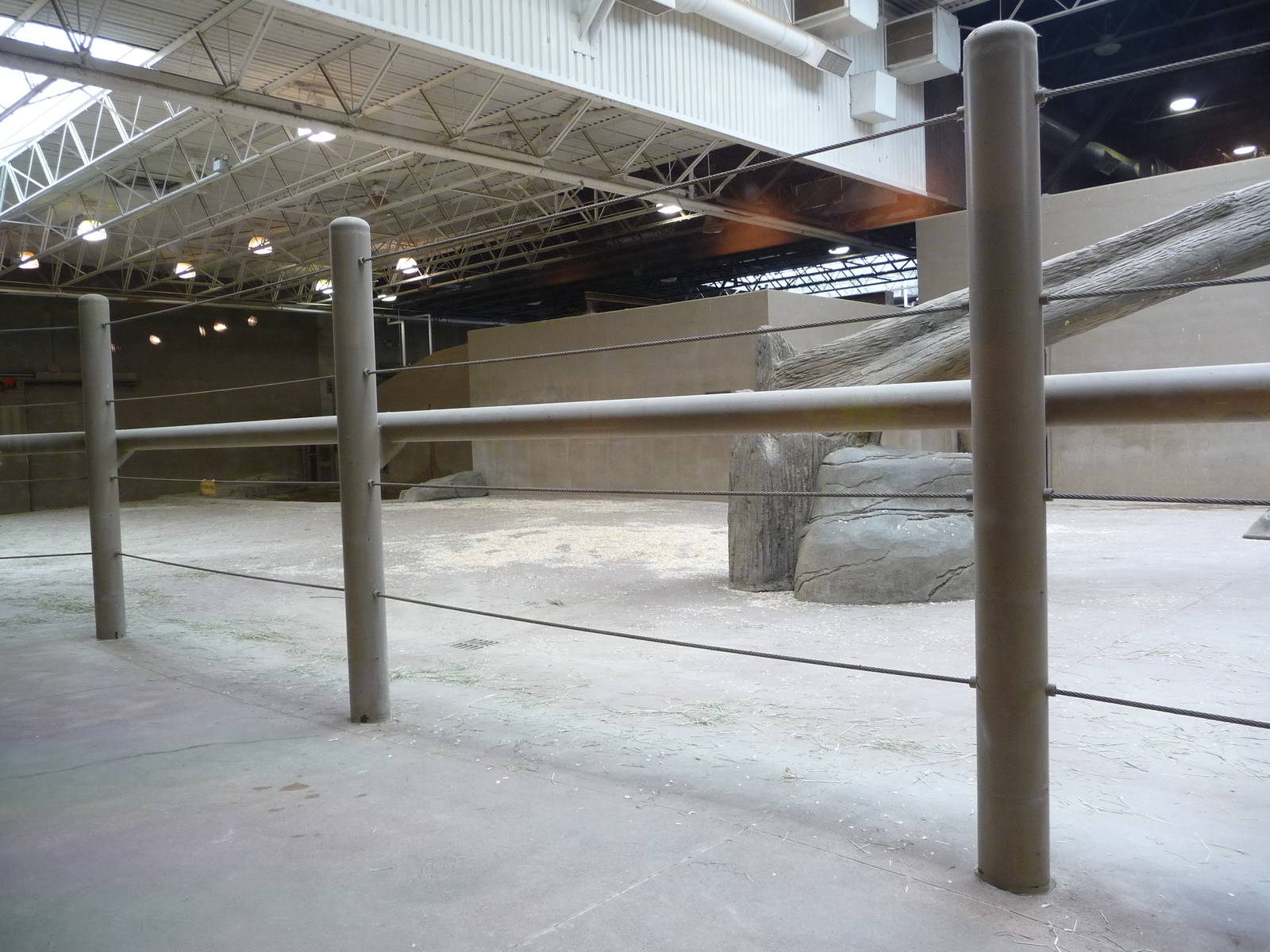
The one item that is sadly lacking in this massive building is some type of soft substrate for the elephants and rhinos, as standing on concrete is not cool for heavy pachyderms.
The floor is designed to be rough so that all the debris caught in the elephant's foot gets rubbed out. I don't remember where I heard about this. I personally think this Pachyderm Building is a trend setter. Its not cramped at all and nearly every building in the country that houses rhinos and elephants has a concrete floor.
@ snowleopard: I know you love substrate (and in any other case so do I) but we opted for a more sanitized facility. And BlackRhino is right. The floor is rough so we dont have to clean their feet, like most facilities do. The topography is also leveled so none of our elephants have joint pain.
I really really do not like the look of this exhibit. I am sure that the hard and sterile floor has its benifits, but I'd still prefer some soft, natural substrate any day. Also, there does not seem to be let much natural light into the indoor exhibit? Or is there more than can be seen on this photo, like a part glass roof?
My zoo-philosophy has always been that zoos should be a "window to the wild" and this elephant house is not the least bit naturalistic (as well as many others).
Sorry if this sounds harsh. I am not questioning the ability of the keepers or their husbandry methods, just the house. I do like the amount of space given to the elephants here though.
Also, there does not seem to be let much natural light into the indoor exhibit? Or is there more than can be seen on this photo, like a part glass roof?
Actually a lot of the roof is glass. There are three sections in the front of the building and three in the back. You can kinda see one in the corner of the photo.
Considering the room you're looking at is larger than most elephant houses in the world, 11,000 sq. ft. than I say natural or not this is one of the best elephant houses in the world if not the best. And that room is only 1/4 of the building. Substrate can allow the build up of dangerous bacteria and diseases, specifically colic.
I hate to be too picky, but colic is not quite something that can "build up" in substrate. Colic is often from gut impactions, gastric torsion, or other physical issues of the gastrointestinal tract, etc. In the situtations involving substrate, colic has resulted from excessive ingestion of the substrate often leading to some kind of impaction.