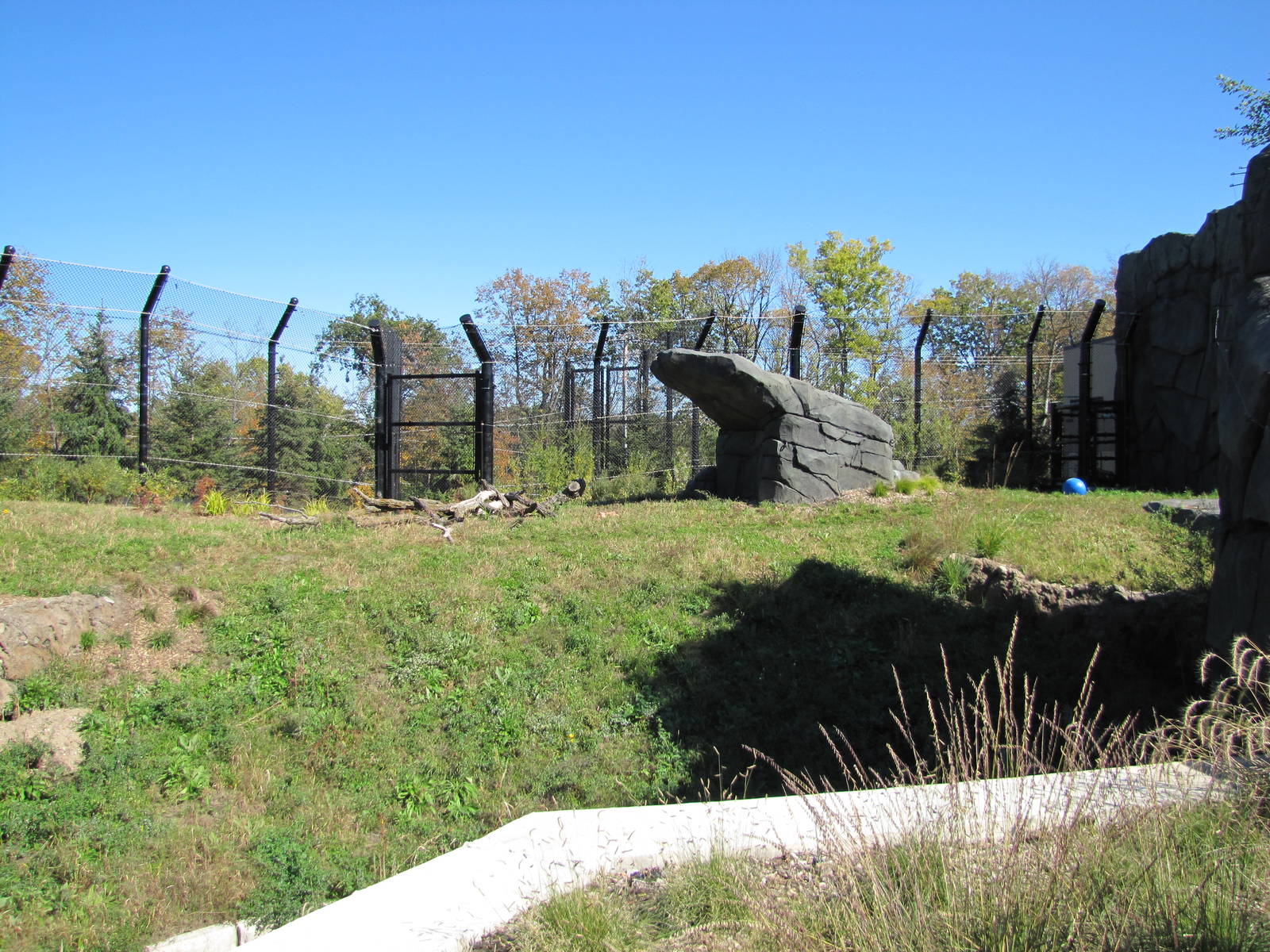
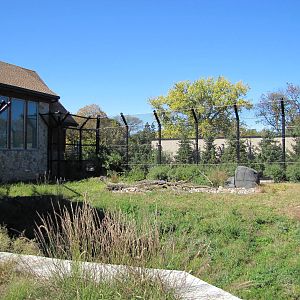
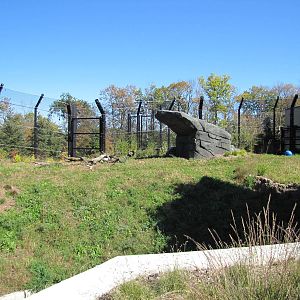
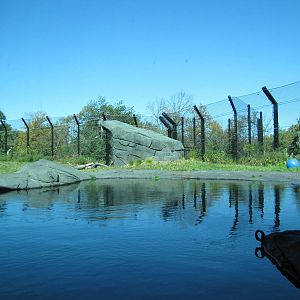
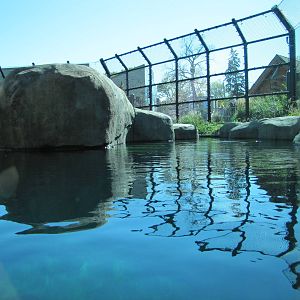
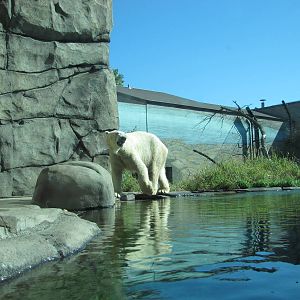
It is great to see new polar bear exhibits being built that actually have large amounts of grass in the enclosure (examples include Toronto, Columbus and Como) but the photos of this exhibit surprisingly show tall metal fences rather than the atypical rock walls. I wonder if that saved the design team a lot of money?
It is great to see new polar bear exhibits being built that actually have large amounts of grass in the enclosure (examples include Toronto, Columbus and Como) but the photos of this exhibit surprisingly show tall metal fences rather than the atypical rock walls. I wonder if that saved the design team a lot of money?
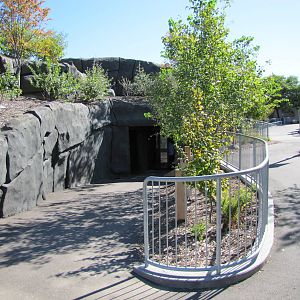
It saved the design team nothing. The zoo and the contractors who BUILT the exhibit saved a bundle. And judging from the photos of the fake rock that WAS built for this exhibit, it was especially good that it was not used any more extensively than it was.
Also, I think you meant to say "typical" not "atypical" as a fake rock wall is all too often used as a solution for containing bears.
Maybe I'm splitting hairs here. I am confident that both of you understand zoos and exhibitry well enough to know the implications of fence vs. wall, but for the other Forumers who may not I thought I'd flesh this out a bit:
No, I disagree with the quote. Yes, the expense of gunnite vs. fence meant the zoo didn't spend as much on containment (but did that allow them to spend more on something else or to cut the budget?)
And the design team works for a contracted fee, so they did what they were supposed to do in the time and fashion that was intended. They neither saved nor lost money (if they were smart). It is a fair guess that early on everyone agreed not to spend the zoo's limited budget on gunnite containment - for whatever reason.
But it does indeed take extra time to design a gunnite containment compared to fencing, so the designers as a result spent less time on this than they might have.
But @snowleopard, I suspect all you are asking is whether the use of fence rather than gunnite wasn't a budget consideration.
There's no way to know really. There are good aesthetic reasons for this as well as budgetary ones.
Maybe I'm splitting hairs here. I am confident that both of you understand zoos and exhibitry well enough to know the implications of fence vs. wall, but for the other Forumers who may not I thought I'd flesh this out a bit:
No, I disagree with the quote.
But it does indeed take extra time to design a gunnite containment compared to fencing, so the designers as a result spent less time on this than they might have.
QUOTE]
That is debatable. Most of these specialist zoo design firms have a "bag of tricks" of basic designs that can be pulled out of a drawer (or a computer) at a moments' notice: "Polar Bear containment fence A1" or "Gunite wall detail #4" etc. etc.
Now, to have taken the time to design a beautiful, highly-detailed geological replication that was also a containment wall WOULD be more time-consuming, therefore more costly. But as is evident from the photos of the rest of this exhibit, this is not something that was pursued, likely based on the limited budget and expectations of the zoo.
Most of these specialist zoo design firms have a "bag of tricks" of basic designs that can be pulled out of a drawer (or a computer) at a moments' notice: "Polar Bear containment fence A1" or "Gunite wall detail #4" etc. etc..
I work with most of these folks and that is not really how it goes.
It can be that way for some "details" (anchor for deadfall tree, for ex.), but usually gunite containment is determined by site based factors and any details of the specific exhibit's storyline, etc.
Depending on the project, scale models may be made of all or part of the exhibit. In many cases, these become part of the contract documents that the rockwork fabricator will bid from and sculpt from. These models are time consuming and expensive to make.
This is an interesting conversation, and my initial thought was that I was a tad surprised to see a large, black, metal fence in place of the usual rockwork that is almost ubiquitous when it comes to modern bear exhibits in American zoos. To see a brand new exhibit (2010?) with fencing was a shock, although I do realize that Como is a small zoo somewhat in the shadow of the nearby Minnesota Zoo...and that may or may not be related to the price-tag on this particular habitat.
It is difficult to discern exactly how large the enclosure is, but the expanse of grass is definitely a heart-warming sight for someone sick of seeing outdated concrete grottoes.
I don't mind the fencing and I don't think it's old-fashioned as snowleopard seems to suggest. Although it is very obviously there, the fact that you can see trees and sky beyond it gives me a sense of space and openess.
Many rockwork backgrounds - such as Brookfield to name one recent example - give me a sense almost of a bear pit at times and I feel show little progression from old style grottoes.
I think the way forward for bear enclosures in general is much more simple: fenced in areas of wood or paddocks with lots of water and mixed substrates. I think they are cheaper than the average bear enclosure and may also be better for the animals.
I don't mind the fencing and I don't think it's old-fashioned as snowleopard seems to suggest. Although it is very obviously there, the fact that you can see trees and sky beyond it gives me a sense of space and openess.
Many rockwork backgrounds - such as Brookfield to name one recent example - give me a sense almost of a bear pit at times and I feel show little progression from old style grottoes.
I think the way forward for bear enclosures in general is much more simple: fenced in areas of wood or paddocks with lots of water and mixed substrates. I think they are cheaper than the average bear enclosure and may also be better for the animals.
Many recent bear exhibits have been designed using fencing, which is far cheaper than rockwork. Black bear exhibits in Portland, Lincoln Park, Naples; Polar bears in Toledo all come to mind. The biggest concern about this is that since bears can climb, the fence solution requires hotwires and/or unsightly metal non-climb panels to safely contain the animals.
But the best example of this technique I've seen is at Northwest Trek, where the black and brown bear exhibits are so large and the enclosed forest so dense that the fencing nearly disappears from view.
I couldn't agree more on the retrogression exemplified by the new Brookfield exhibits.