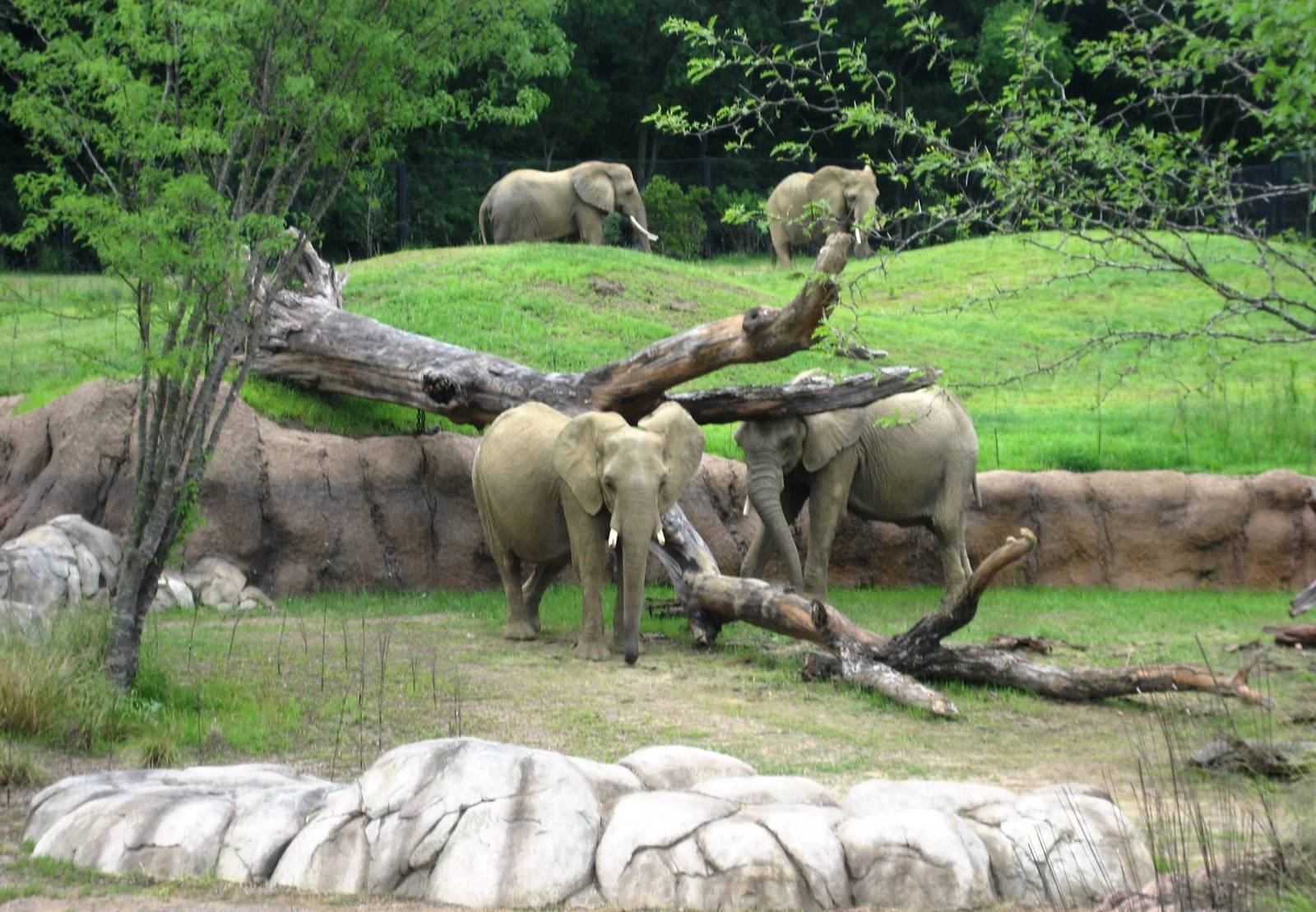
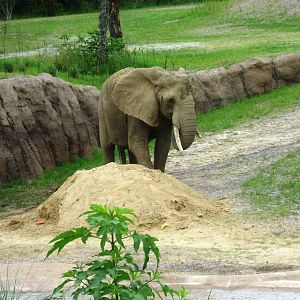
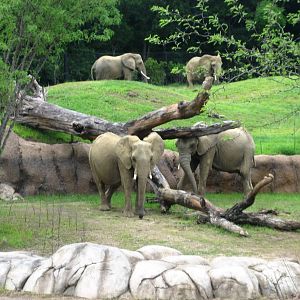
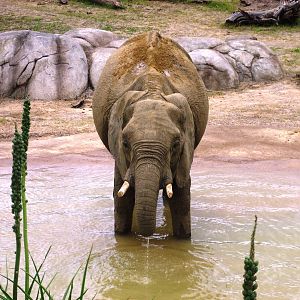
You can see the hotwire that allows for that around the trees. I think I prefer it this way than letting the trees be destroyed by the elephants and the exhibit turning into a barren paddock.
You can see the hotwire that allows for that around the trees. I think I prefer it this way than letting the trees be destroyed by the elephants and the exhibit turning into a barren paddock.
I usually hate hotwire, but I completely agree with you in this case. Its probably cheaper to have hotwire than to constantly replace the plants.
I'm no horticulture expert, but does anyone know if certain plants were used that would deter elephants from messing with them? Plants that may taste bad or have thorns possibly.
I usually hate hotwire, but I completely agree with you in this case. Its probably cheaper to have hotwire than to constantly replace the plants.
I'm no horticulture expert, but does anyone know if certain plants were used that would deter elephants from messing with them? Plants that may taste bad or have thorns possibly.
Transplanting trees large enough to offer elephants shade is very expensive, and great stress on the trees. The process does further damage the exhibit. To plan on regular replacements would not be the wisest strategy, IMO.
The trees are quite thorny.
That will not deter elephants
The line between "tastes bad" and "toxic" is a fine one when it comes to elephants
Yes, if it had to do with plants/landscape then I was the designer responsible.
I usually also get involved a bit in over-all exhibit design, but more as an "associate" you might say