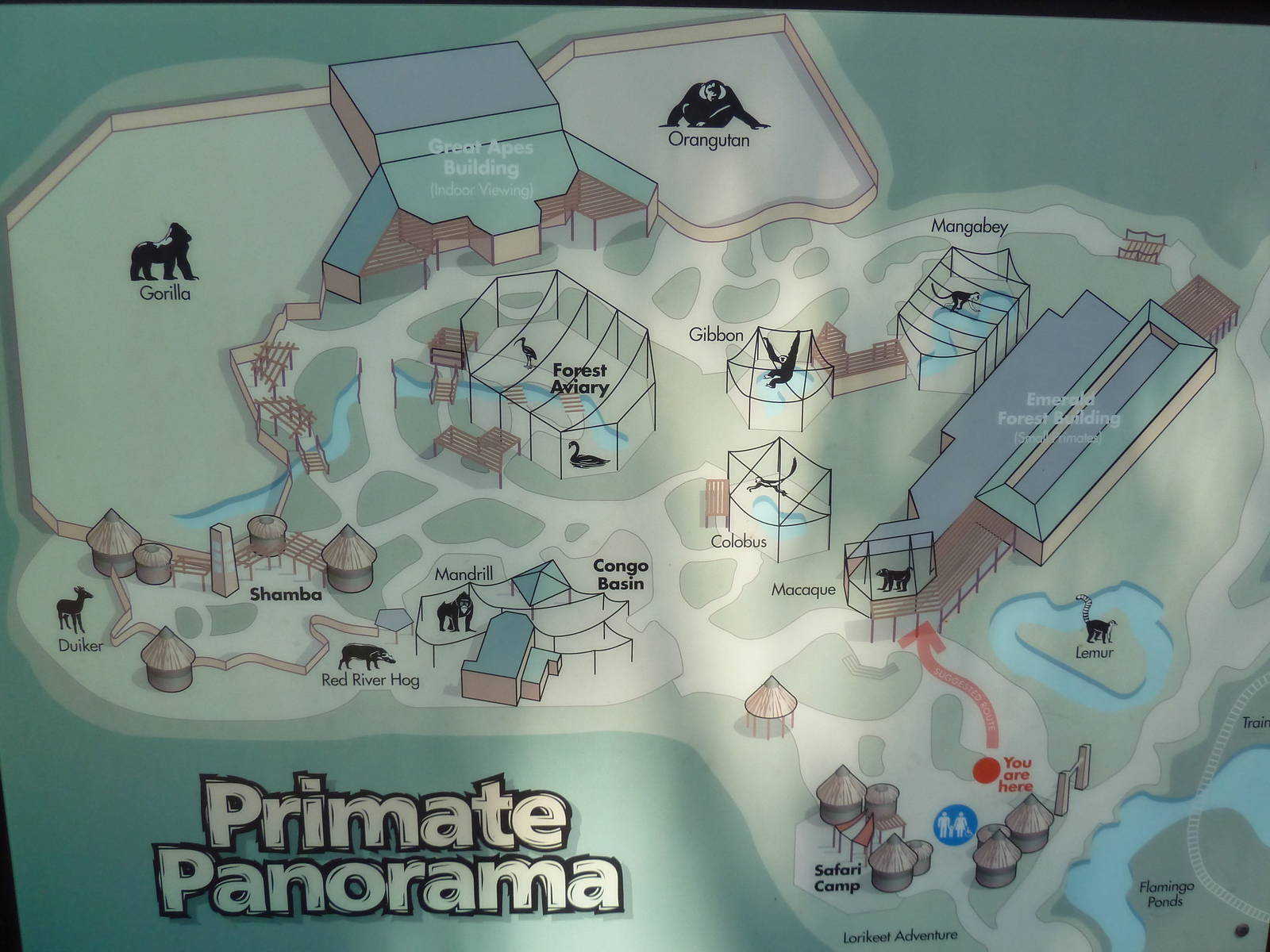
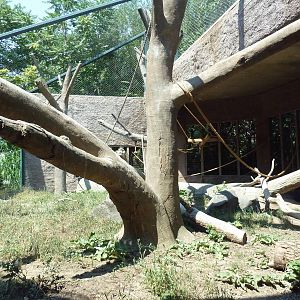
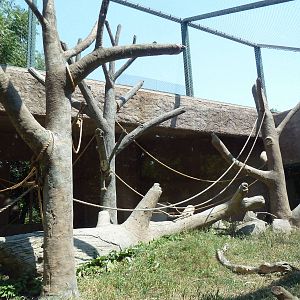
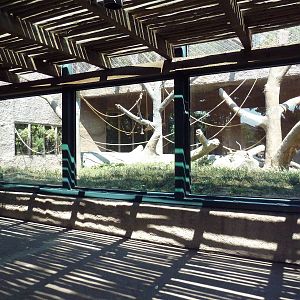
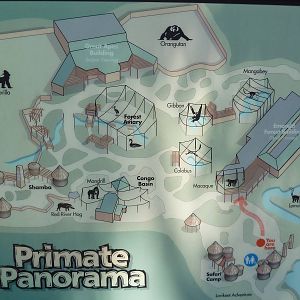
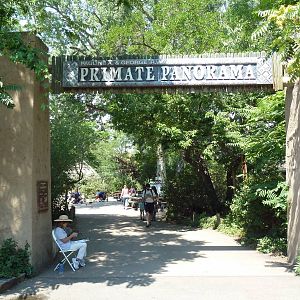
This 7-acre set of habitats features a whopping 20 different kinds of primates (from 3 different continents) and several other species in a wide-ranging style of exhibits. Before going past the main entrance visitors pass a lushly planted squirrel monkey exhibit and a spider monkey/giant anteater habitat that is green and dense with vegetation. Lemur Island features two species (red ruffed and white collared brown) across from Flamingo Lagoon that also features two species (American and Chilean). Black-crested macaques have an outdoor and indoor yard that is seen before the Emerald Forest building is entered. Madagascar is the first themed area and it features the indoor viewing areas for the Lemur Island inhabitants as well as all-indoor exhibits for ring-tailed lemurs and mongoose lemurs.
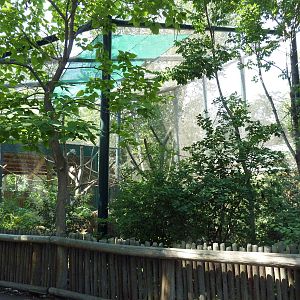
Tropical Forests has all-indoor exhibits for Goeldi’s monkeys (with a southern tamandua), white-faced saki monkeys (two exhibits), golden lion tamarins (two exhibits), emperor tamarins, pygmy marmosets and aye-ayes. Indoor housing for the squirrel monkeys is also seen here. Back outside is a gorgeous, natural-looking netted enclosure for red-capped mangabeys as well as a similar habitat for golden-cheeked gibbons. Both of those enclosures are superb, and across the pathway is a large outdoor habitat for orangutans that is certainly green and naturalistic but could definitely use a lot more climbing opportunities. The 5 orangs do have access to some large trees and the same goes for the 5 gorillas next door that have one of the largest ape habitats in any American zoo. It is an acre in size and resembles a forested environment which naturally makes it difficult to locate a gorilla. There are massive viewing windows at both exhibits, indoor quarters that are loaded with wooden beams and open year-round, and even a two year-old orangutan that was adorable and drew quite a crowd.
There is an exhibit for a yellow-backed duiker, two red river hog enclosures, plus more excellent, lush primate exhibits for mandrills, DeBrazza monkeys and colobus monkeys (with klipspringers). A blue duiker/silvery-cheeked hornbill exhibit ends the trail. A small walk-through aviary has these 14 species: Von der Decken’s hornbill, black-necked swan, black swan, smew, kookaburra, nene, mandarin duck, bar-headed goose, boat-billed heron, South African shelduck, scarlet ibis, cattle egret, roseate spoonbill and Egyptian vulture.
Besides the 20 primate species in Primate Panorama there are also black howler monkeys in Tropical Discovery and a large troop of hooded capuchin monkeys on the outstanding Monkey Island. The capuchins have a vast network of tall trees to roam about and they fare better than the sad-sack monkeys that are stuck inside the small metal cages of the 1908 Monkey House. Wolf’s guenons, silvered leaf monkeys and the indoor housing for the hooded capuchins is also found here. In total Denver Zoo has 24 primate species, most of the exhibits are exemplary, and I think that it beats out San Diego as America’s #1 zoo for primates. Monkeys, lemurs and apes are already the most popular zoo animals for most visitors (including myself) partly because they are so active and human-like in appearance. To have 7 acres of a zoo set aside for such entertaining and interesting mammals, complete with a replicated West African village, makes this one of America’s 25 best exhibit complexes. One day I’ll sit down and make a list of my 25 favourites and Primate Panorama will be a lock for a place.
I think this exhibit is Denver Zoo's best. Shamba has somewhat small exhibits for its' duiker and hogs but that can be overlooked. I think the only downfall of this exhibit is in Emerald Forest; there is no outdoor viewing or even exhibits for the primates located there.
On my visit in 2022, the exhibit listed here for macaque was now inhabited by colobus, and the exhibit listed here for mangabey was being used for spider monkey. I think the exhibit listed for colobus above was being used for Debrazza monkey by that time but I am much less certain as I was sped through the southwestern section. I likely missed the Shamba area entirely.