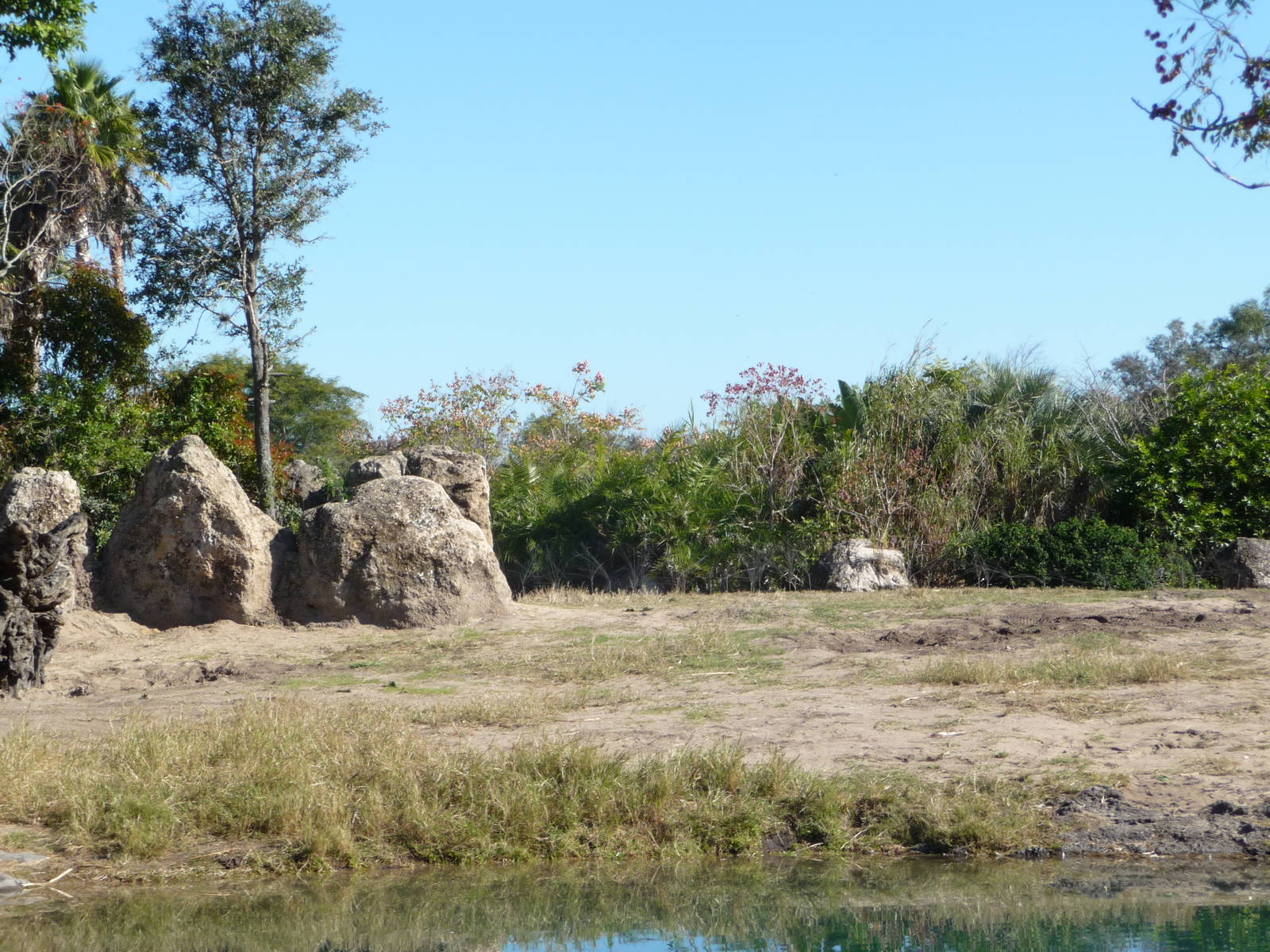
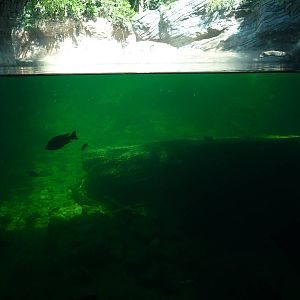
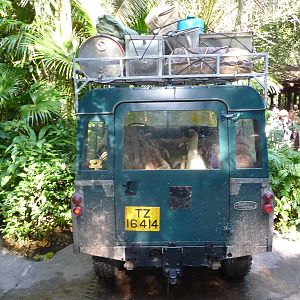
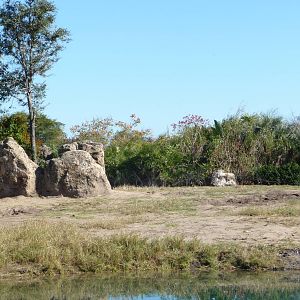
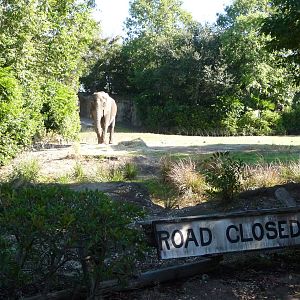
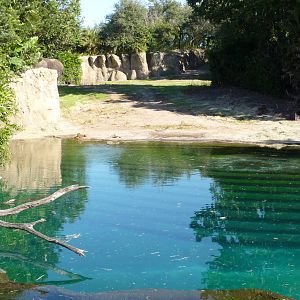
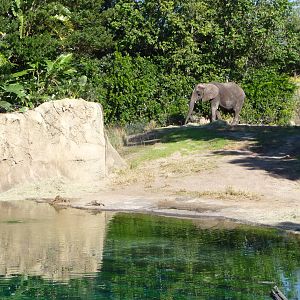
Picture after picture, everything looks so amazingly realistic!
But also - just as I have started to take notice of from so many other brilliant pictures of snowleopard´s - look closely and you will see those damned hotwires!
Those electrical fences - so easy to overlook and of course completly invisible to other people than to us zoo geeks - make Disney Magic a little bit less "magic"....
I agree that sometimes hotwire can become a major turn-off for zoo geeks, but it is surprising how many people don't ever notice it and question as to what is containing the animals. The Miami Metrozoo is a great example of a zoo that uses deep moats to separate visitors from animals, and thus there isn't much use of hotwire at that particular zoo.
There also isn't much in the way of vegetation inside the Metrozoo exhibits, from what I've seen. Hotwire is used as a primary barrier in many European zoos, but almost never is in the US, where it is typically reserved to protect plantings or keep animals from falling into deep moats
Picture after picture, everything looks so amazingly realistic!
But also - just as I have started to take notice of from so many other brilliant pictures of snowleopard´s - look closely and you will see those damned hotwires!
Those electrical fences - so easy to overlook and of course completly invisible to other people than to us zoo geeks - make Disney Magic a little bit less "magic"....
Dan, I can't help but feel that you are overreacting to these hotwires.
If they were unsightly and seperating large portions of these enclosures then I could understand, but these are just acting as a fence, ha-ha, water moat or glass panel and it also 'completes' the experience of actually being in Africa.
Immersion can work upto a point, until the visitor see the back wall of the exhibit or the frames of the glass, but with discreet hotwire then there are no 'foreign' objects ruining the scene.