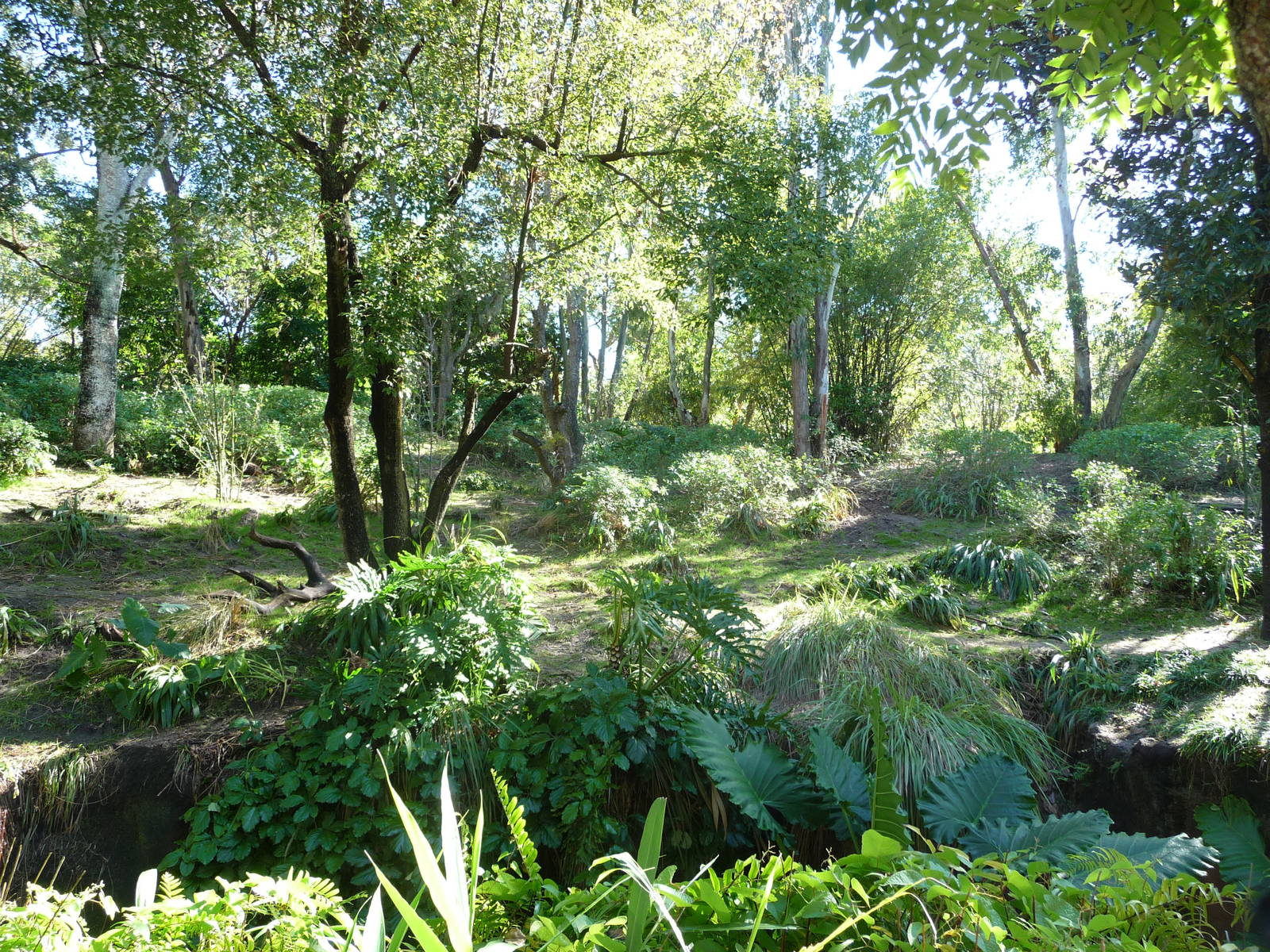
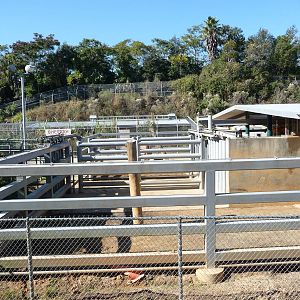
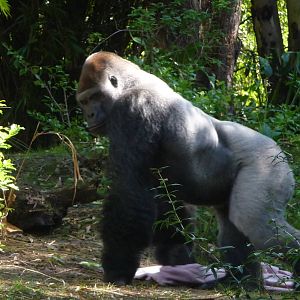
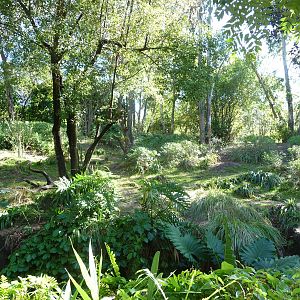
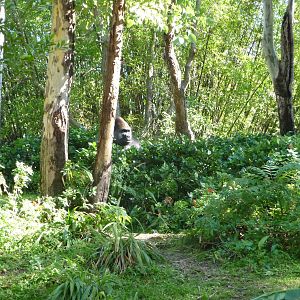
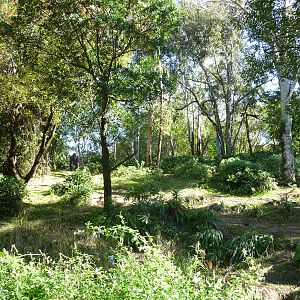
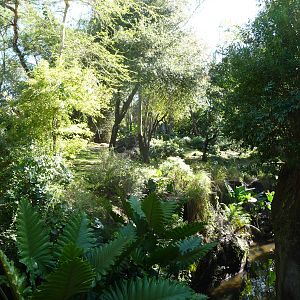
I have to go here, but based on the pics I'm not sure why CGF is rated as being quite a bit better than this exhibit. They look pretty similar, but again, I need to visit Disney.
@mweb08: Disney and Bronx each have 2 large gorilla habitats, and they are all brilliant for both visitors and the apes. While I personally would rank those as the top two that I've seen there of course many other excellent gorilla exhibits in North American zoos, and places like Atlanta, Woodland Park, San Diego and Lincoln Park all have extremely impressive exhibits. There are plenty of others that are above average as well, and what a difference from 31 years ago when American zoos didn't even have grass for their apes! Woodland Park in 1979 was the first zoo to open an all-naturalistic gorilla enclosure.
I'm a little confused how that's a response to me.
I'm just wondering why CGF(which I've been to and is excellent) is considered so much better than this exhibit(which I haven't been to) by most on here.
@mweb08: I was pointing out some of the top gorilla exhibits in the United States, but what I really should have clarified is that I personally see Disney as a stupendous pair of enclosures and I feel that it is only slightly behind CGF in terms of total brilliance. Disney's weather gives it an edge, but Congo's massive glass windows allows for closer viewing and the almost 20 gorillas edges out Disney in terms of "quantity of apes".
Disney does have glass viewing, but it is not nearly as impressive as Congo's enormous windows. However, at Disney the outside area is absolutely brilliant, and they probably have sunshine over 300 days a year as well!
The reason Bronx is much better then Disney is the design. Bronx has better visitor viewing opportunities, a more interesting topography, and was built within a mature forest. By being built within a mature forest Bronx has the best canopy of any zoo. Bronx also gave their plants 1-2 years to mature before opening the exhibit up to the gorillas. More mature foliage further helps to better simulate a more believable African rain forest.
@BlackRhino: well written, and you have brought up a great point about how the Bronx Zoo purposely allowed the foliage in its gorilla enclosures to settle and become rooted before unleashing the apes. The Woodland Park Zoo did the same thing before 1979 when their own historically-famous gorilla exhibit opened to the public. Both zoos, along with Disney, wanted to recreate to the best of their ability a believable African rain forest, and thus make a deliberate statement about the benefits of conservation by allowing visitors to become immersed in an effective reconstruction of central Africa.
Thank you Snowleopard! That was nearly the same response, I got from reduakari when I inquired on the same question.
When zoos allow the foliage time to grow, a much better exhibit results. At Cleveland Zoo, are Mopani Range enclosure of African Elephant Crossing will have several enormous mature trees. Also, trees from the old elephant exhibit are being incorporated into the new one. The Dallas Zoo, also has already planted their trees, which is very smart as the trees will have over half a year to mature before elephants are trampling around the enclosure.
The reason Bronx's CGF is better than Disney is the gorillas are easier to see, there is a VERY STRONG conservation message (interactive educational stations) and it is part of an overall recreation of Congo with other forest animals. (Just my opinion, but I have been to both exhibits).
While DAK is definitely one of the top gorilla exhibits, and there are a few other excellent exhibits, there are not that many exhibits overall compared to a large zoo. And you can't even see the savanna unless you're on the Kilminjaro Safari vehicle. Considering the outrageous admission fee, I feel DAK is a complete ripoff.
I know there was another thread about best gorilla exhibits, but my vote for other top ones beside these two are Busch Gardens and Dallas Zoo. San Diego Zoo is pretty good too. San Diego Wild Animal Park could become great if they plastered over the concrete on the end with more natural-looking rockwork and replanted the natural hillside to make it more lush. When it first opened in the early 70's, it was the largest gorilla exhibit in the country.