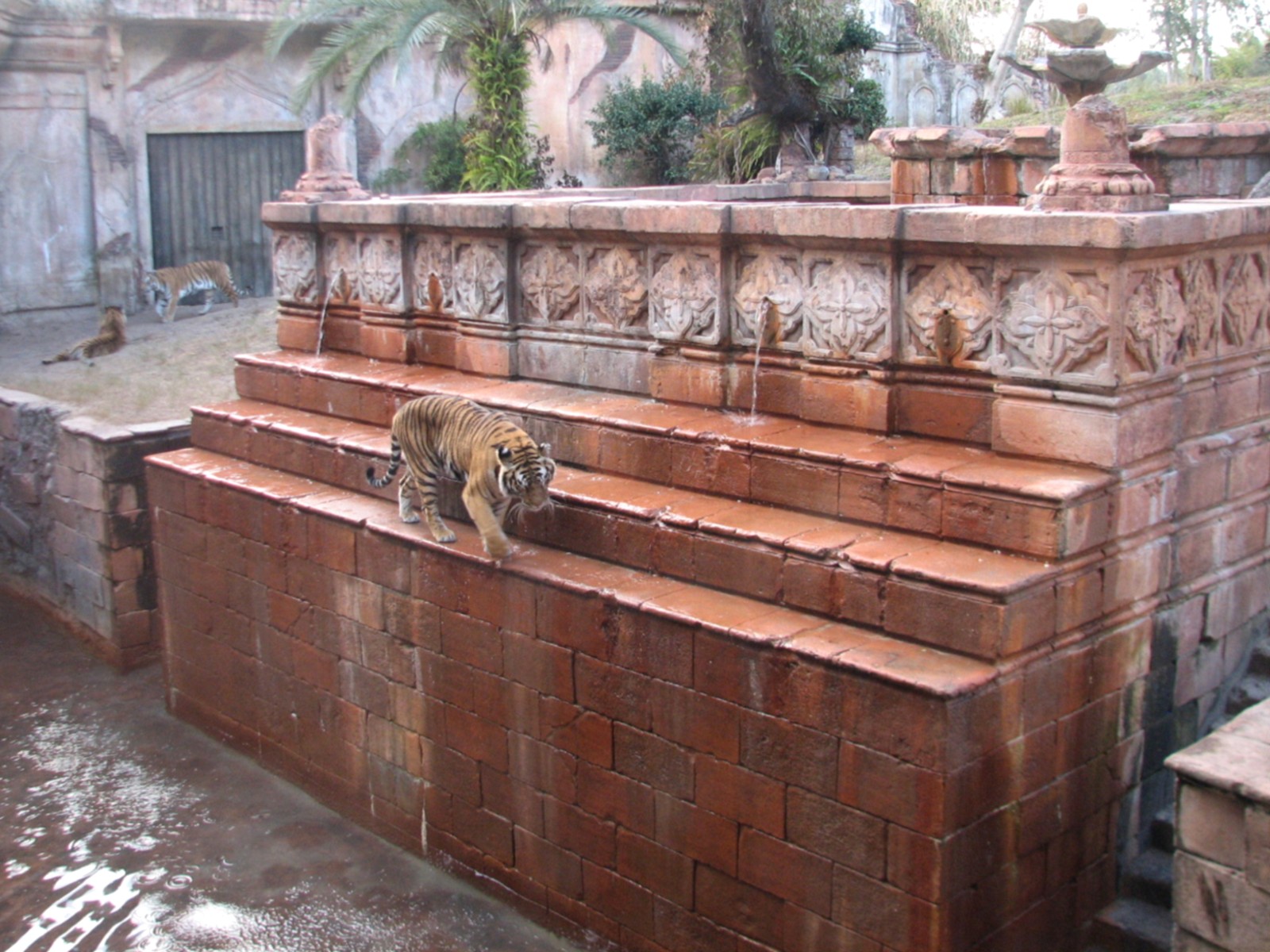
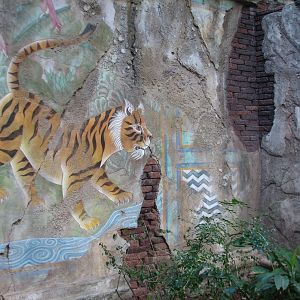
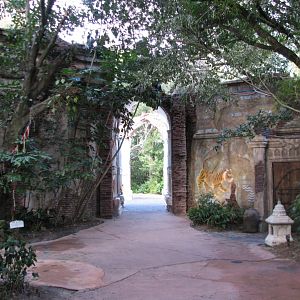
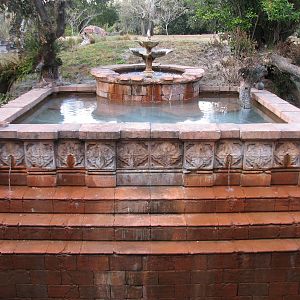
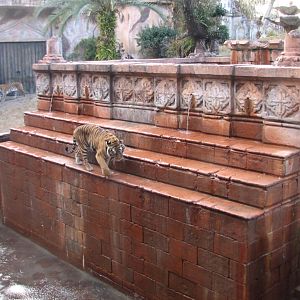
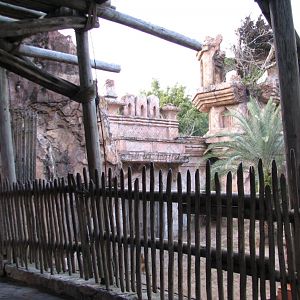
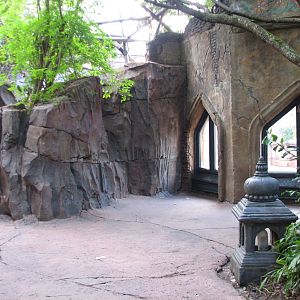
Yes the tiger exhibit is MUCH larger than what you see here. This is only the first viewing area of the first exhibit. Probably not good to speculate about things you've never seen personally. There are plenty of other shots in this very gallery showing off other regions of the exhibit.
Yes, I was fortunate enough to have been shown around the off-exhibit areas at DAK.
The tiger enclosures are vast and put every tiger exhibit in the UK to shame in terms of size. The area you see at the back is part of the exhibit and allows the tigers a huge area of privacy.
I agree with Diseny's marketing team. This is not a zoo it is a Theme Park in that it has attractions (rides and animals), landscaping and architecture built around focused themes.
Anyone who calls it a zoo simply has not been there.
I agree with Diseny's marketing team. This is not a zoo it is a Theme Park in that it has attractions (rides and animals), landscaping and architecture built around focused themes.
Anyone who calls it a zoo simply has not been there.
It may be a theme park as well, perhaps predominately, but anywhere keeping a collection of captive non-domestic animals for display to the public is a zoo, at least in part.
It may be a theme park as well, perhaps predominately, but anywhere keeping a collection of captive non-domestic animals for display to the public is a zoo, at least in part.
I'd argue the animal exhibits are part of the theming. I would also say that Windsor Safari park, Duke University Lemur Centre, Monteray Bay Aquarium and Sea World are not “Zoos”.
How many exotic animals does it take for a facility to become a zoo in your opinion? Does Kew Gardens count?
I'd argue the animal exhibits are part of the theming. I would also say that Windsor Safari park, Duke University Lemur Centre, Monteray Bay Aquarium and Sea World are not “Zoos”.
How many exotic animals does it take for a facility to become a zoo in your opinion? Does Kew Gardens count?
(caveat - I won't comment on Kew, as I don't know what animals they do have. But if they have any at all you could make a case that they are at least part zoo, albeit in a very minor way)
I'm intrigued though - how would you define a 'zoo' in such a way to exclude Windsor Safari Park or Sea World short of saying 'it has to have the word zoo in its name'?
Certainly from a legal point of view, they are most definitely zoos.
I have always treated Aquariums, Safari Parks and Theme Parks as being distinct facilities.
The word Zoo is an abbreviation of the term "Zoological Gardens" so to me a Zoo is a collection of animals displayed against a backdrop of lanscaped gardens (there are varying degrees of landscaping from Bristol to Hammerton!).
Pata Zoo in Thailand (A horrendous place and I strongly suggest that no one ever fund its continued existance with a visit) is a collection of animals maintained on the top floors of a departmartment store. I would call that a menagerie (and is the only example I can think off that I have visited).
I have always treated Aquariums, Safari Parks and Theme Parks as being distinct facilities.
The word Zoo is an abbreviation of the term "Zoological Gardens" so to me a Zoo is a collection of animals displayed against a backdrop of lanscaped gardens (there are varying degrees of landscaping from Bristol to Hammerton!).
Pata Zoo in Thailand (A horrendous place and I strongly suggest that no one ever fund its continued existance with a visit) is a collection of animals maintained on the top floors of a departmartment store. I would call that a menagerie (and is the only example I can think off that I have visited).
I see where you're coming from, but I think to me the word 'zoo' has lost that specific meaning over the years (not least from its use in legal terms such as Zoo Licensing).
It also occurs to me that places like Whipsnade Zoo are conceptually and structurally closer to a safari park than they are to Bristol or London - your system must have some grey areas.
I think I also dislike the political implications (as discussed elsewhere) of somewhere being able to say 'we're not a zoo' as they often seem to think this gives them the moral highground.
Don't forget also that as well as 'zoo', 'wildlife park', 'aquarium', 'animal theme park', 'safari park', 'herpetarium' we also have to allow for 'parc animalier' vs 'jardin zoologique', 'Zoo' vs 'Tierpark' vs 'Wildpark' and so on. They are all variably distinct flavours of the same thing. And that thing to me is Zoo.
I think I also dislike the political implications (as discussed elsewhere) of somewhere being able to say 'we're not a zoo' as they often seem to think this gives them the moral high ground.
With Disney's Animal Kingdom, claiming that they are Nahtazu (Not a Zoo), isn't about moral highground, it's about distinguishing themselves in the minds of the tourists from the zoos they frequent in their own hometown. Trying to prevent the mindset of, "oh, we'll skip this one, we can see the same thing when we get home."
With Disney's Animal Kingdom, claiming that they are Nahtazu (Not a Zoo), isn't about moral highground, it's about distinguishing themselves in the minds of the tourists from the zoos they frequent in their own hometown. Trying to prevent the mindset of, "oh, we'll skip this one, we can see the same thing when we get home."
Whipsnade has always been an "animal park" to me. Set more in parkland than formal gardens. A “safari park” needs to have an actual drive-through component to qualify!
Regarding the Zoo licensing act, I certainly accept that “zoo” can be used as a broad term to prevent overcomplicating laws and regulations. However that does not mean (to me at least) that DAK is in the same category as Miami Metro Zoo. Somewhere saying they are not a "zoo" could imply they offer a more diverse range of experiences than a zoo.
I’m sure that I have read you have visited Sea World San Diego would you agree that it’s an entirely different experience to visiting to Bristol Zoo?