B

Gladys Porter Zoo 2010 - The last sight of the Gem of Brownsville

  • Media owner Baldur
  • Date added
September 2010

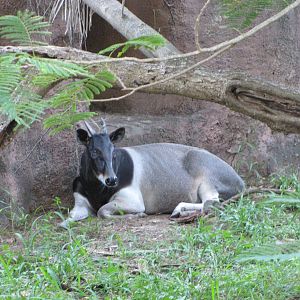
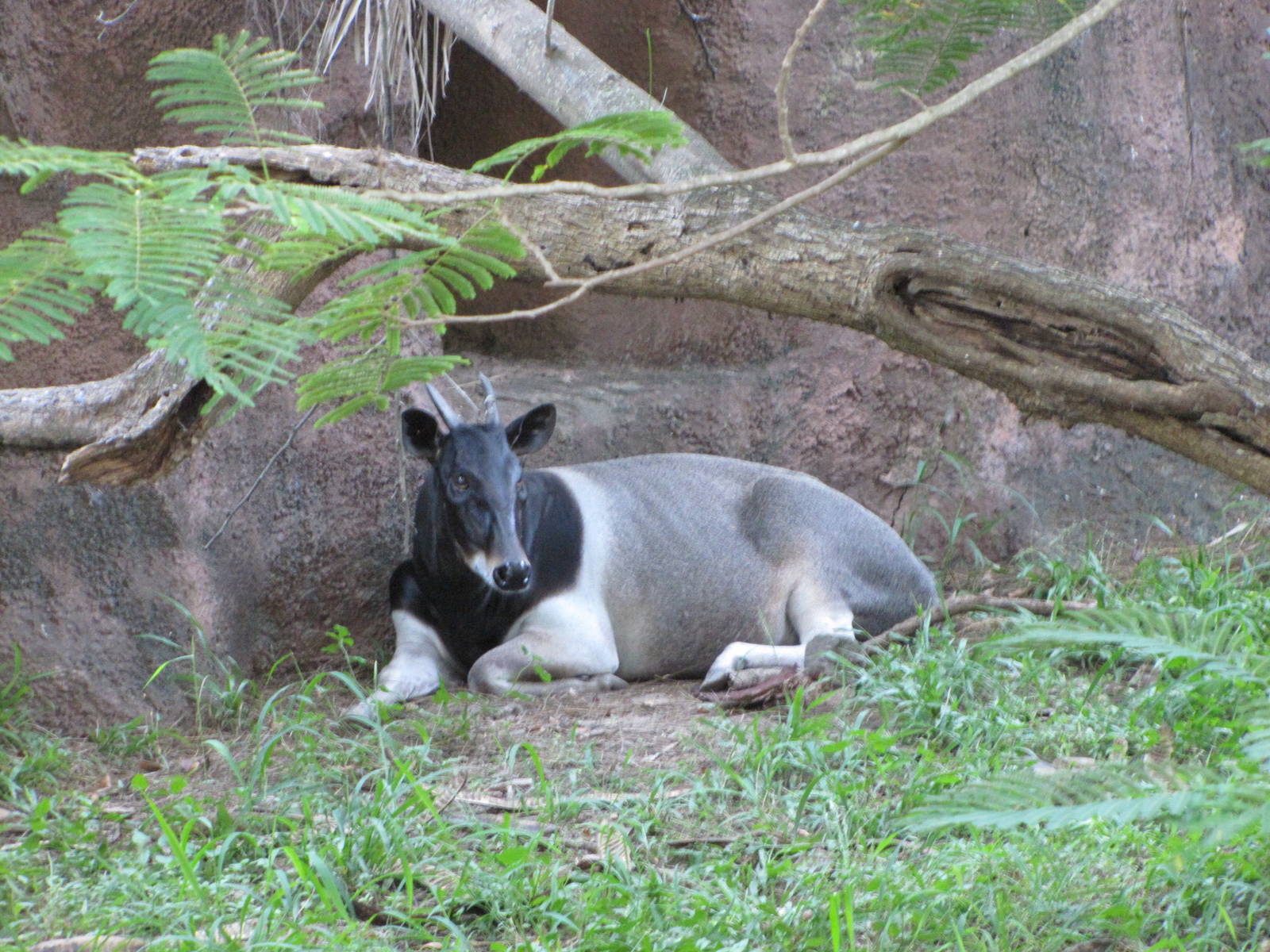
The last photo that I took at the Gladys Porter Zoo in the evening before leaving (the zoo is open until sunset) of an animal that may not live much longer; of a species that may never be seen in a western zoo again; and may become extinct very soon due to the ongoing civil wars in its native West African countries.

It was odd to look at the Duiker for the last time as it was mostly because of him that I decided to fly all the way down to Brownsville. There were almost no other people around and it was so quiet. It was a strange moment as our eyes met for the last time and I left thinking of the trouble this species is in and how truly grateful I am that I got to see this beutiful animal.
September 2010

The last photo that I took at the Gladys Porter Zoo in the evening before leaving (the zoo is open until sunset) of an animal that may not live much longer; of a species that may never be seen in a western zoo again; and may become extinct very soon due to the ongoing civil wars in its native West African countries.

It was odd to look at the Duiker for the last time as it was mostly because of him that I decided to fly all the way down to Brownsville. There were almost no other people around and it was so quiet. It was a strange moment as our eyes met for the last time and I left thinking of the trouble this species is in and how truly grateful I am that I got to see this beutiful animal.
 
There are no civil wars in Liberia, Sierra Leone and Cote d'Ivoire!
Even though now with Laurent Gbagbo (current president of Cote d'Ivoire) not willing to step down since he lost the election to Alessane Outtara, in the last years elections in December, there is fears for violence again.
Hopefully things won't escalate back to the 2002-2003 crisis.
Liberia is progressing very well from it's civil war , which officially ended with Charles Taylor leaving his post in 2003, and the first female president
Ellen Sirleaf Johnson being elected in 2005.
same thing with Sierra Leone a peaceful country now since 2002, of course a lot of healing and reconciliation to do, not saying these things are making these countries perfect, but they are on the right track!

I didn't get to take any nice pictures like the ones you did, my main focus whas to shoot video footage of the Jentink's, since, far as I know that has never been done before! I took the greyhound all the way from LA to do that! So it is very exciting to know that there are more people out there Interested in the species. Some more facts about the Jentink's that I would like to point out is; that they are indeed very threatened, mostly from habitat destruction, which comes from illegal logging, clearing forest for dry rice 'slash and burn' and most of all the illegal bushmeat trade.
This makes them Endangered with extinction And that surviving numbers are listed at 2000 to 3500 individuals, depending on the source.
Cephalophus jentinki (Jentink's Duiker)

Let's talk about how to promote the conservation need of this really unique and endemic Duiker of Liberia, and how to raise awareness, so it won't be forgotten. The Pygmy Hippo has gotten a lot of attention as a flagship species for conservation in the region , I think the Jentink's deserves the same kind of attention!
I was fortunate enough to speak to both Dr Patrick (Director of the Zoo) and Mr Jerry (Facilities Director) who provided me with some very interesting insight on why there is only one Jentink's left and what's the future holds for it in captivity!

here are some useful websites about NGO's working in the region of the Upper Guinea Forest:
Liberia | Fauna & Flora International

Liberia - Conservation International

Forestry Development Authority

Gola Forest - Homepage

The Tai-Sapo Forest Complex - A Transboundary Conservation Area for Environmental Cooperation and Sustainable Development

And lastly! some very nice and rare camera trap pictures from Cote d'Ivoire's Taï National Park, and there is one color picture (the only one on the web that I know of, that is taken in its natural habitat) of the jentink's Duiker.
Picasa Web Albums - Henk Eshuis - Cameratrap

Take care and Enjoy!
lets talk some time!
Sincerely Thobias
also here is my first edited video of the Jentinks Duiker, more on the way soon!
[ame=http://www.youtube.com/watch?v=l0itMYhOd9E]YouTube - Jentink's Duiker[/ame]
 
Thobias, thank you for your very informative post! You're actually not the first one who tells me that there is next to no civil war in the West Africa states any longer, and I would erese these comments if I could, but at this stage (more than 48 hours) after I post the photos, it is only possible to correct the headline, not the text. I do follow the world news daily and it was my impression that they were still fighting hard around there but I'm glad it's not the case as I would indeed like to travel around the area at some point.

I met the director too but mostly spoke to him about zoos; not about the Duiker, it was the keepers who showed it to me and talked to me about it. I'm mighty glad that I got to see this specimen as it is quite old at this stage.
 
I feel very fortunate to have seen Jentink Duikers at the LA Zoo many years ago. A truly impressive species that deserves much more attention !
 
You're actually not the first one who tells me that there is next to no civil war in the West Africa states any longer, and I would erese these comments if I could, but at this stage (more than 48 hours) after I post the photos, it is only possible to correct the headline, not the text. I do follow the world news daily and it was my impression that they were still fighting hard around there but I'm glad it's not the case as I would indeed like to travel around the area at some point.

I don't think you need to beat yourself up on this one, Baldur! 99% of Europeans will only have come across Liberia and Sierra Leone in the context of their wars. As an African politics nerd, I struggle to find any news of the continent in the mainstream press, unless there is a war involved (such as in Cote d'Ivoire right now), or white people are involved (as in the taking of farms in Zimbabwe). Otherwise... silence!
 
Yeah it is a real hard to come by any news on the flora and fauna of the West African region, but for those who do their research there still only some, it's a real downer.
best chance is to google a nation or a city, then that will be the local news for ya, beats CNN and FOX any day though.
take care!
 
As naive it might sound!
Send email after email and letters to San Diego Zoo or any big zoo for that matter, make them know you care, and that you know about the Jentink's Duiker, and they should to
If they breed the Pygmy Hippo in captivity with great success, why not the Jentink's ?
they are both from same the region, and they are both unique to the West African 'Upper Guinean Forest' Liberia , Sierra Leone and Cote d'Ivoire
 
As naive it might sound!
Send email after email and letters to San Diego Zoo or any big zoo for that matter, make them know you care, and that you know about the Jentink's Duiker, and they should to
If they breed the Pygmy Hippo in captivity with great success, why not the Jentink's ?
they are both from same the region, and they are both unique to the West African 'Upper Guinean Forest' Liberia , Sierra Leone and Cote d'Ivoire

They have different husbandry requirements, and Pygmy Hippo are not afflicted by a gastrointestinal condition for which there is no treatment and often results in the animals un-timely death.
 
So why is then the Yellow Backed Duiker more common?
It's all about money and effort
And the Jentink's Duiker did not die of those causes in Brownsville!

-That is not the case for the Jentink's. Gladys Porter Zoo in Brownsville TX, was the first and only zoo in the world to breed them successfully back in the 70's. As far I know, a virus affecting horses called 'equine encephalitis'
was threatening to spread across the US border in the 80's, and the Zoo had requested to get the vaccine for its live stock, they got denied since it had officially not entered the country. Unfortunately the virus did spread and it decimated the
Jentink's population, with how many i'm not sure! Either way, now there is only one male left in captivity (in the whole world) and he is going on 14 years, and they live on average to be 10 to 15, with one reaching 20.
This was told to me by Zoo Director, Dr Patrick M Burchfield!
 

Media information

Category
Gladys Porter Zoo
Added by
Baldur
Date added
View count
6,912
Comment count
12
Rating
0.00 star(s) 0 ratings

Share this media

Back
Top