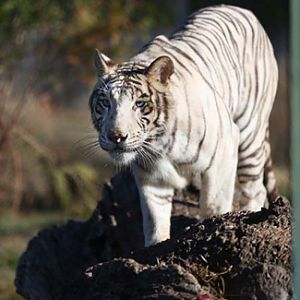
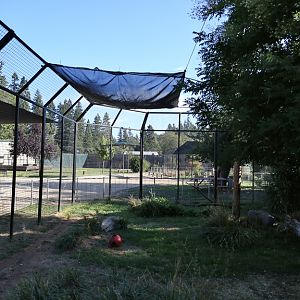
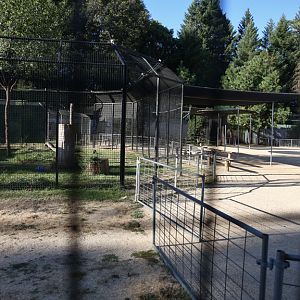
I like it. The enclosures are not huge, but not awful either. Basically average by zoo standards, though I would like to see bigger. However many of the cats are worked with and walked on leash, so they probably lead more interesting lives than many zoo cats in bigger enclosures that never get to leave their enclosures. All enclosures have natural substrate and foliage (no cement, except of course for night houses).
The regular tour for visitors, which I did after my private photo tour, is informative and accurate. For one example the lion had a full belly mane and the guide said he gets it from having some Barbary genes though pureblooded Barbary lions are extinct. Many other private zoos would likely just call them Barbary lions.
They work with the amur leopard SSP and with other reputable facilities such as EFBC. They have 54 cats at present (though a few were away with the director at a conference) representing I think 15 species. More species are to be added. What is most amazing is that besides the director there are only two paid staff members to run everything (animal care, gift shop, tours). They get some volunteer interns in summer, but still unbelievable.
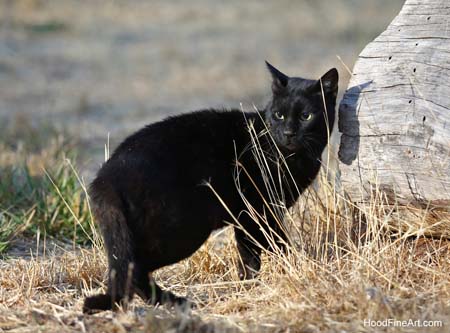
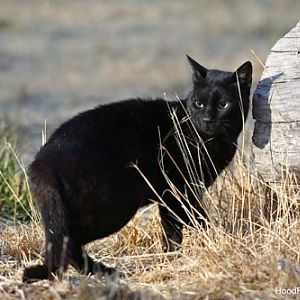
All four of their African wildcats came from Audubon Species Survival Center. This one was either born there or imported from Africa by them. Great Cats World does hope to breed their wildcats soon.
Thanks for sharing this great shot, AD. I had previously missed it but remembered your plans to visit. Good to know the cats' provenance. Are they of a pure subspecies (maybe Felis silvestris cafra)?
Is cafra a valid subspecies? I thought all African wildcats were now F.s. lybica? Paging TeaLovingDave to the rescue... (or anyone else who want to chime in).
The South African Wildcat, or F. s. cafra, is recognised as a distinct subspecies on the basis of genetic, morphological and behavioural studies the division between the North African and South African wildcat taxa is more or less Mozambique in the east, and Angola in the west.