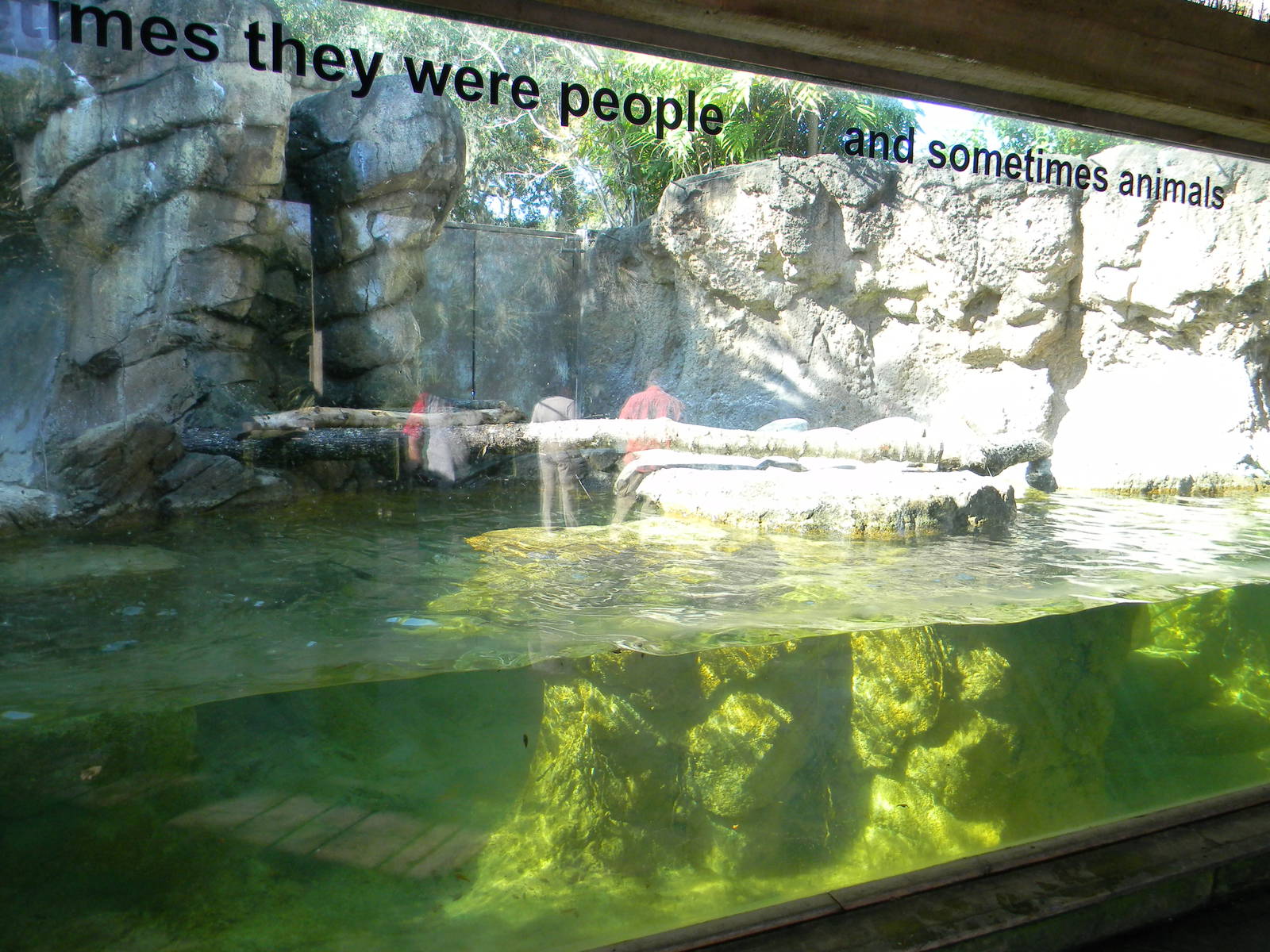
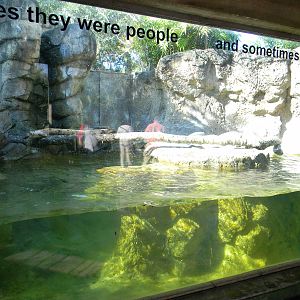
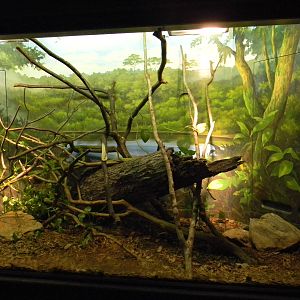
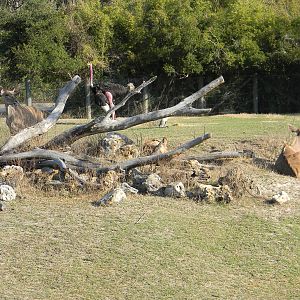
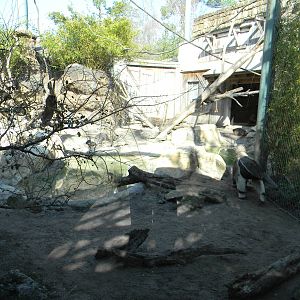
There is another part of this exhibit that a deep pool and a little land with sand on it. The brothers still have this enclosure but I hope soon they move and the zoo gets a female for Buddy!
There is another part of this exhibit that a deep pool and a little land with sand on it. The brothers still have this enclosure but I hope soon they move and the zoo gets a female for Buddy!
I would say this exhibit is between average to sub-average, I would prefer these guys to live in the old River Otter exhibit in the Play Park as I love that enclosure for our otters though it didn't have best underwater viewing for teens-adults. The exhibit(in the Play Park) is now home to Penguins(which I highly disagree with) though it did bring in crowds.
This enclosure was designed with the Philly Zoo giant otter enclosure as a model. Therefore I would assume it is about 90m² (~900 square feet) in size. That is very small by international standards. Dr. Nicole Duplaix (giant otter researcher and current head of the IUCN otter specialist group) suggested 240m² as the minimum size enclosure for a pair of giant otters already way back in the seventies and that is still the minimum size suggested by the International Giant Otter Studbook husbandry guidelines. Giant otters will spent a significant time of their day on land, if it is appropriate. They need to do this to reduce stress (e.g. by digging, grooming and playing) and to dry off properly (among many other things). Just look at the giant otter enclosure pictures of Doue La Fontaine, Chestnut or Dortmund in the gallery for comparison. I am not saying the giant otters at Jacksonville will never breed or dye very quickly, but neither do some other species in undersized enclosures. I am just saying that this could and should have been way better (and bigger) for the otters (and visitors) benefit.
Are the giant otters an especially popular exhibit at the Jacksonville Zoo? There is a new giant otter exhibit being built at my local LA Zoo and I'm hoping that it will help bring these animals the popularity that they deserve.
I think they are very popular. Giant otters are much more active during the day than the North American or Asian Small Clawed Otters most zoos have. So Giants are doing more "otter things" like swimming, playing, etc when zoo visitors are there.