A nice species; like so many odd primates, the only one I've seen was at Twycross - the female 'Blossom' who died some years ago (late nineties if I recall..?).
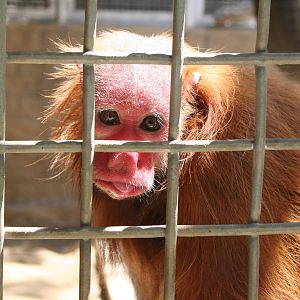
Uakaris are great animals! The only problem is that in captivity they are not so colorfull thna in nature! They adquire a very palid face, giving the impression that they are not in very good health!
In Huachipa Zoo / Peru they keep 3 species of Uakari but never got a breeding result!
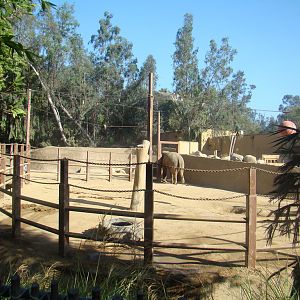
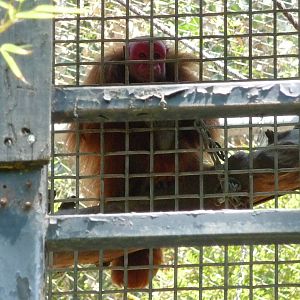
I saw the Red Uakaris at Los Angeles Zoo in 2003. I thought they were remains of a group from the past but as I understand from above, Los Angeles Zoo has imported them recently. But how recently? In the 1980s? How old will this species become in captivity? It is an all right enclosure, not state-of-the-art but still OK. But has the Los Angeles Zoo openly admitted that they are not interested in breeding them?
Are the uakaris still off exhibit at the Los Angeles Zoo? I saw this one in 2008 only because a zoo volunteer (and fellow ZooChatter mstickmanp) pointed him out for me.
Los Angeles imported a pair from Brazil in the 90's ! The previous animals where reduced to only 1 animal, a old female. Uakaris can live for about 30 year in captivity.
I can be wrong: Los Angles tried to breed them without success, I dont know the reason.
But Uakaris are hard to keep alive in Zoos and breeding in captivity is very poor. As far as I know they need a special diet of nuts that are very hard to provide and otherwise Los Angeles is a very dry region and they are not keept in a humidity controled enclosure. They have a very special habitat in Amazon. They live along the rivers in the trees that grow in the water.
If you look some pictures in the LA gallery you will see the male showing stereotyped signs (showing is tongue). This also contributes a lot for no breeding results. This stereotyped behavior he acdquired at LA, here in Brazil he was a normal boy and also never show any sign of agressivity!
Question: with such rare individuals and a low chance that they will breed, could artificial insemination not be an option? this could apply to any captive-rare species that are unlikely to breed.