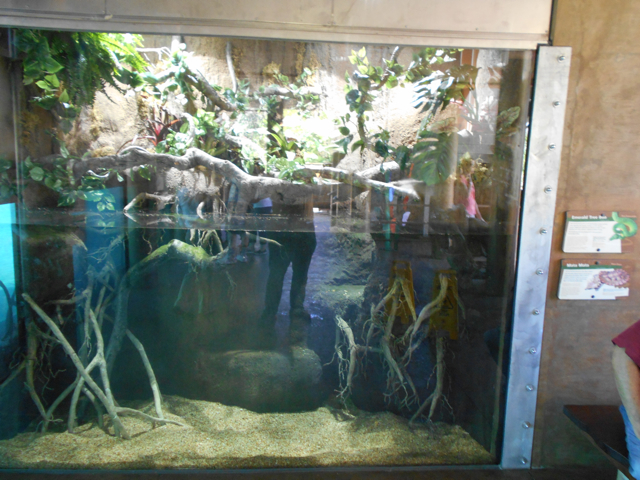
How is it too deep? The water looks to be 91 cm to 106 cm, which is fine for a healthy C. fimbriatus. Most label them as poor swimmers, which isn't the case for healthy C. fimbriatus. There are ways for them to grab on and pull themselves to the surface if needed. The enclosure looks fine, just wish they gave them more time to adjust before visitors start pounding on the viewing window.
How is it too deep? The water looks to be 91 cm to 106 cm, which is fine for a healthy C. fimbriatus. Most label them as poor swimmers, which isn't the case for healthy C. fimbriatus. There are ways for them to grab on and pull themselves to the surface if needed. The enclosure looks fine, just wish they gave them more time to adjust before visitors start pounding on the viewing window.
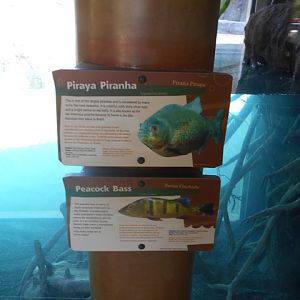
As of last week there weren't any animals in the exhibit yet. The docent said that there was a water quality issue with this exhibit and the piranha exhibit that needed to be resolved before the animals were put in.
As of last week there weren't any animals in the exhibit yet. The docent said that there was a water quality issue with this exhibit and the piranha exhibit that needed to be resolved before the animals were put in.
How is it too deep? The water looks to be 91 cm to 106 cm, which is fine for a healthy C. fimbriatus. Most label them as poor swimmers, which isn't the case for healthy C. fimbriatus. There are ways for them to grab on and pull themselves to the surface if needed. The enclosure looks fine, just wish they gave them more time to adjust before visitors start pounding on the viewing window.
Most husbandry literature state that mata mata prefer water shallow enough such that they can simply extend their necks to breathe. It's not that they are poor swimmers, but they are sedentary and would prefer to lie at the bottom and not have to swim to the surface every 30 minutes.
Yes, but reading dated material or some internet regurgitated info is not gospel. Their curator has decades of experience as do other staff. I'm sure they know what they are doing and would not do something to harm the turtles. If they can't handle deep water, then how do they survive in the wild? Why are they collected in areas where water depths are over 4m? Just because some academics only find them in shallow water, doesn't mean much. Just means they write it down and have it reviewed by peers, then get published. As for captive husbandry, well suggested basics are for many reasons. Usually, it is because they are collected, stored then exported elsewhere. The stress of being stacked or placed in crowded tubs until someone places an order causes stress and exposes them to who knows what kind of sickness. Then, they are given some medicine, even if they don't need it, and shipped off to some destination. Upon arrival, they are usually given medicine again. Add the stress, plus all the medicine weakens their immune systems. Some buyers show up to stock their pet stores or what not. They are kept in fish tanks with tap water, with none of their needs addressed and some impulsive person buys them or finds them online and fills their online shopping cart. They arrive at their forever home given all the love and attention they need. Which isn't what they need, as the set-up and care is wrong 9/10 times because someone read something online, and it has to be true. So, in the end, after all the export quottas are met, some genius offers basic guidelines to husbandry because it isn't the water depth that kills them. Everyone blames drowning and so forth. The animal was dying before it even got home. Without proper care, Vet appointments and quarantine, they're doomed. The owner never wants to own the fact they killed the animal. They were too busy taking pictures to post on social media of their awesome turtle, than to spend the extra money on properly caring for the animal in their care.
Yes, but reading dated material or some internet regurgitated info is not gospel. Their curator has decades of experience as do other staff. I'm sure they know what they are doing and would not do something to harm the turtles. If they can't handle deep water, then how do they survive in the wild? Why are they collected in areas where water depths are over 4m? Just because some academics only find them in shallow water, doesn't mean much. Just means they write it down and have it reviewed by peers, then get published. As for captive husbandry, well suggested basics are for many reasons. Usually, it is because they are collected, stored then exported elsewhere. The stress of being stacked or placed in crowded tubs until someone places an order causes stress and exposes them to who knows what kind of sickness. Then, they are given some medicine, even if they don't need it, and shipped off to some destination. Upon arrival, they are usually given medicine again. Add the stress, plus all the medicine weakens their immune systems. Some buyers show up to stock their pet stores or what not. They are kept in fish tanks with tap water, with none of their needs addressed and some impulsive person buys them or finds them online and fills their online shopping cart. They arrive at their forever home given all the love and attention they need. Which isn't what they need, as the set-up and care is wrong 9/10 times because someone read something online, and it has to be true. So, in the end, after all the export quottas are met, some genius offers basic guidelines to husbandry because it isn't the water depth that kills them. Everyone blames drowning and so forth. The animal was dying before it even got home. Without proper care, Vet appointments and quarantine, they're doomed. The owner never wants to own the fact they killed the animal. They were too busy taking pictures to post on social media of their awesome turtle, than to spend the extra money on properly caring for the animal in their care.