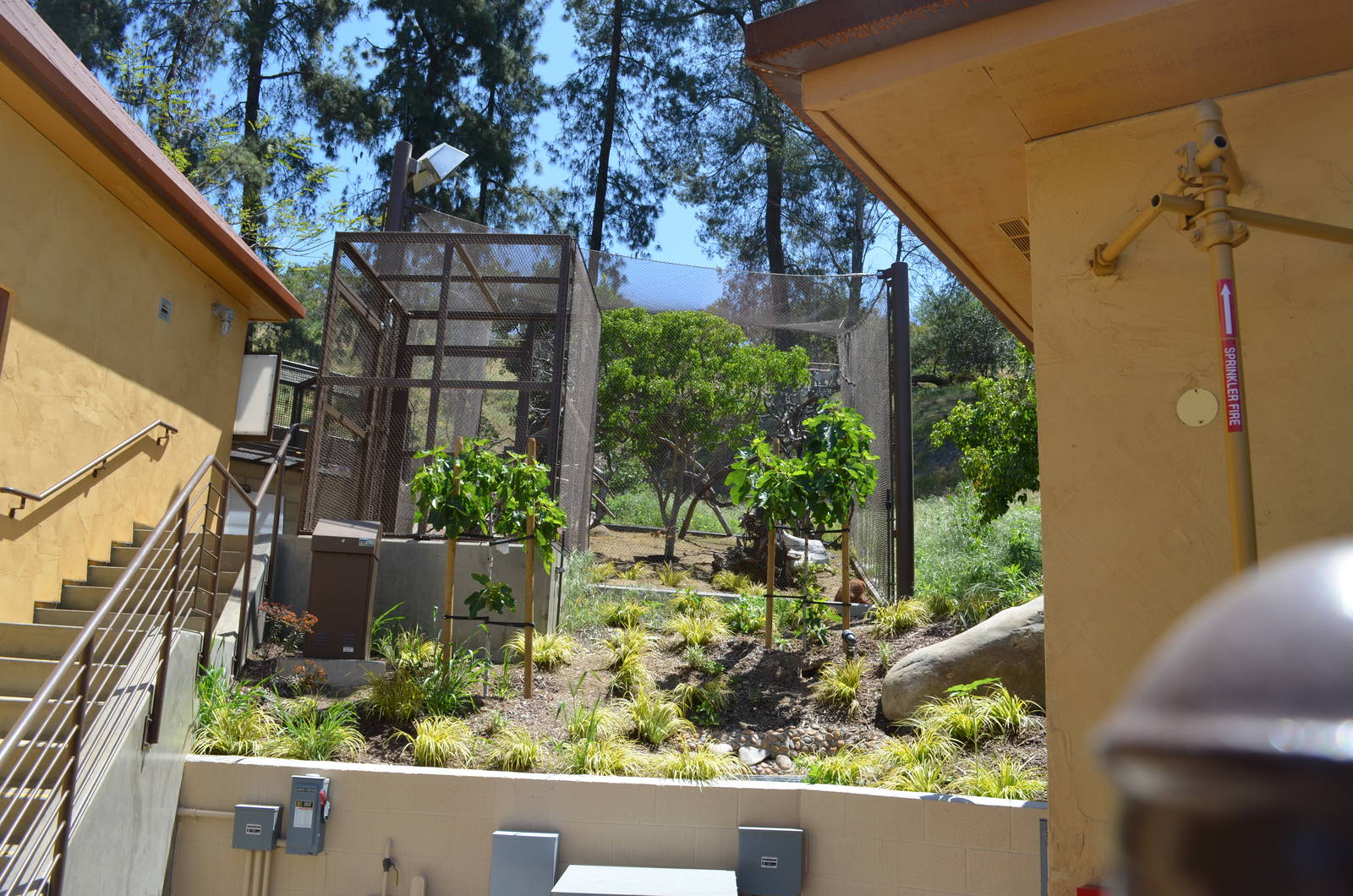
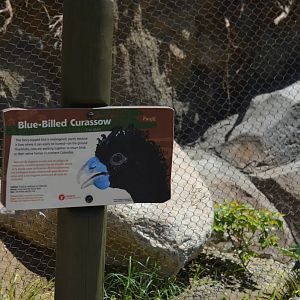
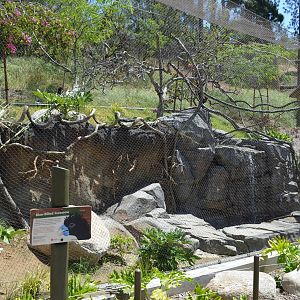
Is this really as close as you can get? One thing that I've noticed about many of the new exhibits in the photos of Rainforest of the Americas is that the smaller cages attached to the main exhibits (holding quarters and keeper entrance areas) are quite prominent and distracting. It reminds me of the insipid Charles Paddock Zoo not too far away from Los Angeles, as there are plenty of enclosures there that have a side cage in the open. A holding area for either keepers or animals is of course necessary but if you are a major zoo with millions of dollars at your disposal why wouldn't you tastefully design an exhibit so that extra caging is somewhat hidden?
Is this really as close as you can get? One thing that I've noticed about many of the new exhibits in the photos of Rainforest of the Americas is that the smaller cages attached to the main exhibits (holding quarters and keeper entrance areas) are quite prominent and distracting. It reminds me of the insipid Charles Paddock Zoo not too far away from Los Angeles, as there are plenty of enclosures there that have a side cage in the open. A holding area for either keepers or animals is of course necessary but if you are a major zoo with millions of dollars at your disposal why wouldn't you tastefully design an exhibit so that extra caging is somewhat hidden?
The service doorway blocks about half of the view too! And the view of the support buildings is pretty distracting too. The exhibit seems like an afterthought.
Quite a pity - an animal as rare as the uakaris deserve a better display.
Are the Uakaris in any way skittish? Maybe they do better away from the main path, especially when you consider the overall area is a new major exhibit for a major us zoo, there will be a good footfall through this and maybe that wod be unhealthy for the animals?
Likewise, maybe there were other reasons it's off from the path? Logistics/cost of construction, maybe the electricity/water supplies for the exhibit were set awkwardly in comparison to the main paths/other enclosures?
Of course, there may be no valid reason to do this at all, but I'd hate to think we're slagging it off if there is a perfectly legitimate reason. If it is due to skittish nature of the animals then I would just be grateful they can be seen by the public at all!
What a huge disappointment. Since the red uakari's are already elderly then what is the long-term plan for this exhibit? Will there be a common species available that the public can then see by walking up the stairs? The "rainforest" environment has clearly been shattered in several areas of this new, hugly expensive exhibit complex. The giant otter enclosure looks to be top-notch, and the tapir/tamarin exhibit is enticing, but after the greatness of LAIR this is a step back for an already average zoo.
What a huge disappointment. Since the red uakari's are already elderly then what is the long-term plan for this exhibit? Will there be a common species available that the public can then see by walking up the stairs? The "rainforest" environment has clearly been shattered in several areas of this new, hugly expensive exhibit complex. The giant otter enclosure looks to be top-notch, and the tapir/tamarin exhibit is enticing, but after the greatness of LAIR this is a step back for an already average zoo.
It may be that this exhibit will be completely off exhibit if the red uakaris pass and are not replaced. The way that it is situated now it is practically off-exhibit if one took the sign away calling attention to it. Those stairs and the surrounding buildings are behind-the-scenes and not open to public access.
The male uakari is a bit possessive of his females and prone to attacking strangers. Keeping the public as far away from him as possible reduces stress both for him and the rest of the animals.
Is the Los Angeles Zoo the only North American Zoo that still has them ?
Understanding the unique needs of these particular animals one would think that there still could have been a better way of exhibiting them.