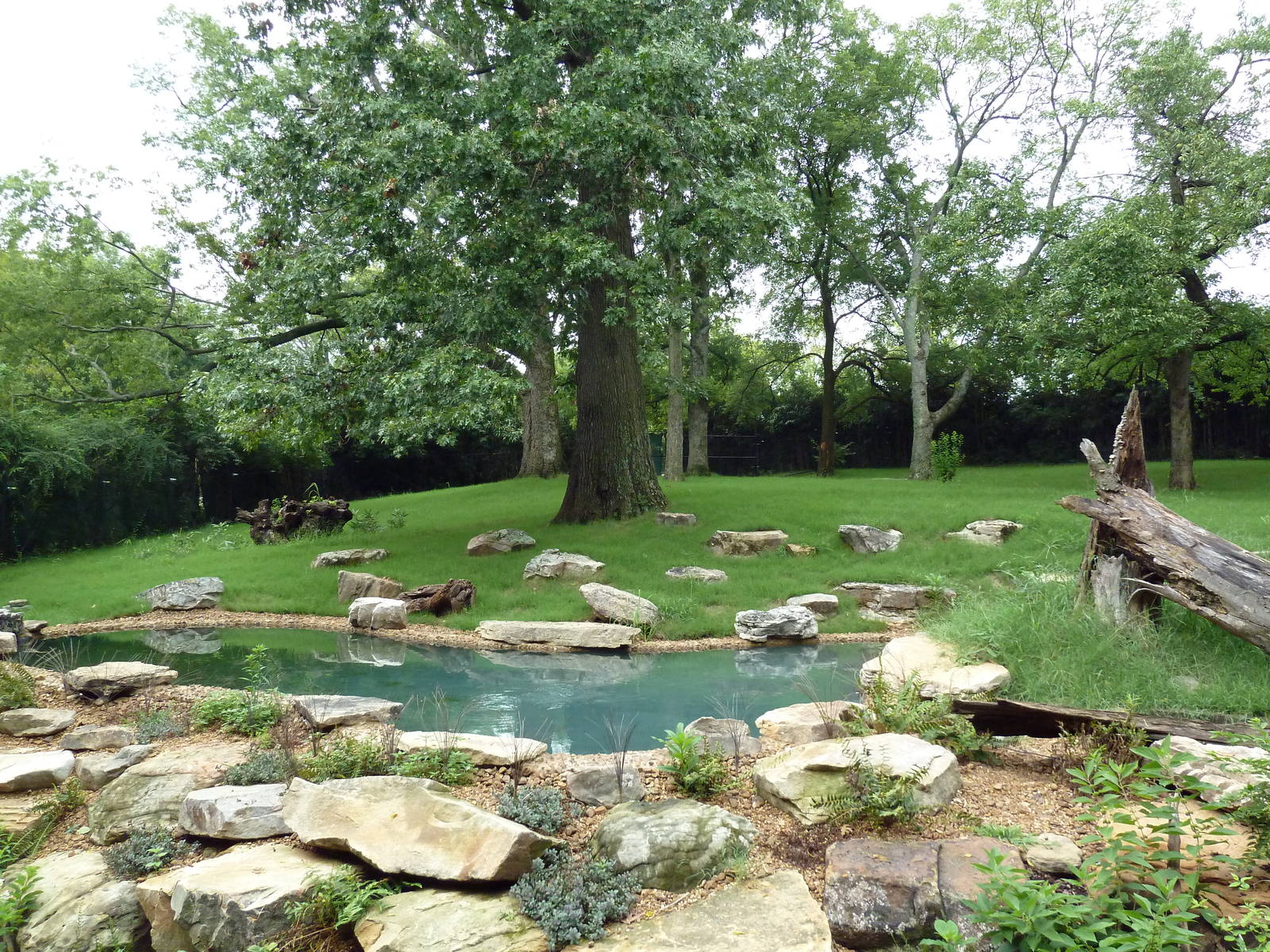
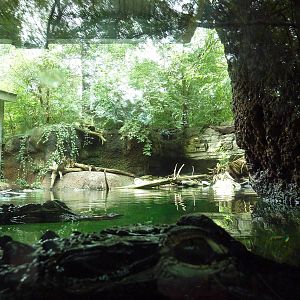
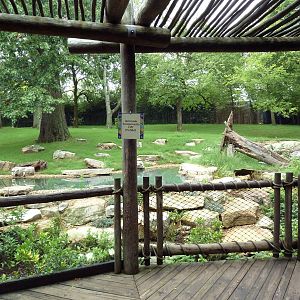
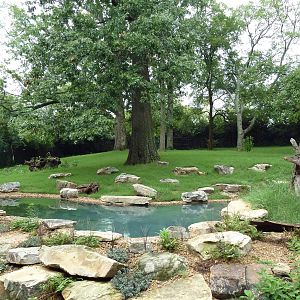
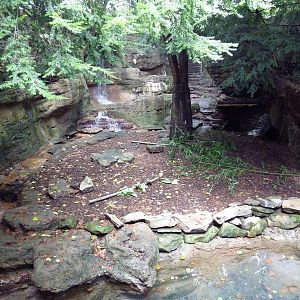
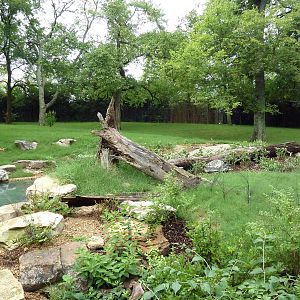
forgive me for asking, but how does a big grassy paddock with a few trees make a "great" enclosure for a rainforest animal? It looks like it is big, yes; it looks pleasant to the viewing public, yes; but is it any better than putting an okapi in a field with a couple of trees and claiming that to be amazing? This just looks like a standard interchangeable paddock that the zoo could put anything with hooves into.
Couldn't agree more. I find it tragic that tapir exhibits in the US are so bad that that enlightened people will call a lawn a great exhibit. From experience I can say that the tapirs probably are ok in these exhibits, but they look awful for a rain forest animal.
@Chlidonias: it occurs to me that you have seen Malayan tapirs in the wild...where do you think the best tapir exhibits are? You actually have some unique insight into this given that you have experience with actual tapir habitat unlike the rest of us opining here.
short answer, I have never seen a great Malayan tapir enclosure. They do indeed get short shrift in zoos the world over. The worst I've seen is probably at Bukittinggi Zoo in Sumatra (http://www.zoochat.com/1230/enclosure-malayan-tapirs-145632/) -- but I have seen photos of the one at Lied Jungle which probably seconds this one for lack of space. The biggest in size that I have seen is certainly at the Malacca Zoo in Malaysia (http://www.zoochat.com/652/malayan-tapir-enclosure-246215/) -- you can't get the scale from the photo but it is very big, but unfortunately very bare as well so not at all what I would call "great", merely much better than others.
It is telling that in Australia Malayan tapirs are being phased out because they have all gone blind, theorised to be due to the strength of the sun down our way (and the gaping hole in the ozone layer doesn't help) when the tapirs are kept in unnatural shadeless enclosures. Brazilian tapirs on the other hand are doing fine, probably because they live naturally in open habitats as well as forest. Nashville certainly doesn't have the solar power that Australia does, but paddocks of grass are not how I like to see rainforest animals such as Baird's tapirs.
Some of you guys are acting like they just threw the tapirs on a grassy hillside and someone then refered to it as great.For starters this enclosure is twice the size of most tapir exhibits and secondly there is pleny of shade as exhibit sits in a forested area.The tapirs have been very active on both my (Marty) visits to the zoo.Bonnie and I both agree this is the best tapir exhibit in North America.
@kudu When were the Screamers added we were just there and it was only tapirs.
They're very recent additions. The zoo said that they hoped the screamers would be on permanent, daily display Wednesday, but until then they would be out for a few hours a day.
From what I know and what I have read about tapirs, this enclosure and many others seem to have them mistaken for grazers. I know that most enclosure either get wrecked if they are too small or eaten down if not sufficently protected etc...
In the wild, the tapir’s diet consists of fruit, berries, and leaves, particularly young, tender growth.
From what I know and what I have read about tapirs, this enclosure and many others seem to have them mistaken for grazers. I know that most enclosure either get wrecked if they are too small or eaten down if not sufficently protected etc...
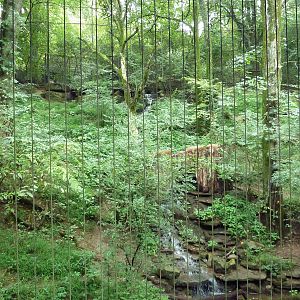
Your point on the natural habitat of tapirs is welltaken however there are few US zoos that come even close to replicating hat such as the example you gave.This exhibit at Port Lympe is amazing.
Your point on the natural habitat of tapirs is welltaken however there are few US zoos that come even close to replicating hat such as the example you gave.This exhibit at Port Lympe is amazing.
I feel that it is the same in the UK in terms of standards of enclosures - they seem to cater for people a lot more then they cater for the tapirs. I get the impression that as most tapirs in zoos are healthy, happy and breeding that zoos may also feel due to this they don't have to build new enclosures that are like Port Lympe's. Thus lowering the naturaliatic standard to subpar.
I am quite surprised by the US zoos that I have seen being less natural, as from reading and looking at photographs. The American ethos in zoo building seems to be natural over functionality for the animals.
From what I know and what I have read about tapirs, this enclosure and many others seem to have them mistaken for grazers. I know that most enclosure either get wrecked if they are too small or eaten down if not sufficently protected etc...
In the case of this Nashville exhibit, such dense 1m tall plants would mean that no visitor sees tapirs.
Had it not been for the existing trees, a very different forest could have been done here, but protecting the roots of this tree was more important. At Port Lymphe (from what I can se) visitors have a higher perch from which to look over the grasses and the trees are all in the back.
Am I mistaken?