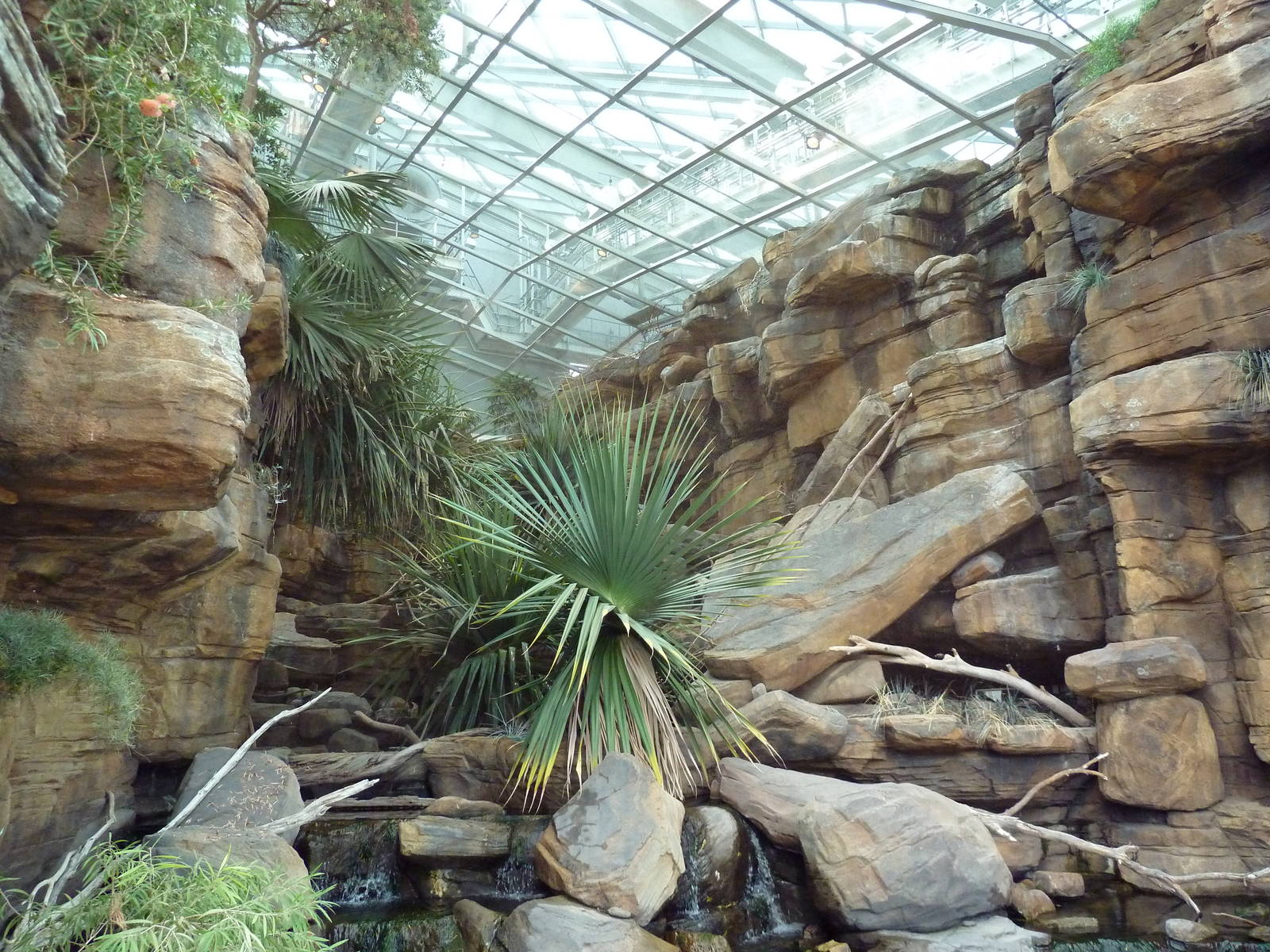
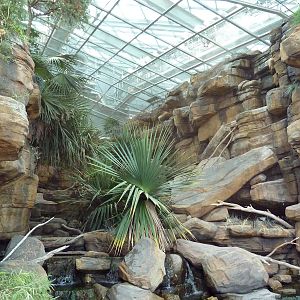
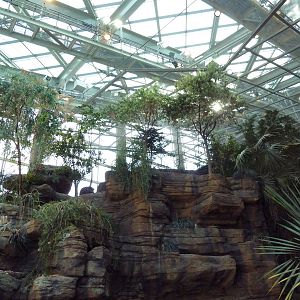
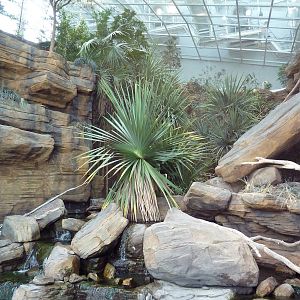
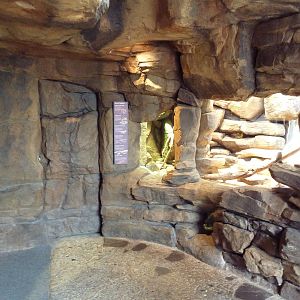
This area is spectacular, and the photo only highlights one section of the large pavilion. There are many Aussie critters that are rarely exhibited in American establishments, and this represents one of the three major pavilions that make up the Baltimore aquarium.
An excerpt from my 2010 review:
Glass Pavilion – This huge pavilion is spectacular on the outside, and just as amazing on the inside. It is called “Animal Planet Australia: Wild Extremes” and features the AZA Best Exhibit award-winning Aussie zone. The entire structure cost $75 million, and is only about 4 years old. A crashing waterfall and superbly designed rockwork precipices tower over visitors as they cross a bridge and stroll through the cavernous hallways that make up the area. The only downside is that this zone ends sooner than it should and is not quite as large as it first appears, but there is a long list of amazing creatures that are difficult to spot outside of Oz. I managed to list a number of the animals below, but I omitted numerous fish species and probably a few birds as well.
There are free-flying birds such as eastern rosellas, northern rosellas, sulfur crested cockatoos, galahs, rainbow lorikeets and cockatiels, and jam-packed tanks with species often rarely seen in North American zoos. Here is a partial list: various finches, kookaburras (free-flying), frilled lizard, northern death adder, Merten’s water monitor, central bearded dragon, Hosmer’s skink and at least 2 other types of skink, spiny-tailed monitor, eastern carpet python, water python, eastern water dragon, freshwater crocodile, black-headed python, northern snake-necked turtle, soft-shelled snake-necked turtle, pig-nosed turtle, Northern Australian snapping turtle, Jardine river turtle, Northern red-faced turtle, saw-shelled turtle, Mary River turtle and fish such as gulf saratoga, barrumundi, sooty grunter, yabby, tailed sole, western rainbowfish, sleepy cod, giant gudgeon, freshwater whipray, lesser salmon catfish, black catfish, toothless catfish and shovel-nosed catfish.
This area is spectacular, and the photo only highlights one section of the large pavilion. There are many Aussie critters that are rarely exhibited in American establishments, and this represents one of the three major pavilions that make up the Baltimore aquarium.
An excerpt from my 2010 review:
Glass Pavilion – This huge pavilion is spectacular on the outside, and just as amazing on the inside. It is called “Animal Planet Australia: Wild Extremes” and features the AZA Best Exhibit award-winning Aussie zone. The entire structure cost $75 million, and is only about 4 years old. A crashing waterfall and superbly designed rockwork precipices tower over visitors as they cross a bridge and stroll through the cavernous hallways that make up the area. The only downside is that this zone ends sooner than it should and is not quite as large as it first appears, but there is a long list of amazing creatures that are difficult to spot outside of Oz. I managed to list a number of the animals below, but I omitted numerous fish species and probably a few birds as well.
There are free-flying birds such as eastern rosellas, northern rosellas, sulfur crested cockatoos, galahs, rainbow lorikeets and cockatiels, and jam-packed tanks with species often rarely seen in North American zoos. Here is a partial list: various finches, kookaburras (free-flying), frilled lizard, northern death adder, Merten’s water monitor, central bearded dragon, Hosmer’s skink and at least 2 other types of skink, spiny-tailed monitor, eastern carpet python, water python, eastern water dragon, freshwater crocodile, black-headed python, northern snake-necked turtle, soft-shelled snake-necked turtle, pig-nosed turtle, Northern Australian snapping turtle, Jardine river turtle, Northern red-faced turtle, saw-shelled turtle, Mary River turtle and fish such as gulf saratoga, barrumundi, sooty grunter, yabby, tailed sole, western rainbowfish, sleepy cod, giant gudgeon, freshwater whipray, lesser salmon catfish, black catfish, toothless catfish and shovel-nosed catfish.
Does anybody think on the same line as me and think one day NAIB could possibly get a platypus on exhibit in this section. It's probably the best place for this species.
Does anybody think on the same line as me and think one day NAIB could possibly get a platypus on exhibit in this section. It's probably the best place for this species.
I don't know the specific reasons, but one of the general curators says it wouldn't work. The space needed for an effective exhibit isn't available and the only possible exhibit space is home to Irwin's turtles which apparently won't get along with the platypus.
Well hopefully one day a U.S zoo or aquarium will get one to put on display. the other good place for a platypus is columbus zoo in there Australian Roadhouse exhibit. I just saw that National Aquarium has this beautiful Australian exhibits and nice line up of species and thought to myself if they ever had that in mind of ever obtaining a live platypus. thks NAIB Volunteer your a big help