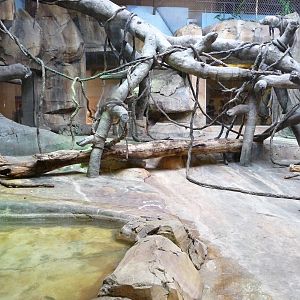
Real plants and Great apes in an indoor exhibit only works if the apes have no access to the plants-or if you're willing to invest into a constant re-installation of new plants, and make sure that they do not cause harm in any way. However, adding freshly cut leaves on a constant basis could be an option already put into use by many zoos.
What exactly does the expression "views beyond their exhibit" try to convey?
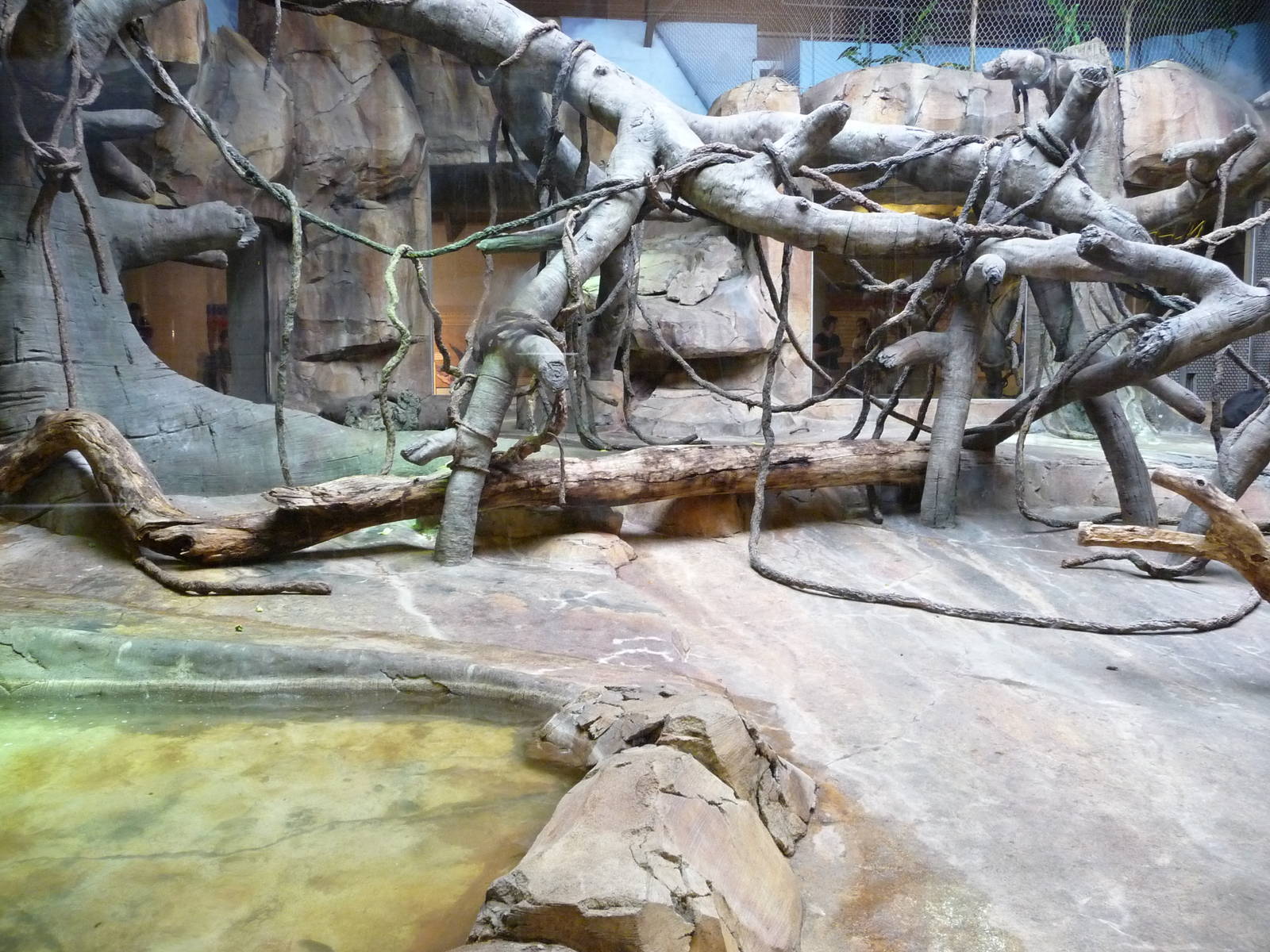
To the exhibit in question: I appear to have offended some in the past by my rather harsh critique of Omaha's zoo and several of its exhibits. It's funny to see that now more and more zoochat members seem to come to a similar conclusion (see the Tapir exhibit) even without having been there. This particular exhibit gives the term "Mountain gorilla" a complete new meaning, even if it does contain Western Lowlands...
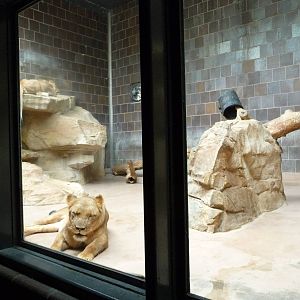
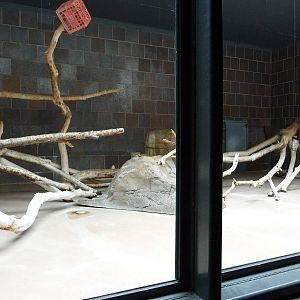
Everything in this indoor exhibit is concrete though...Every other photo of indoor exhibits I've seen at least have blankets, hay, toys, ropes, real wood climbing frames or wood shavings. Even at Melbourne where the gorillas only spend nights indoors they have hammocks, ropes, blankets and fresh wood shavings every night.
Phoinex, this was never directed towards you alone, It was a point to everyone
If you guys would have read a bit more carefully, maybe you could have realized the part about "this isn't the only indoor exhibit" . They have several rooms which provide an ample enviorment for the apes
And if you think Howletts is better, thats your opinon, but mine is that it is very minusclue and miles behind even this
This may not be the best enclosure but its a hell of alot better than alot of other ****** enclosures
okay firstly - personally, i haven't endorsed any other indoor exhibit.
secondly, it irrelevant how many other zoos have exhibits like this, because i never said any other zoos exhibits were any better and
thirdly, it doesn't much matter if they also have an outdoors exhibit. during nebraska's cold winters this is their only exhibit.
now i haven't seen howlett's either but i from all i've read it is miles above this.
now i haven't been to henry doorly zoo but, so instead of further critique i will say what i think should be standards FOR ALL INDOOR EXHIBITS (and please keep in mind that i am not a fan of indoor exhibits for large species and don't think this is these standards are possible for all species and thus, if its not, i don't think zoos should keep them)
large amounts of space
natural substrates
natural materials, real logs, and real plants if possible
natural light
good ventilation and moving airflow
enrichment
views beyond their exhibit (i actually think this is important for all exhibits)
privacy
did i say "real plants, if possible"?
i'm pretty sure i said "if possible"....
i'm also pretty sure i wrote "FOR ALL INDOOR EXHIBITS" in caps too - just made it clear i was talking about indoor exhibits in general, not just for apes. tree shrews don't destroy live foliage so thats a case where it would be possible to have live plants.
i reckon i said all that because i preempted someone who can't read babbling to me about the need for hotwires or the impossibility of keeping live foliage with apes - to make out like i was dumb.
pity it didn't work.
oh and sun wukong, i think that having a view outside of the immediate enclosure is a valuable form of enrichment, particularly for intelligent animals like apes. it should be a consideration of all exhibits. apes like to people watch, and view the scenery as much as we do, and i think glass windows overlooking the zoo or beyond is a fair request for intelligent creatures trapped inside all winter.
oh and sun wukong, i think that having a view outside of the immediate enclosure is a valuable form of enrichment, particularly for intelligent animals like apes. it should be a consideration of all exhibits. apes like to people watch, and view the scenery as much as we do, and i think glass windows overlooking the zoo or beyond is a fair request for intelligent creatures trapped inside all winter.
All nice and fine, but I don't think that this is achievable in every zoo, especially in flat country.
Don't underestimate the costs for large, robust panorama windows, the danger of overheating due to direct sun light in the summer and heating loss in winter (not very eco-friendly...).
And why should only apes receive this special treatment? Because they are "intelligent", according to anthropocentric standpoints?
All nice and fine, but I don't think that this is achievable in every zoo, especially in flat country.
Don't underestimate the costs for large, robust panorama windows, the danger of overheating due to direct sun light in the summer and heating loss in winter (not very eco-friendly...).
And why should only apes receive this special treatment? Because they are "intelligent", according to anthropocentric standpoints?
I disagree with almost every premise in your statement above, but I'm especially puzzled how being located in "flat country" would make the provisioning of views via windows any more difficult than it would be anywhere else???
How to achieve an overview for the apes if the highest elevation is a mole hill? Build the whole house on an artificially raised level so that the apes have a better view? Most zoo directors I know would shake their heads in disbelief when hearing this suggestion-and mention the cost factor. An elevation in the outdoor exhibit might be better.
Large robust windows are expensive-and there is no doubt that too much glass can lead to overheating in the summer and unnecessary loss of heating in the winter; prophylactic counteractive measures (improved isolation) are even more expensive.
Is an all too sunny exhibit OK for animals adapted to an at least partly existence in the shadows of rainforest flora?
And did anyone think of the poor wild birds crashing against the windows? That might entertain the apes, but certainly not the local bird lovers...(and I'm only partly joking here).
Don't get me wrong-I don't mind great apes having a nice indoor enclosure, on the contrary! But some requests should be better grounded on reality.