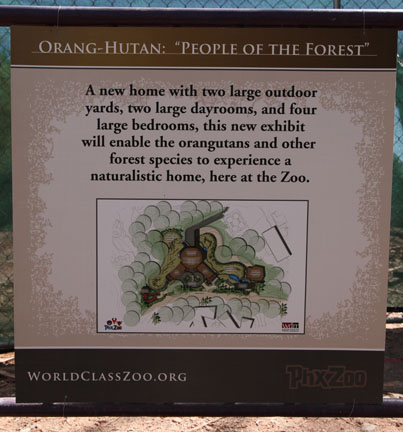
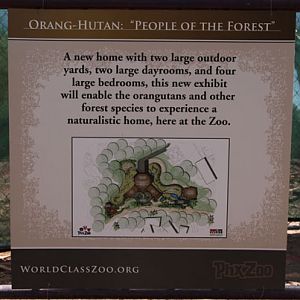
An interesting point here in the 'two countries separated by a common language' area - I would never use 'yard' to describe an animal exhibit, except maybe a small hardstand.
I suppose in US English 'yard' has connotation of 'garden', whereas in UK English a 'yard' suggests something small, probably paved, and probably not very pleasant.
I've seen 'yard' used quite a bit around these parts, and it always jars a bit to my British ears!
Interesting observation - I never knew that. Yes, in America, yard is a pleasant term and describes a grass or landscaped area around a house that can range from modest size to several acres.
An interesting point here in the 'two countries separated by a common language' area - I would never use 'yard' to describe an animal exhibit, except maybe a small hardstand.
I suppose in US English 'yard' has connotation of 'garden', whereas in UK English a 'yard' suggests something small, probably paved, and probably not very pleasant.
I've seen 'yard' used quite a bit around these parts, and it always jars a bit to my British ears!
To American English-speakers, frequently-used (in the UK) zoo terms like "hardstand," "perspex," "mock rock" and "climbing frame" are unfamiliar to our ears.
perspex = plexiglass
mock rock = gunite or artificial rock
climbing frame = climbing structure or platform
hardstand = has be baffled since I've never seen such structures erected in US zoos (at least not knowingly)
Interesting observation - I never knew that. Yes, in America, yard is a pleasant term and describes a grass or landscaped area around a house that can range from modest size to several acres.
Yup - not so much if it were a platform on its own (although it may include platforms). This is also used in kids' playgrounds (I think the US equivalent would be 'monkey bars').
You do have them - but Bob only knows what you'd call them if not hardstands!
Hardstand (or hardstanding) in zoo terms is an area of a paddock or exhibit, usually able to separated from the main paddock, that has a hard substrate (concrete, paving, more often nowadays gravel), whose main purposes are to a) provide an area that won't become waterlogged/muddy in winter and b) to provide a hard surface to keep hooves in check.
EDIT: Just wanted to add that this isn't exclusively a zoo term; I've heard it applied to hard-surfaced areas of car parks ('parking lots' ), for example.
I'm glad I'm not the only one who finds this sort of stuff interesting!