Accordin to a review by snowleopard in 2009, siamangs, white-cheeked gibbons, Sumatran tigers, Malayan tapirs, lowland anoas, Indian crested porcupines and small-clawed otters
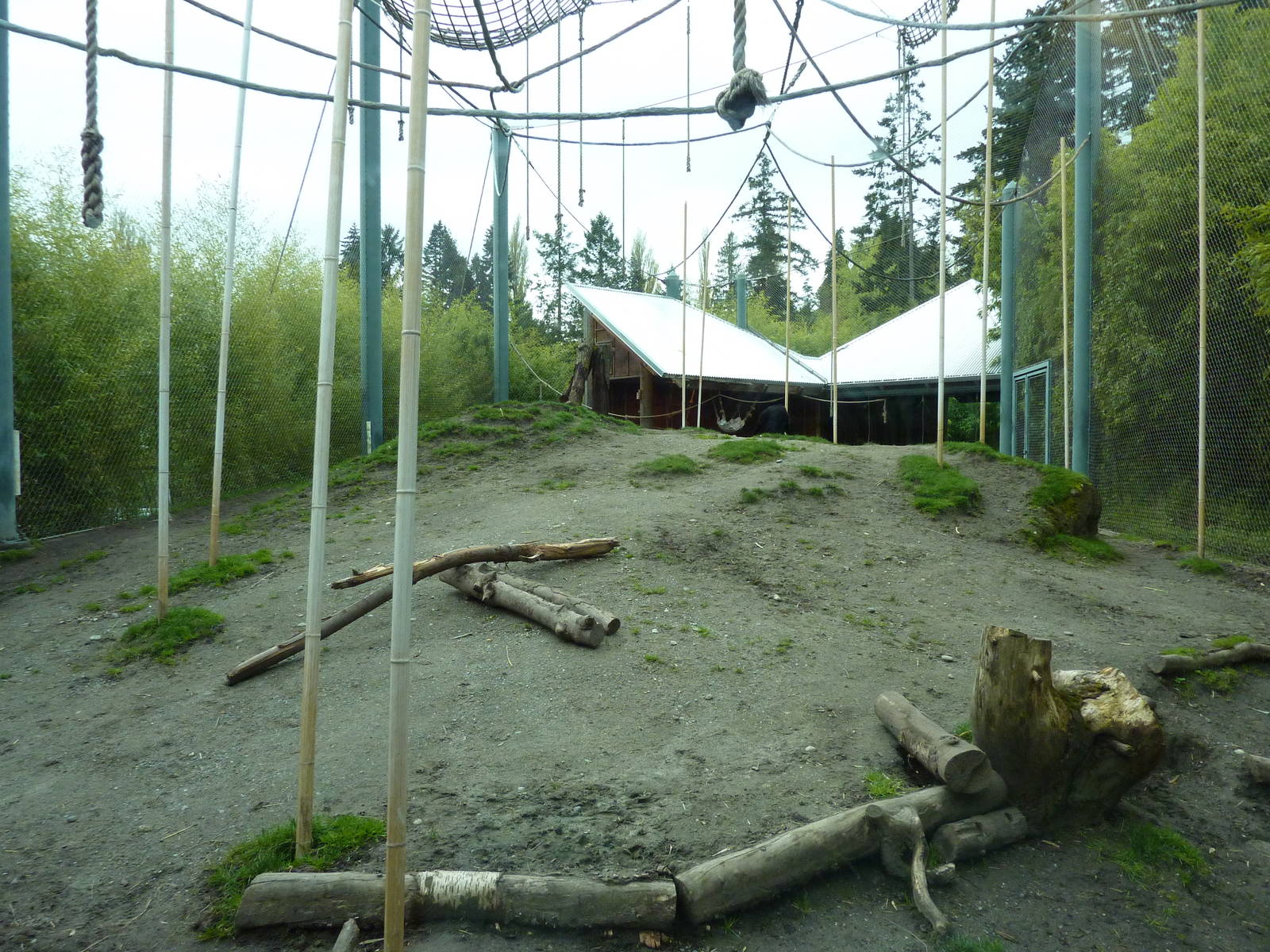
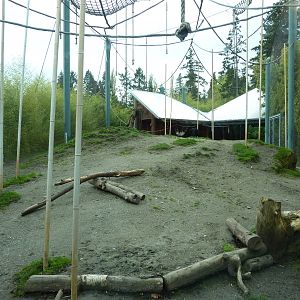
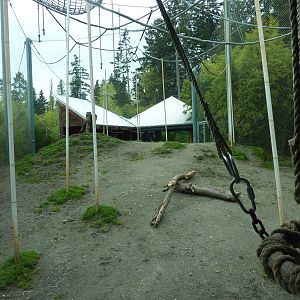
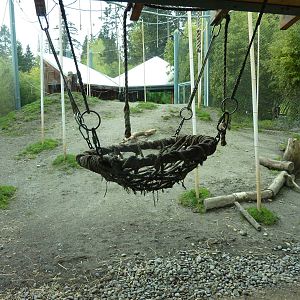
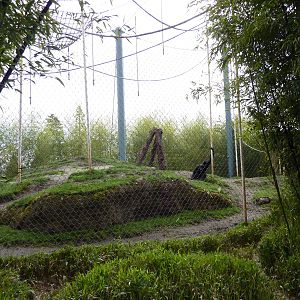
The downside of multi-species rotational exhibits is perfectly illustrated here. Is it really any more "enriching" for animals or visitors that different species get to split time in a series of barren cages?
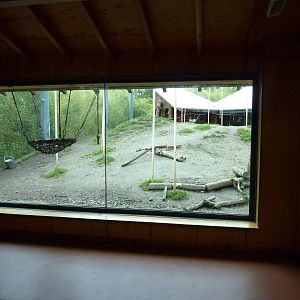
It is obviously wrong to judge from just a photo - there may be more to this than meets the (camera's) eye, and good judges (not least the taker of the picture) speak highly of the exhibit - but, on the evidence of this picture, this looks curiously desolate.
I personally LOVE the idea of having a rotating set of animals in a group of enclosures, and in North America only Point Defiance and Louisville utilize that method of displaying animals. The creatures are stimulated in varying ways by passing through different exhibits rather than the same one for much of their lives, and it is exciting and somewhat suspenseful for visitors to find what animals are located in a given exhibit on any random day.
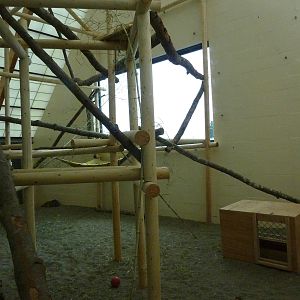
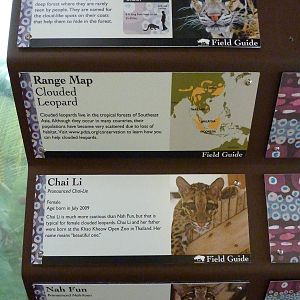
The general public also loves this section of the zoo and the set of exhibits is fairly new and modern. Some of the enclosures are a little barren and I agree with many ZooChatters that more could be done to create an actual "forest" atmosphere within the habitats. However, the animals are unbelievably active. The Sumatran tigers had cubs just over a year ago and all of the pools are used frequently by those big cats; at one point there was a large group of at least 8 small-clawed otters and those creatures seemingly never stop moving; I've seen a Malayan tapir running across its yard with a gibbon swinging overhead; the two species of gibbons are fantastic to watch as they use their sway poles and the netting of the enclosures; some of the zoo's 8 clouded leopards have been on exhibit for just over a year and the new Cats of the Canopy exhibit is due to open this summer. There are also two elderly female Asian elephants that will eventually be phased out in favour of Indian rhinos. As with the case in Louisville some of the enclosures are merely adequate at best, but the idea and execution should really be taken up and improved by other major zoos as the general concept is wonderful.
So in summary while some of the enclosures are a tad on the desolate side others are more than adequate, and the "charisma" of the animals makes up for many of the exhibitry deficiencies. The mixing of the animals is also cool to see as on my many visits I've witnessed otters with white-cheeked gibbons; otters with porcupines; otters with anoas; anoas with gibbons; otters, gibbons and tapirs all together, and various other combinations.
I often praise the zoo as many of the exhibits are of decent quality and what other small zoo (29 acres right on the sea) has all of these rarely seen species: polar bear, clouded leopard, muskox, walrus, sea otter, red wolf, tufted puffin and 2 different aquariums.
Maybe SL has had better luck than I at this exhibit. I watched a porcupine pace incessantly against the mesh in one of the three barren cages, and otherwise saw no activity. The big open habitat is good for tigers, but is too steep for tapirs and cannot contain gibbons. Basically, the small cages have been beaten down at the ground level by large herbivores (tapirs, anoa), and denuded of any tree foliage by the primates. And how "enriching" is it for a prey species to be shunted into a cage recently occupied (and smelling of) a top predator (tiger)? I guess fear is a form of stimulation, but is it positive?
I just don't buy the theory that this is good for the animals, and the visitors I watched were simply confused--looking at the labels and asking "so where are the tigers?"
At the very least it adds some variety to the animals' daily schedules, and that can't be a bad thing.
But its just impossible to create an aesthetically-pleasing exhibit that can satisfy the needs of such a diverse collection of species. And I agree with reduakari's last point about visitors being confused. Most visitors don't read signs and will never appreciate the message this exhibit is trying to bring across.