November 30, 2011.
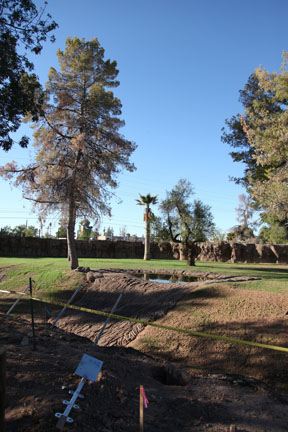
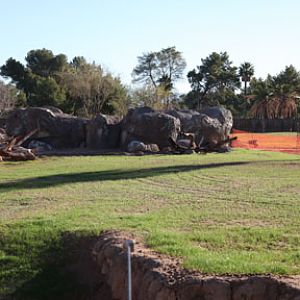
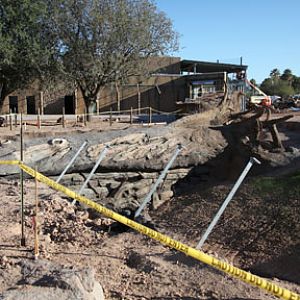
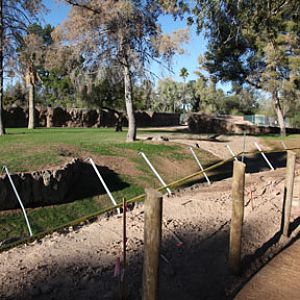
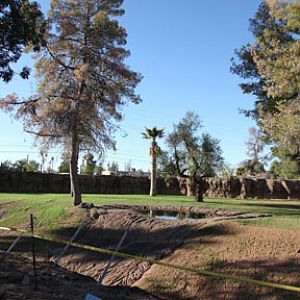
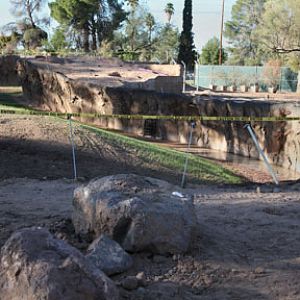
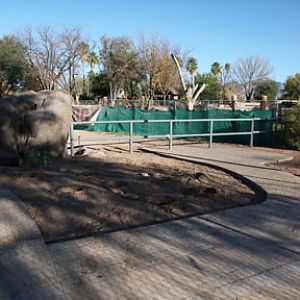
Construction completion is one month away (but opening is about four months out). This is not the main pool, but a smaller pool or mud wallow they can use. Existing trees are incorporated into the exhibit.
November 30, 2011.
Construction completion is one month away (but opening is about four months out). This is not the main pool, but a smaller pool or mud wallow they can use. Existing trees are incorporated into the exhibit.
Good news - they will not! The staff seems to know that there is a chance the elephants will destroy them and if they do we will just consider that another form of enrichment. I am hoping, however, that they are big enough and well enough established to remain long term.
Good news - they will not! The staff seems to know that there is a chance the elephants will destroy them and if they do we will just consider that another form of enrichment. I am hoping, however, that they are big enough and well enough established to remain long term.
Not to be a pessimist, but if this is true there will need to be several new USDA-mandated shade structures erected, as these trees will be reduced to toothpicks in a matter of weeks. No doubt it will be great enrichment for the elephants, but I sincerely hope no one expects there to be live trees if they are indeed left to the mercy of these smart, inquisitive, leaf/branch/wood-eating and incredibly powerful savanna-creators.
This is looking like one of the very best elephant exhibits anywhere--but long term it would be better to have some protected trees rather than the usual big clunky man-made elephant shade structures.
Well it could be an interesting experiment. I do not know if anyone has tried this before. Remember when Woodland Park Zoo said they were going to build a gorilla habitat with live vegetation and everyone said it would not work? They were willing to take a risk and try it and of course it did work. They deserve credit for being willing to go out on a limb and set a precedent. Maybe the same could be said for us? It may work, it may not work, but someone has to be the first to at least try.
Well it could be an interesting experiment. I do not know if anyone has tried this before. Remember when Woodland Park Zoo said they were going to build a gorilla habitat with live vegetation and everyone said it would not work? They were willing to take a risk and try it and of course it did work. They deserve credit for being willing to go out on a limb and set a precedent. Maybe the same could be said for us? It may work, it may not work, but someone has to be the first to at least try.
I admire the sentiment, but would note that today all of the large trees in WPZs gorilla exhibits are hotwired, and the one very tall tree (where the famous photo of the adult male climbing high was taken) died, probably as a result of construction stress and animal damage. Why not place many deadfall trees in the exhibit for the elephants to interact with, and protect the large trees, which would be nearly impossible to replace when killed, as they almost certainly will be.
I have to agree with Reduakari. Even with hotwire and fencing, Billy managed to take down a couple of new trees at the LA Zoo, one of which was considered mature. If these trees will remain unprotected, they won't survive...
The Cleveland Zoo's Mopani Range had a huge grove of trees when the exhibit opened. There are now only two or three mature trees and I don't see them providing much shade come spring and summer. That said, this exhibit does look fantastic, much better than Cleveland. I especially love how there is already a lot of grass and the exhibit has not opened. Cleveland's exhibit is as barren as an outdated 1950's elephant yard.
Hard to be sure from this small image, but it looks as thought the trees have seen some construction damage and root zone problems. The elephants will likely finish them off. Then what?