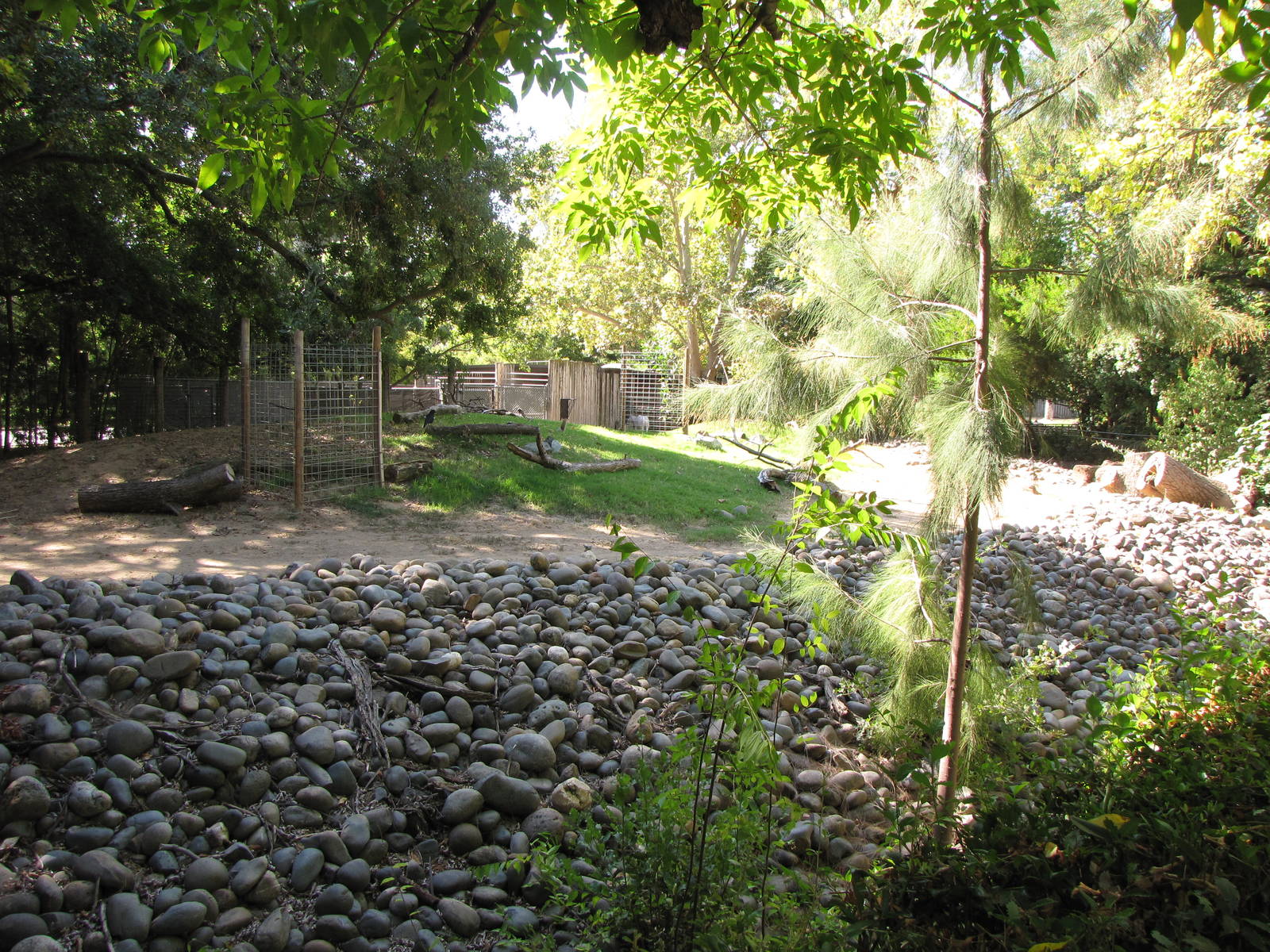
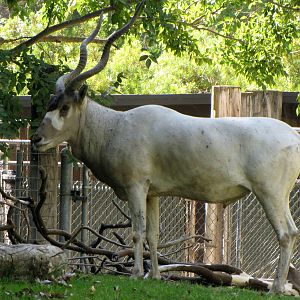
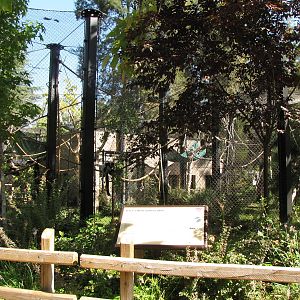
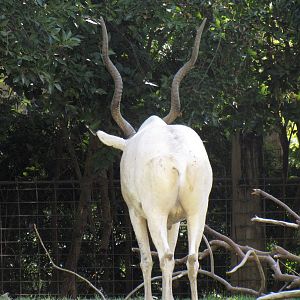
The "gravel pit" barrier is aesthetically terrible and it does not allow for close-up viewing of the hoofstock. Incidentally this enclosure now holds sitatunga and yellow-backed duikers.
The "gravel pit" barrier is aesthetically terrible and it does not allow for close-up viewing of the hoofstock. Incidentally this enclosure now holds sitatunga and yellow-backed duikers.
This whole complex was built in the 1970s. I'm not sure if the "gravel pit" aesthetic was in vogue then. It is functional, but not particularly attractive.
The "gravel pit" barrier is aesthetically terrible and it does not allow for close-up viewing of the hoofstock. Incidentally this enclosure now holds sitatunga and yellow-backed duikers.
One theory is that the "gravel pit" is used for water drainage. And the other theory is that it was made to prevent animals from jumping out of their enclosures. The rocky surface and the angle it is facing dosn't allow the ungulates to cross.
The major downsides are that by having a "gravel pit" in the hoofstock exhibits the space allocated to the animals is made significantly smaller and the enclosure is also arguably uglier and forces the animals to be farther away from zoo visitors. Those 3 reasons make them all very poor excuses for hoofstock exhibits, and there are plenty of excellent ones scattered throughout American zoos so Sacramento really has no reason not to overhaul their current paddocks.
The major downsides are that by having a "gravel pit" in the hoofstock exhibits the space allocated to the animals is made significantly smaller and the enclosure is also arguably uglier and forces the animals to be farther away from zoo visitors. Those 3 reasons make them all very poor excuses for hoofstock exhibits, and there are plenty of excellent ones scattered throughout American zoos so Sacramento really has no reason not to overhaul their current paddocks.
I would be interested to know if zoo managers would agree that these are "poor excuses" for hoofstock exhibits. They are perfectly functional and I'm not aware of any plans to replace them.
I would be interested to know if zoo managers would agree that these are "poor excuses" for hoofstock exhibits. They are perfectly functional and I'm not aware of any plans to replace them.
I would agree that the hoofstock paddocks are perfectly functional, but then again so are the enclosures for gibbons, mongoose lemurs, ring-tailed lemurs, chimps, spotted hyenas, tamanduas, etc, etc, etc. Sacramento Zoo is packed to the rafters with functional exhibits, but very few of them are actually appealing to the eyes of visitors. There lies the conundrum, as does the zoo have the money to overhaul 90% of its exhibits? Of course not, but by spending a relatively small amount of cash to remove the piles of rocks and then plant grass would go a long way to creating a spacious, excellent hoofstock exhibit...which are a dime a dozen in many major American zoos.
I would be interested to know if zoo managers would agree that these are "poor excuses" for hoofstock exhibits. They are perfectly functional and I'm not aware of any plans to replace them.
The use of irregular, uncomfortable surfaces (like this "gravel pit") to encourage hoofstock to stay out of moats (or away from trees) is somewhat controversial. While generally effective, there are legitimate concerns that a stressed/confused animal running into this kind of substrate could injure itself. The ultimate examples of this were some of San Diego's old "Horns and Hoofs Mesa" exhibits where "cattle-catchers"--horizontal steel rods placed over the moats like a grill--were widely used. Presumably after too many broken legs were suffered by specimens in the amazing collection once housed there, the zoo removed the barriers and substituted vertical mesh or cable barriers in their place.
@snowleopard: I think that the rocks are there for functional reasons that makes moving them impossible unless another method is engineered as reduakari outlined. When I was a teenager volunteer keeper at the zoo in 1989 I was cleaning out the moat of the Grevy's zebra/ostrich exhibit with the male ostrich strutting a hostile display at me at the edge of the exhibit. I was very glad that the rocks were there then.
There was a grand master plan for the Sacramento Zoo crafted in 1988 by the then-director Steve Taylor (now director of the Cleveland Zoo). The plan called for converting the moat to a water barrier. The plan was called Zoo 2002 and called for many plans that never came to pass, in large part because the military bases that were a large part of the region's economy closed in the early 1990s and cratered the region's economy. Among other plans were an immersion grizzly bear exhibit, African elephant exhibit, and hippo exhibit with underwater viewing. In some ways it is good that it never came to pass because given the size of the zoo, these exhibits would already be outdated.
Regarding replacing "functional" with attractive, you make a good point and the zoo has been systematically doing that over the last decade with projects like the new giraffe barn, the otter exhibit overhaul, the red panda forest (which replaced some awful big cat exhibits), and the sifaka/ruffed lemur exhibits (which replaced a group of monkey cages like the mangabey and ring-tailed lemur exhibits). In the upcoming not-too distant future the remaining "functional" primate exhibits and hyena exhibit will be modernized.
I can see that it might be an issue in terms of limiting space but I don't find the rocks unattractive at all, it just looks like a rocky riverbed to me.