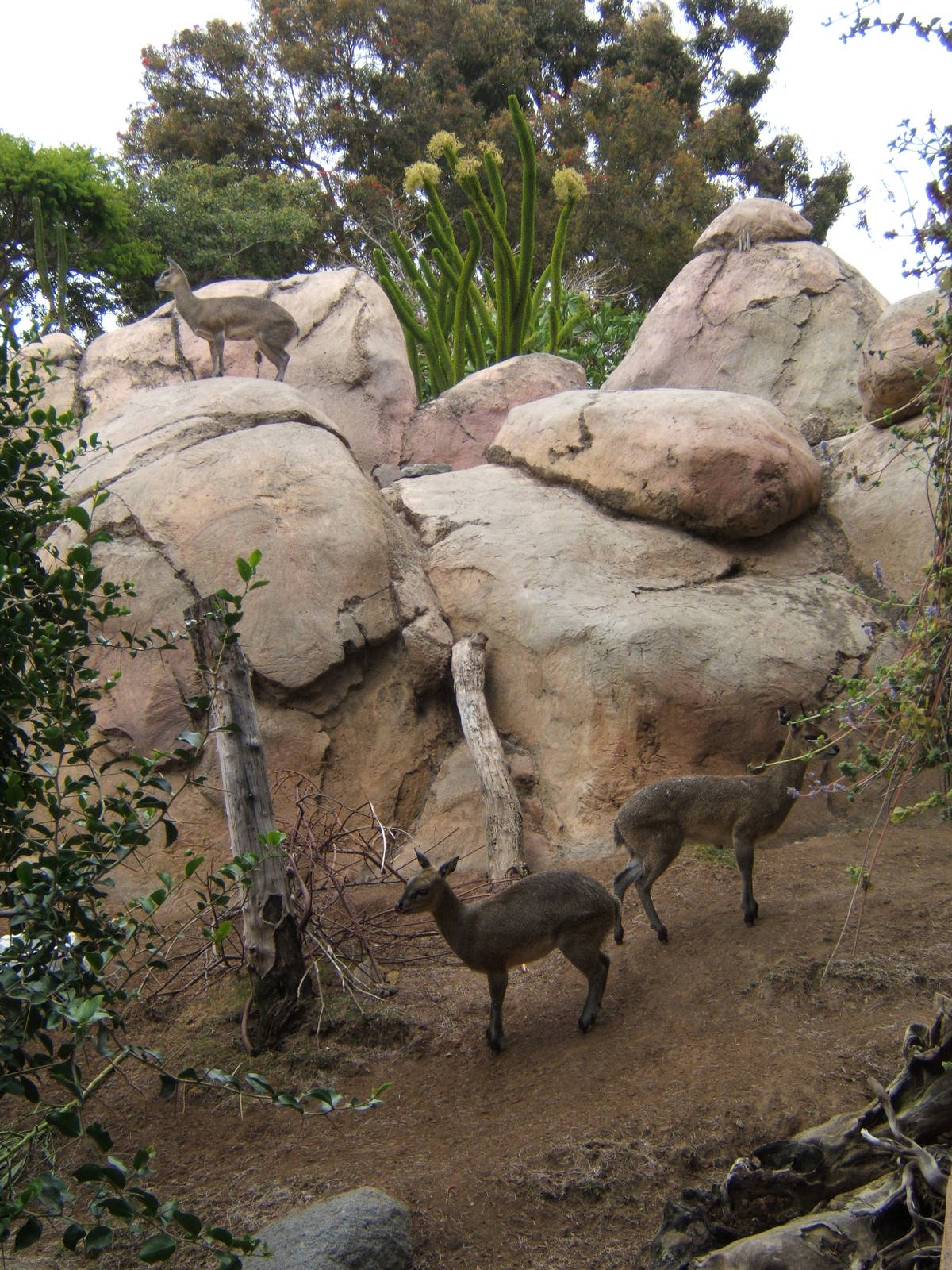
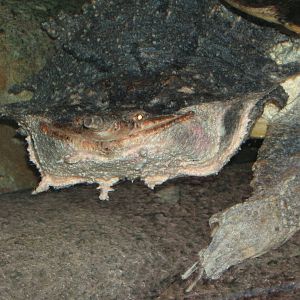
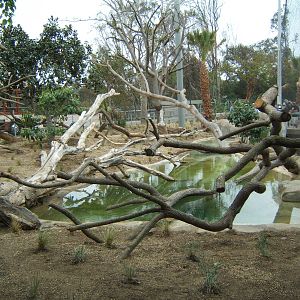
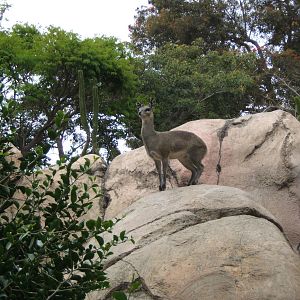
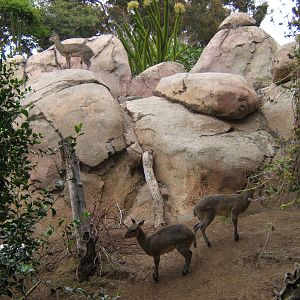
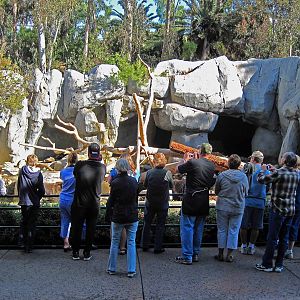
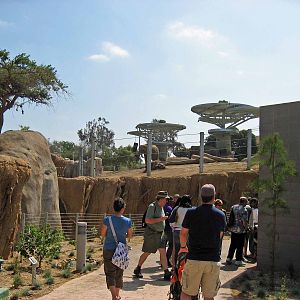
It's a lot easier to get that level of detail in a small exhibit that should have a lot of tall rocks(therefore keeping the opposite side of the exhibit out of site) than it is an elephant exhibit which can be viewed from most of it's surrounding area. That is a point that I think people need to recognize.
I think some of the exhibits I mentioned do live up to those standards, especially when being realistic concerning the point I just made.
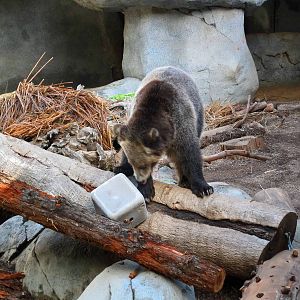
That is merely an excuse. Take Woodland Park as an example of what a zoo can look like when the focus is on immersion into a real landscape. The geology of the artificial rockwork makes absolutely no sense in most of the newer exhibits. Polar Bear Plunge and Ituri Forest are both examples of rockwork for the sake of rockwork, not rockwork done to transport you to another place entirely. The buffalo exhibit of Ituri Forest could NOT exist in the wild simply because not only is the geology all wrong, but if it was that is not a place a forest buffalo would be found hanging out. And claiming that the size is what makes the difference is only an excuse. Large animal exhibits CAN be done in a realistic manner. For other examples see Kilimanjaro Safaris at Disney's Animal Kingdom. The rockwork used along this ride is only in places that you would see rocks or cliffs in the wild, but is used to the utmost effect to contain the animals. The newer exhibits in San Diego just don't hold up to the same design effect (and frankly I believe this to be a conscious decision on the part of ZSSD) and are more like caracatures of the wild than replications.
That is merely an excuse. Take Woodland Park as an example of what a zoo can look like when the focus is on immersion into a real landscape. The geology of the artificial rockwork makes absolutely no sense in most of the newer exhibits. Polar Bear Plunge and Ituri Forest are both examples of rockwork for the sake of rockwork, not rockwork done to transport you to another place entirely. The buffalo exhibit of Ituri Forest could NOT exist in the wild simply because not only is the geology all wrong, but if it was that is not a place a forest buffalo would be found hanging out. And claiming that the size is what makes the difference is only an excuse. Large animal exhibits CAN be done in a realistic manner. For other examples see Kilimanjaro Safaris at Disney's Animal Kingdom. The rockwork used along this ride is only in places that you would see rocks or cliffs in the wild, but is used to the utmost effect to contain the animals. The newer exhibits in San Diego just don't hold up to the same design effect (and frankly I believe this to be a conscious decision on the part of ZSSD) and are more like caracatures of the wild than replications.
I am sure one could find many faults with DAKs exhibits on the Kilamanjaro Safari if they had as long as they wanted to look at them. That ride controls your point of view and you only get a minute (if that) to look at each of the enclosures thus DAK can hide many sight lines.
No question most of the exhibits you mention are "good," some even very good. But when a zoo has the resources, collection and climate of San Diego--and is held by many to the the standard-bearer for all zoos globally--it is really not enough to do "good" exhibits when greatness is possible. The Kopje hinted that such excellence was going to be the hallmark of future exhibits at the zoo--history has proven that wrong, unfortunately.
I am sure one could find many faults with DAKs exhibits on the Kilamanjaro Safari if they had as long as they wanted to look at them. That ride controls your point of view and you only get a minute (if that) to look at each of the enclosures thus DAK can hide many sight lines.