Arizona Docent

Road to nowhere?

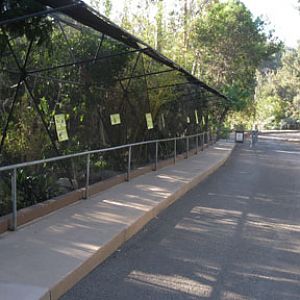
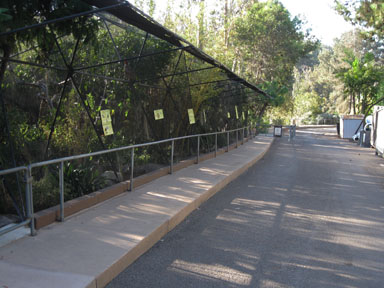
This is below Polar Bear Plunge - a row of aviaries that no one ever bothers to go down and look at. The end of the row has a sign prohibiting visitors from going any further, even though the road obviously continues. Someone else on the forum said you used to be able to go there to see the now off-exhibit hoofstock hillsides (see my aerial shot of it taken from the Skyfari).
  • Like
Reactions: UngulateNerd92
This is below Polar Bear Plunge - a row of aviaries that no one ever bothers to go down and look at. The end of the row has a sign prohibiting visitors from going any further, even though the road obviously continues. Someone else on the forum said you used to be able to go there to see the now off-exhibit hoofstock hillsides (see my aerial shot of it taken from the Skyfari).
 
A variety of medium sized birds - often two species per cage. There are five or six cages total - all directly connected to each other. This is an OLD exhibit. The only two bird names I remember off the top of my head are congo peafowl and purple roller.
 
Cool, thanks. I don't remember seeing these cages in my visit. Hopefully I'll see them next time I go.
 
Blackduiker

I haven't been to the San Diego Zoo in 5 or 6 years but remember these older aviaries. I've always thought they must go back at least 60 or 70 years. all part of exhibiting their rather large bird collection.
 
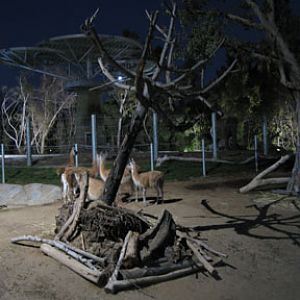
That road actually used to lead to a section known as Alpine Canyon, which was essentially a down hill extension of Horn & Hoof Mesa. It was blocked off from the public following the construction of Polar Bear Plunge. In the past, as far as I remember, species kept in Alpine Canyon included Cretan wild goat (Capra aegagrus cretica), Shiras moose (Alces americanus shirasi), Roosevelt elk (Cervus canadensis roosevelti), Japanese serow, Chinese goral (Naemorhedus griseus), West Caucasian tur (Capra caucasica), East Caucasian tur (Capra cylindricornis), Himalayan tahr (Hemitragus jemlahicus), Altai wapiti (Cervus canadensis sibiricus), Rocky mountain goat (Oreamnos americanus), Northern white-tailed deer (Odocoileus virginianus borealis), MacNeill's deer (Cervus macneilli), White-lipped deer (Cervus albirostris), Vietnamese sika deer (Cervus pseudaxis), European mouflon (Ovis aries musimon), Chinese bharal (Pseudois nayaur szechuanensis), Tadjik markhor (Capra falconeri heptneri), North Indian muntjac (Muntiacus vaginalis), Mexican gray wolf (Canis lupus baileyi), and Mongolian wolf (Canis lupus chanco).
 
@UngulateNerd92 Interesting! Do you (or anyone else) happen to know the reason for the closure? It seems a bit odd to close off this area, as Looking at it from google earth, it looks like a perfectly fine area, and it looks to still be occupied. It seems a bit counter-intuitive to close of this section for seemingly no reason.
 
I will also add that when the area was open, the famous double decker tour buses would drive down the hill into that exhibit area and make a U-turn back up the hill to finish the tour. I also wish that space were still open to the public. I would have really enjoyed a walk down there on my visits!
 

Media information

Category
San Diego Zoo
Added by
Arizona Docent
Date added
View count
2,198
Comment count
9
Rating
0.00 star(s) 0 ratings

Share this media

Back
Top