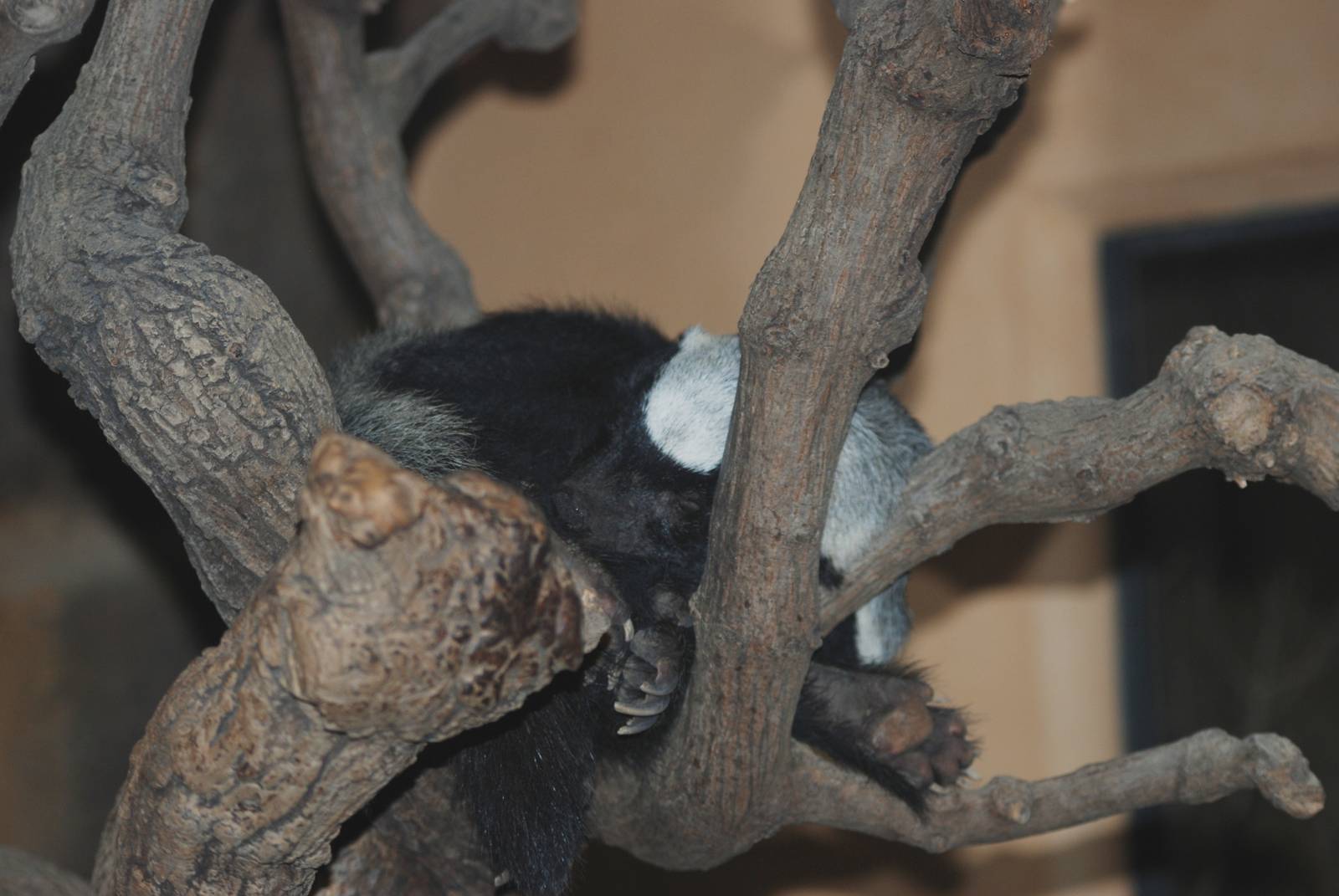
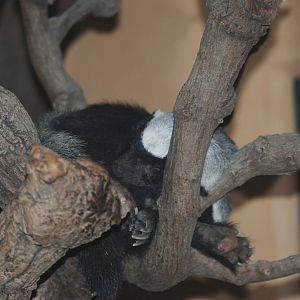
Prague's male is [i]M. c. cottoni[/i] and the female is [i]M. c. capensis[/i]. Honestly not sure which this is; the other was visible curled up in a log at the time.
Prague\'s male is M. c. cottoni and the female is M. c. capensis. Honestly not sure which this is; the other was visible curled up in a log at the time.
Ah - thanks for that - this individual (always assuming they didn't swap round!) was in the tree most of the time so I guess it's likely this is the female in that case (which is handy if so, as that would make this my first photo of M. c. capensis ).
They are different subspecies of the same species. The two groups of animals are closely related enough to be the same species, but distinct enough to be more than just different populations.
In the scientific name, the first name (first letter always capitalised) is the genus. The second and third (always lower-case) are the species and subspecies, respectively. They are just different ways of classifying animals, and there's often some debate about different subspecies. Many species don't have recognised subspecies; it's also common (in casual text) to find only two names denoted even if the subspecies is known.
In this case, the genus is Mellivora, species name is capensis (so that means it's a honey badger), and a subspecies may be cottoni (a subspecies found in West Africa).
Also, once part of the full name (genus/species) has been mentioned, or is thought to be obvious, it's common to find that part of the name replaced with just an initial. (e.g. M. c. capensis)
Sorry if it sounds too complex. Does all that make sense?
Perfect sense devilfish -It is the same in horticulture- I had assumed wrongly that the female of the species was known as capensis and the Male cottoni hence my question. thanks for replying in such detail.
dean